Zhaoxing Dong Village Guide: China's Largest Dong Village Without a Tour Group
A Zhaoxing Dong village guide: trains via Congjiang station, the RMB 80 entry ticket, where to stay, the Tang'an rice terraces hike, and how commercial it really is.
Zhaoxing has a strange status for a place this photogenic: it is the largest Dong village in China, it now sits 20 minutes from a high-speed rail station, and there is still barely any independent English-language writing about it. Guiyang is my mum's hometown and I have spent real time in Guizhou, but I have never made it to this far southeastern corner of the province, down where Guizhou leans into Guangxi. So this is not a memoir. It is the post I could not find when I started planning: how to get there via Congjiang, what the RMB 80 ticket actually covers, where to sleep, how the Tang'an terraces hike works, and the question every recent traveller report circles, which is how commercial Zhaoxing has really become. Built from dated 2025 and 2026 accounts, flagged honestly where they disagree.
What Zhaoxing actually is
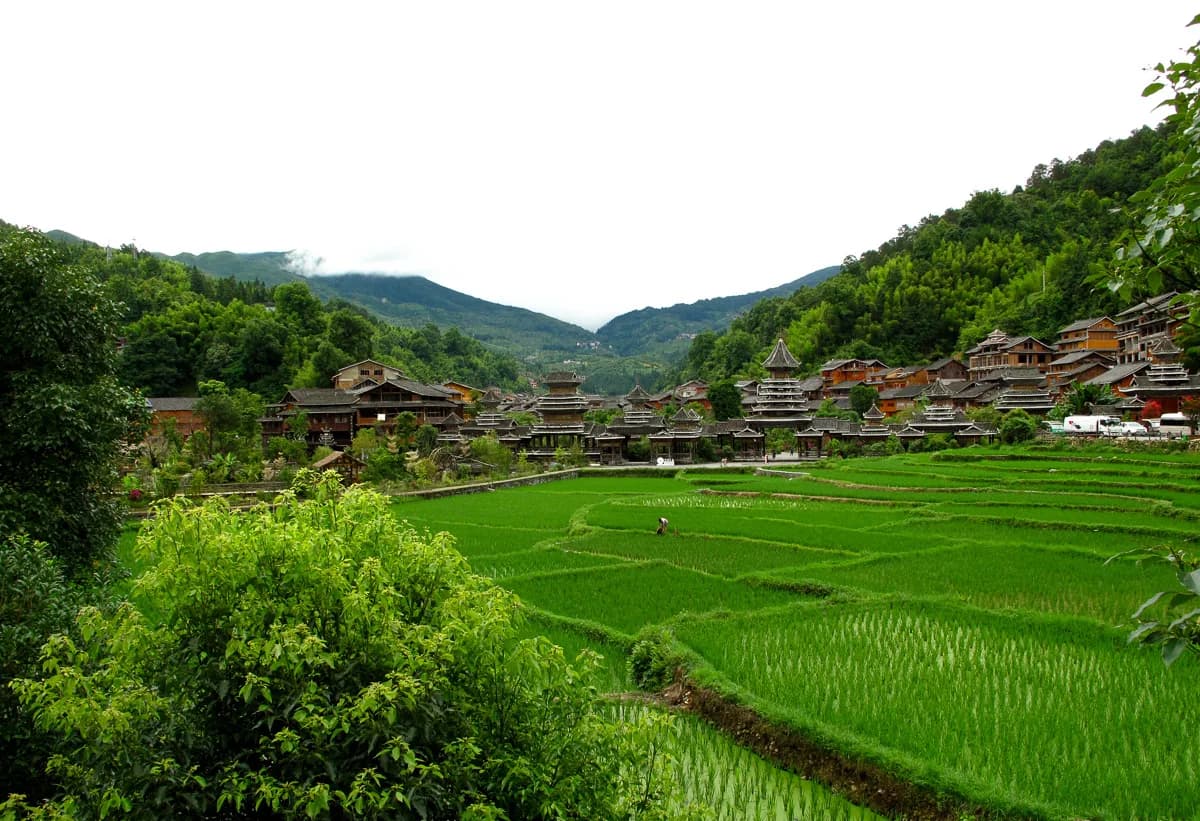
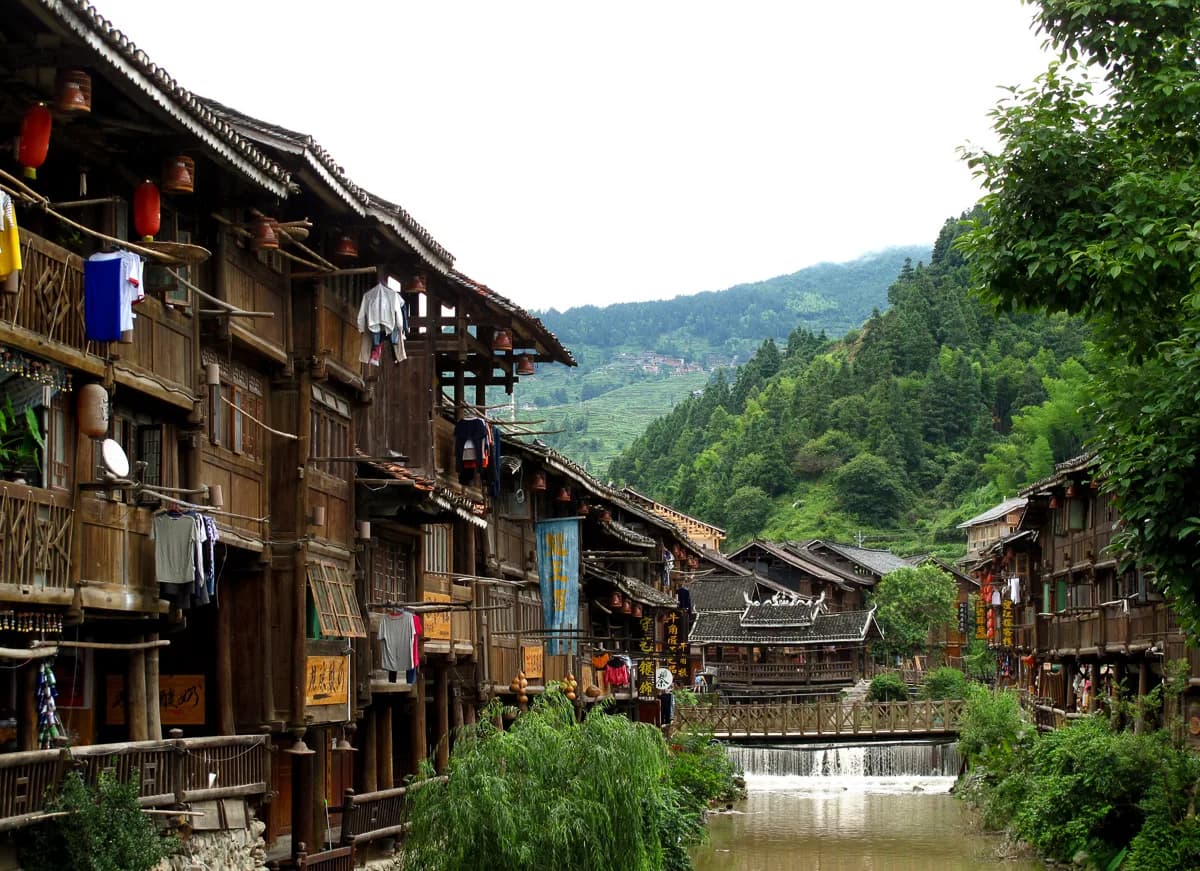
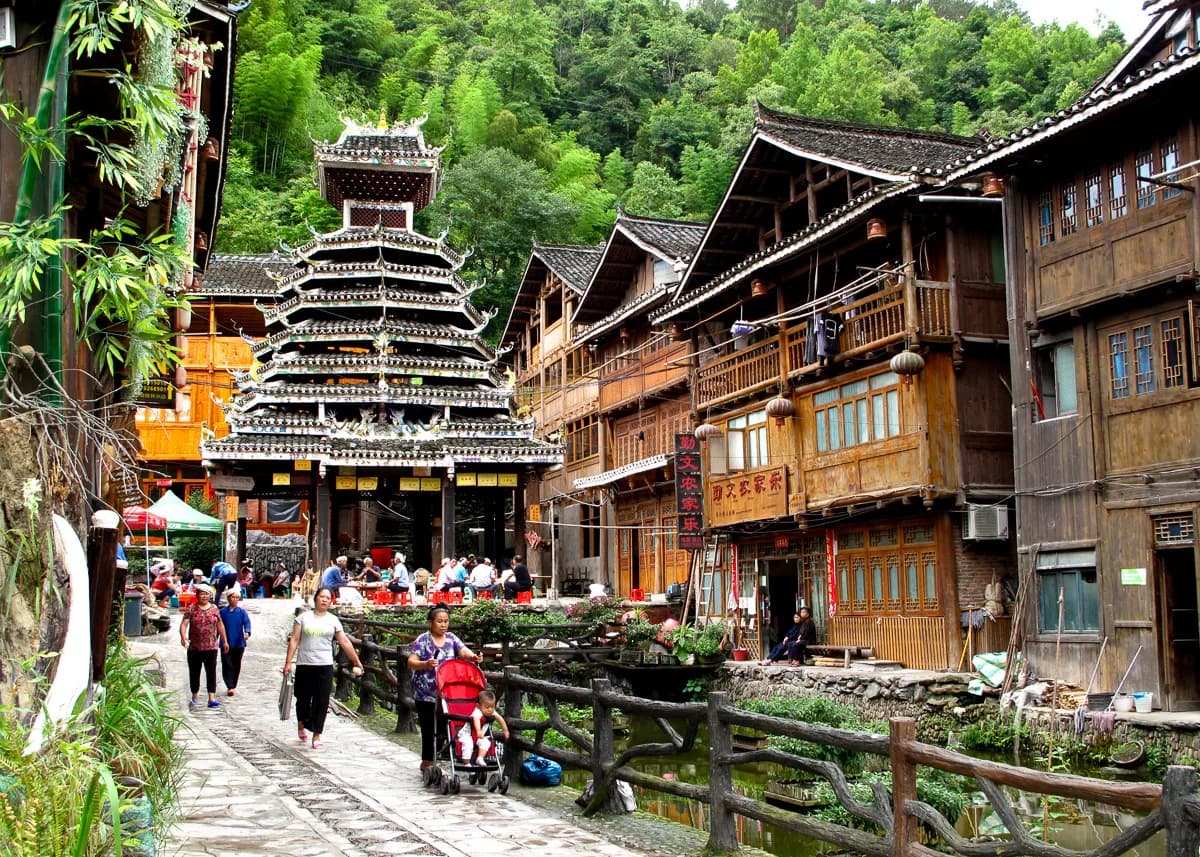
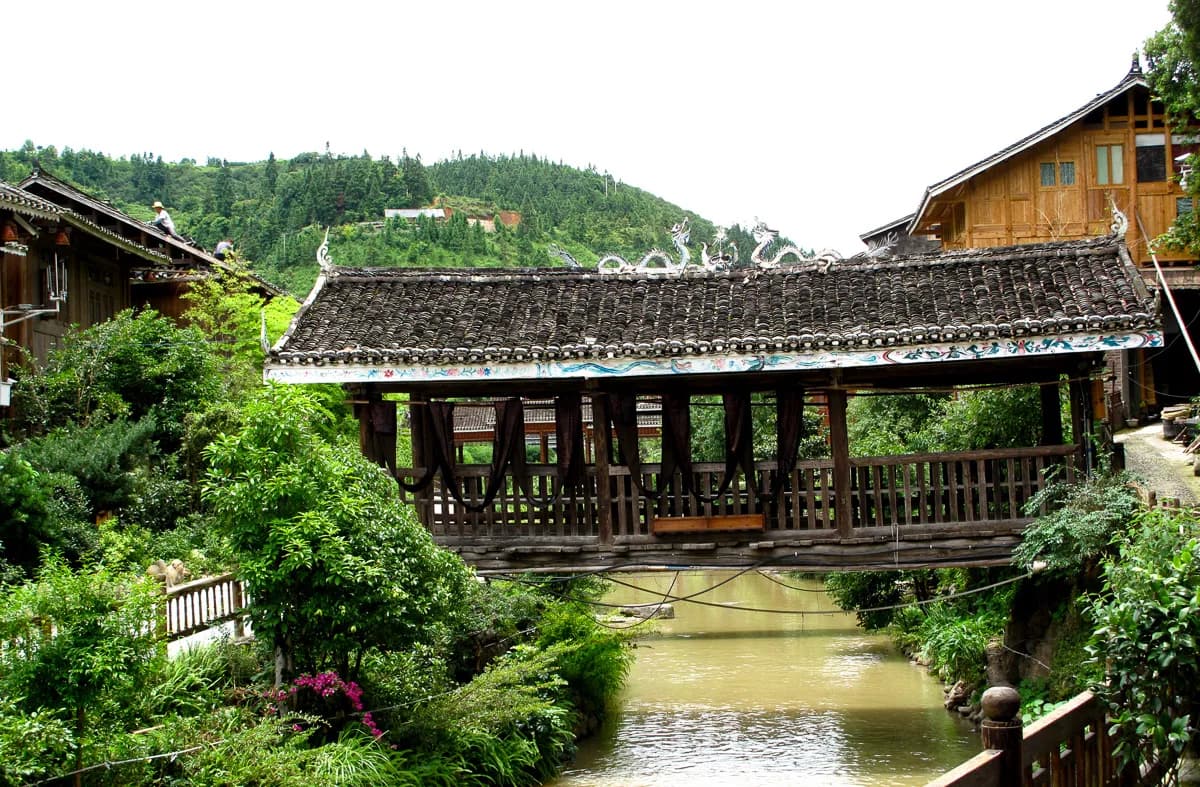
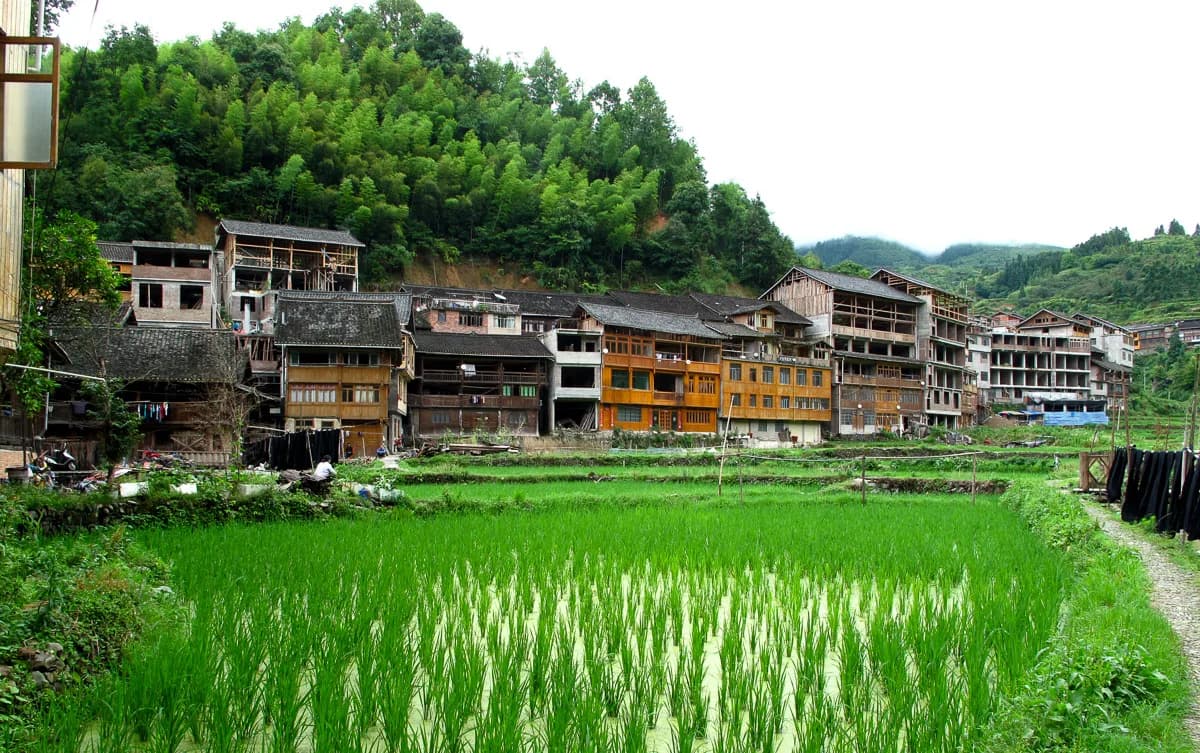
Zhaoxing is a Dong (Kam) village of more than 800 households and about 4,000 residents in Liping county, Qiandongnan prefecture, and by oral history it has been here since around 1160. The Dong are the minority famous for two things you see everywhere in the village: drum towers and wind-and-rain bridges, both built from fir without a single nail. Zhaoxing has five drum towers, one for each of its clan groups, named for the Confucian virtues, and each tower anchors its own cluster of lanes, wells and covered bridges. The wooden houses stack up both sides of a stream that runs the length of the village, with indigo-dyed cloth drying on balconies; the Dong's glossy, hand-beaten indigo fabric is still made here.
The other thing the Dong are famous for is sound. The Grand Song of the Dong, polyphonic choral singing with no conductor and no instruments, is UNESCO-listed intangible heritage, and Zhaoxing is one of the easiest places in China to hear it performed. That combination, five towers plus the singing plus the rice terraces above the village at Tang'an, is why domestic media rank Zhaoxing as the number one Dong village. For where it fits in a longer route, my Guizhou itinerary covers the full high-speed-rail loop through the province.
How commercial is Zhaoxing, really?
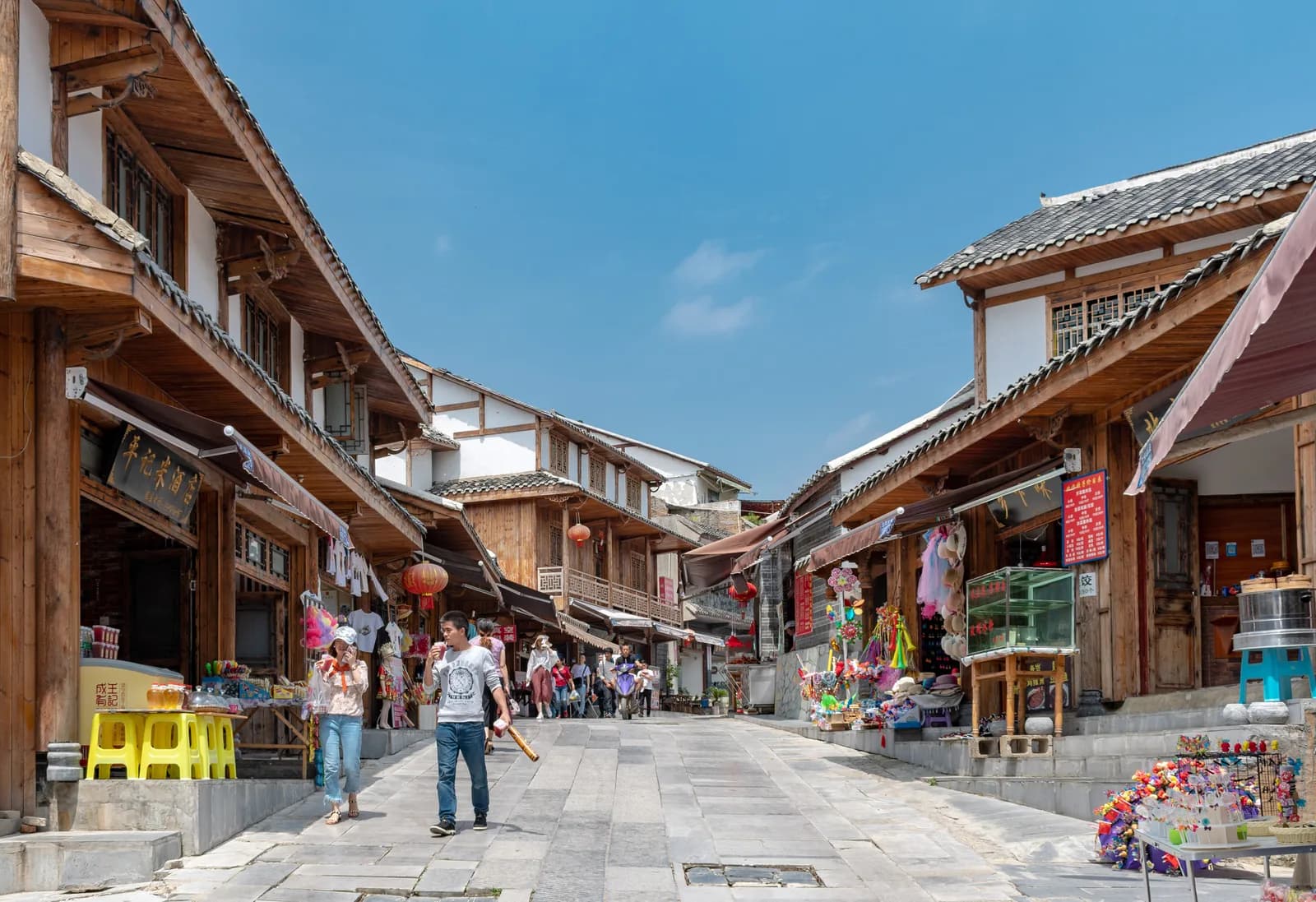
This is where recent reports genuinely split, so here is the honest synthesis rather than one verdict. On the critical side, TripAdvisor reviewers describe a main street of "hundreds of shops, supplemented in the evening by hundreds of food stalls," and some flag that parts of the streetscape have been rebuilt for tourism. One recent guide that has tracked the village since 2008 puts it bluntly: the dirt paths of fifteen years ago are now paved streets full of tourists. There is a ticket gate, a shuttle bus, and a nightly staged show. Nobody should arrive expecting an untouched village.
On the other side, the same review threads keep landing on the same qualifier: the commercial layer is one street deep. Reviewers note that the back lanes still hold original houses and original inhabitants, especially around the drum towers, where older residents gather by the fire pits. A traveller report from April 2025 describes the village as small and peaceful, with locals around the fire and morning markets, "perfect for a slow stroll." A June 2026 write-up makes the comparison that matters for Guizhou planning: Zhaoxing is clearly less crowded than Xijiang, the famous thousand-household Miao village that most tours default to.
My read, as someone who has watched Chinese old towns along this spectrum for years: Zhaoxing in 2026 sounds like it sits roughly where Zhenyuan sits among river towns, commercialised at the core, real at the edges, and entirely rescuable by staying overnight and walking uphill. The visitors who hated it day-tripped the main street at noon. The ones who loved it were there at 7am.
Getting to Zhaoxing: Congjiang station is the whole trick
Zhaoxing used to be a long, rough bus ride from anywhere. The Guiyang-Guangzhou high-speed line changed that completely, and here is the detail that confuses first-timers: the station called Congjiang is not actually near Congjiang town. It sits about 7 km from Zhaoxing, which makes the village one of the easiest minority-village visits in China.
| Route | Time | Rough cost (RMB) |
|---|---|---|
| Guiyang North/East to Congjiang (HSR) | ~1.5 hr, ~18 trains daily | 140-220 |
| Guilin West to Congjiang (HSR) | 40-60 min | 60-100 |
| Guangzhou South to Congjiang (HSR) | 3.5-4 hr | 250-350 |
| Congjiang station to Zhaoxing gate | 15-20 min shuttle or taxi | 10-30 |
From Guiyang, around 18 high-speed trains run daily between 7am and 6:30pm, taking about 1.5 hours. From Guilin, Zhaoxing is under an hour on the same line, which is why it works as the first China stop after Yangshuo. From the station, frequent tourist coaches run to the scenic-area entrance in about 15 minutes, and taxis are cheap; several recent hotels also offer station pickup if you ask ahead. Book trains on the 12306 app or Trip.com a few days out, and note the 240-hour visa-free transit policy covers all of Guizhou, so this whole trip works without a Chinese visa for most Western passports.
If you are starting from a Guiyang base, sort the city end first with my where to stay in Guiyang post, and if this is your first landing in the province, my first impressions of Guiyang covers the payment-app and language setup that applies doubly in a village like Zhaoxing.
Tickets: what the RMB 80 actually covers
Entry to the Zhaoxing scenic area is RMB 80, and the detail most useful for planners: the ticket is valid for three days with multiple entries, so staying two nights costs no more in tickets than a day trip. Online platforms often sell it a little cheaper than the gate, and there are periodic regional promotions (a spring 2025 report noted free entry for Guangdong residents, which tells you where most of the domestic visitors come from). The sightseeing bus that covers the 3 km of road from the ticket gate to the village core is about RMB 20 return.
Inside, the towers, bridges and lanes are free to wander, as is the 8pm Grand Song performance at the drum tower square. The ticketed extras are the staged evening bonfire shows, roughly RMB 60-68 depending on where you buy (guesthouses sell them cheaper than the gate), and workshops like indigo dyeing. Budget RMB 100-130 per person for entry plus bus, and treat everything else as optional.
Things to do in Zhaoxing
The core activity is walking the five drum-tower clusters, and it takes half a day done slowly. Each tower has its own square, its own wind-and-rain bridge and its own personality, and the further you get from the main street, the more of the working village you see: rice wine being pressed, indigo cloth being beaten glossy, and the covered bridges being used for what they were built for, which is sitting out of the weather.
Beyond the wander: the small Dong culture museum gives the towers context, the indigo workshops are the one souvenir stop recent travellers rate as genuine craft rather than trinkets, and the food is classic Qiandongnan. Sour soup fish is everywhere (the same fermented sour broth I wrote about in the Guiyang food guide, though here the fish often comes straight from the rice paddies), alongside wild mushroom and chicken hotpot and barbecue rice balls from the evening stalls.
The best half-day extension is Basha, the Miao village about 30-40 minutes' drive back past Congjiang, famous as the last community in China licensed to carry hunting muskets. Recent visitors arranged a car through their Zhaoxing guesthouse for about RMB 60 return; entry is RMB 40 with a RMB 40 performance ticket on top. If you would rather have it organised, there are Zhaoxing and Basha day tours on GetYourGuide and combined Congjiang village tours on Klook, but this is a destination independent travellers handle easily. For shorter hub-and-spoke ideas closer to the capital, my day trips from Guiyang post has the rest.
Zhaoxing after dark
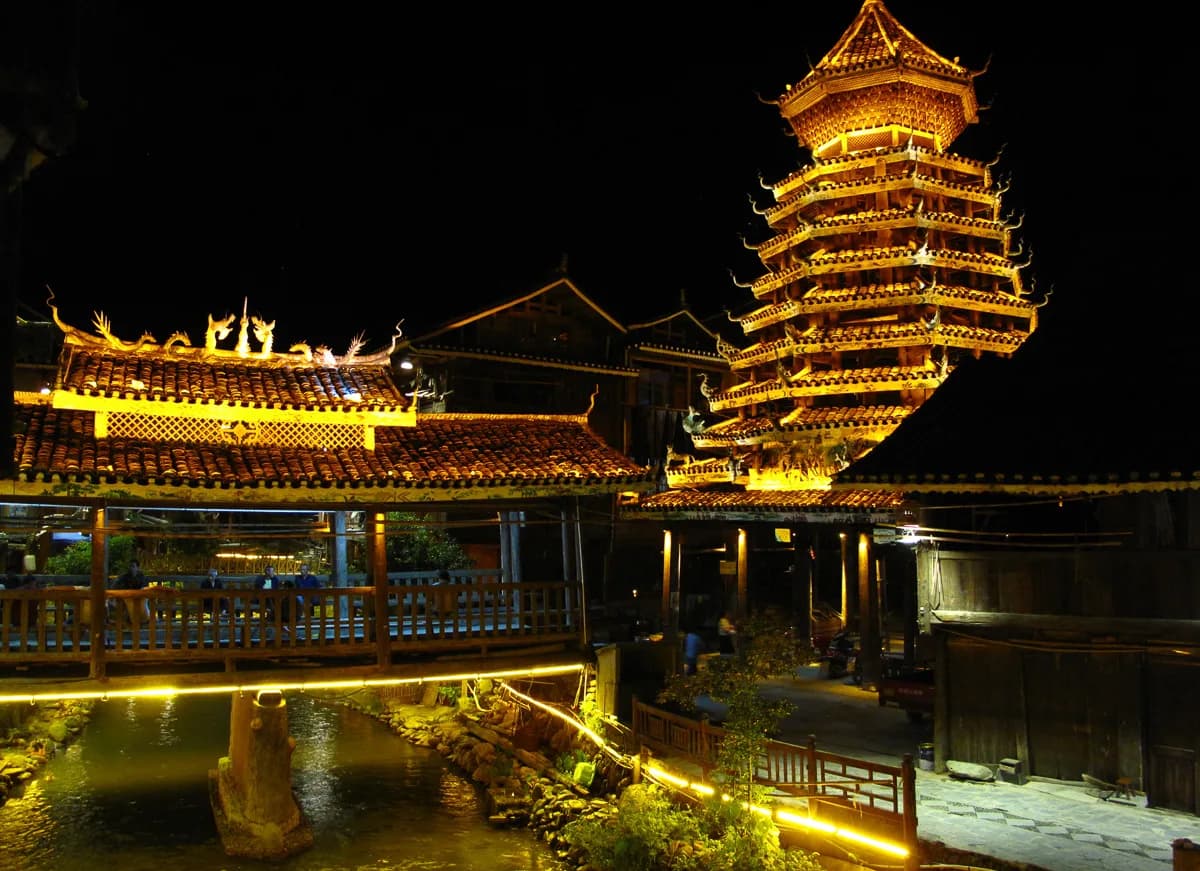
Evening is the argument for staying over, on this every recent report agrees. The drum towers and bridges are lit after sunset, warm light on dark timber rather than the neon some Chinese old towns default to, and the whole valley glows. The free Grand Song performance at the drum tower square around 8pm is the thing to build the evening around: village singing groups performing the UNESCO-listed polyphony they learned as children. The ticketed bonfire show (RMB 60-68) adds dancing and audience participation; travellers who did both generally call the free square performance the more affecting of the two. Then the day-trippers leave, the food stalls wind down, and the lanes go quiet in a way the noon crowds make hard to imagine.
The Tang'an rice terraces hike
Tang'an is a much smaller Dong village perched in stone-walled rice terraces high above Zhaoxing, and the trail between the two is the best walk in this corner of Guizhou. The terraces here are distinctive: built up with stone rather than clay because the slope is too steep for anything else, stacked several hundred metres up the mountainside. Tang'an itself has a fraction of Zhaoxing's tourism, and a recent TripAdvisor reviewer called it the highlight of their whole trip.
The route runs about 5.5-6.5 km depending on the path, and the consensus play in recent reports is to take the shuttle bus up from Zhaoxing (about RMB 20 per person each way, 20 minutes, roughly every half hour from 8am) and walk back down through the terraces in 1.5 to 2 hours. Hiking up instead is a solid climb of a few hundred vertical metres; allow closer to three hours with photo stops. Two practical warnings that repeat across accounts: the trail is not well marked, so load it on Maps.me or Amap before you start, and the stone paths get genuinely slippery after rain. Go early or late for the light on the terraces, spring for mirror-flooded paddies, autumn for gold.
Where to stay in Zhaoxing
Zhaoxing is compact, so this is less about distance and more about what surrounds you at night: lit towers, quiet lanes, or rice fields. Guesthouse standards have jumped in the last few years, with a wave of boutique openings alongside the family-run places. Budget rooms run about RMB 100-250, and the boutique tier sits around RMB 400-700 a night.
Stay in the drum-tower core if it is your first time and you want the village outside your window. The name that surfaces most in recent reviews is Creedside Inn, near Rentuan Drum Tower, praised for modern rooms, helpful staff and fair prices; Dong Tianjian Guesthouse gets similar marks for a central-but-soundproofed spot. The trade-off is evening noise from the shows and stalls until about 10pm.
Stay in the upper back lanes if you want quiet and a more local street scene one level above the commerce. Indigo Lodge is the standout here in English-language reviews, a charming design-led guesthouse whose owner speaks fluent English, which is rare and genuinely useful in a village where almost nobody else does.
Stay on the rice-field edge of the village if the view matters more than the two-minute walk to dinner. Newer panoramic places like Shanyu Panoramic Boutique Stay look across the roofs and paddies, and guesthouses at the top of the village put the Tang'an trailhead near your door.
Stay near Congjiang station only for a late arrival or dawn departure. The station area is functional and nothing more, and waking up inside the ticket gate, with the village to yourself before the coaches arrive, is most of the reason to come.
Travel-style picks
- First-timer: the drum-tower core, close to the night lighting and the 8pm Grand Song; accept the evening buzz.
- Budget: a family-run guesthouse in the upper lanes, roughly RMB 100-250, spending the savings on the bonfire show and a Basha car.
- Comfort: Indigo Lodge or one of the newer boutique stays on the rice-field edge; boutique here means well-designed timber rooms, not an international chain.
- Photographer or slow traveller: the rice-field edge, for terrace light at dawn without walking through town first.
When to go and how long to stay
The windows are the same as the rest of Guizhou: April to June, when the terraces are flooded and mirror-still, and September to November, when the rice turns gold and the harvest is on. November usually brings Dong New Year, the biggest festival in the Dong calendar and the best cultural timing of the year if the dates line up. Summer is green and lively but hot and busy; winter is misty, cold in wooden buildings, and very quiet. Hard avoid: Spring Festival, May Day and the October 1-7 National Day week.
Give it two nights. One night covers the towers, the evening singing and a morning walk. The second buys the Tang'an hike and Basha without rushing either. Zhaoxing also chains neatly into a longer eastern-Guizhou run: it pairs with Zhenyuan and Fanjingshan on the rail loop in my Guizhou itinerary, or continues seamlessly south to Guilin.
What Zhaoxing costs per day
| Item | Budget | Mid-range | Comfort |
|---|---|---|---|
| Room per night | RMB 100-250 | RMB 300-500 | RMB 500-900 |
| Food (3 meals) | RMB 60-100 | RMB 120-220 | RMB 250+ |
| Tickets (entry, bus, show) | RMB 100-130 | RMB 160-200 | RMB 250+ (with workshops) |
| Transport (from Guiyang) | RMB 150-250 | RMB 200-300 | RMB 400+ (private transfer) |
| Daily total | RMB 410-730 | RMB 780-1,220 | RMB 1,400+ |
Spread over a two-night stay the transport and ticket lines halve per day, so a comfortable trip from Guiyang lands around US$70-130 (NZ$115-215) per day all-in, and a backpacker version well under US$60.
Recommendations
- Stay at least one night; the reports that call Zhaoxing over-commercialised are almost all from midday day-trippers.
- Walk the lanes before 8am, when the market runs, the fires are lit and the tour coaches have not arrived.
- Take the bus up to Tang'an and hike down through the terraces, not the reverse, and never in jandals after rain.
- Catch the free 8pm Grand Song at the drum tower square before deciding whether you also want the paid bonfire show.
- Buy the bonfire show ticket through your guesthouse, which recent travellers report is cheaper than the gate price.
- Book Congjiang trains on 12306 or Trip.com a few days ahead; the Guilin-direction trains are few and sell out on weekends.
- Set up Alipay or WeChat Pay before arriving; rural Guizhou runs on QR codes and foreign cards are useless here.
- Ask your guesthouse to arrange the Basha car (about RMB 60 return) instead of hunting for transport at the station.
- Keep your entry ticket on you; it is checked on re-entry and covers three days, so do not bin it after day one.
Final note
I have not walked Zhaoxing's lanes yet, and I have written this so that fact stays visible. What the recent record shows clearly is a village at a specific moment: commercial enough to be easy, still real enough one street back to be worth the trip, and about to be found by the visa-free wave that is already lifting the rest of Guizhou. That is the window I would book. If you have been recently and the prices or trains have moved, tell me and I will update this, and I will rewrite it properly once I have heard the Grand Song from under a drum tower myself.
For the wider province, start with the Guizhou itinerary, add the river-town night in Zhenyuan, and if you are basing in the capital first, the things to do in Guiyang post covers the city end.
Frequently asked
Is Zhaoxing Dong Village worth visiting?
Yes, with eyes open. Zhaoxing is the largest Dong village in China, with five drum towers, wind-and-rain bridges and free nightly Grand Song singing, and it is now easy to reach by high-speed rail. The main street is heavily commercial, but recent visitors agree the back lanes and mornings are still a working village, and it remains noticeably calmer than Guizhou's famous Xijiang Miao village. Stay a night or two rather than day-tripping.
How do you get to Zhaoxing Dong Village?
Take a high-speed train to Congjiang station, which sits only about 7 km from Zhaoxing despite the name. From Guiyang it is roughly 1.5 hours (about RMB 140-220), from Guilin under an hour, and from Guangzhou South around 3.5 to 4 hours. At Congjiang station, frequent shuttle coaches and cheap taxis cover the last 15-20 minutes to the scenic-area gate. Book trains on the 12306 app or Trip.com.
How much is the Zhaoxing entrance ticket?
RMB 80 at the gate, and the ticket is valid for three days with multiple entries, so an overnight stay costs no more than a day trip. Online platforms often sell it slightly discounted. The sightseeing bus between the gate and the village core is about RMB 20 return, and evening bonfire shows run roughly RMB 60-68, though the 8pm Grand Song performance at the drum tower square is free.
Where should you stay in Zhaoxing?
Inside the village, not near Congjiang station. The drum-tower core puts the lit-up towers outside your window; Creedside Inn near Rentuan Drum Tower is the name that surfaces most in recent reviews. The upper back lanes are quieter and more local, with Indigo Lodge (English-speaking host) repeatedly recommended, and guesthouses on the rice-field edge of the village trade convenience for terrace views. Budget rooms start around RMB 100-250; boutique stays run RMB 400-700.
How hard is the Tang'an rice terraces hike?
Moderate, mostly because of the climb. Tang'an sits well above Zhaoxing, and the walking trail through the terraces runs about 5.5-6.5 km. The standard move in recent reports is to take the shuttle bus up (about RMB 20 per person each way, 20 minutes) and walk back down through the terraces in 1.5 to 2 hours. The path is poorly marked in places and slippery after rain, so wear proper shoes and load the route on Maps.me or Amap first.
How many days do you need in Zhaoxing?
One night minimum, two nights ideally. Day-trippers see the commercial main street at its busiest and miss the two best windows: the evening, when the drum towers light up and the free Grand Song performance starts, and the early morning, when the lanes belong to residents again. Two nights adds the Tang'an terraces hike and a side trip to Basha Miao village without rushing.
When is the best time to visit Zhaoxing?
April to June for water-filled terraces and September to November for golden rice, the same window as the rest of Guizhou. Late autumn adds the Dong New Year festivities, usually in November, the biggest cultural event of the year. Avoid Chinese national holidays (Spring Festival, May Day, October 1-7), when even remote villages fill up and room prices spike.