Day Trips from Guiyang (2026): 6 Ranked by Train Time and Cost
Huangguoshu in 30 minutes by rail, Qingyan for a half day, and the two trips to skip. Six Guiyang day trips ranked with 2026 train times, costs and honest calls.
The thing that surprised me most when I started using Guiyang as a base is how much the high-speed rail network has changed the day-trip maths: excursions that used to mean a 4-hour minibus are now a 30 to 60-minute train ride. That changes everything about how you plan. What follows is how I'd book them, with the train timetables and the logistics that actually trip people up once they land in Guizhou.
So this is a ranking and a logistics breakdown, not a diary. Six excursions, ordered by how often recent visitors say they were worth the day, with real costs, real travel times, and an honest "do it or skip it" call on each. If you want the in-city version first, the things to do in Guiyang post covers Jiaxiu Tower, Qianling Park and the rest. And if you have not actually reached Guizhou yet, there is a section further down on getting to Guiyang itself by high-speed rail from Beijing, Shenzhen, Kunming and Chengdu, because that leg decides more of your plan than people expect.
Day trips from Guiyang at a glance
Here is the shortlist, ranked, with the numbers that matter. Prices are per person in RMB (rough USD and NZD in the text below).
| Day trip | Distance from Guiyang | One-way travel | Rough day cost | Verdict |
|---|---|---|---|---|
| Huangguoshu Waterfall | ~130 km (via Anshun) | 30 min train + shuttle | RMB 250-450 | Do it (the headline) |
| Tianhetan Scenic Area | ~35 km | 30-40 min Didi/metro | RMB 120-220 | Do it (easiest nature day) |
| Qingyan Ancient Town | ~30 km | 40-60 min bus/Didi | RMB 100-180 | Do it (easy half-day) |
| Zhijin Cave | ~150 km | ~2 hr bus | RMB 250-500 | Do it if you love caves |
| Xijiang Miao Village | ~195 km | 3 hr bus / train + shuttle | RMB 300-600 | Overnight, not a day trip |
| Libo Xiaoqikong | ~210 km | ~1 hr train + shuttle | RMB 300-550 | Overnight if you can |
A quick conversion anchor: RMB 100 is roughly US$14 or NZ$23, RMB 400 about US$56 or NZ$92. Guizhou is cheap, so cost rarely decides the trip. Travel time does.
Huangguoshu Waterfall: the one to build a day around
This is the trip travelers consistently rate as worth it, and it is the reason most people add a day to their Guiyang stay. Huangguoshu is the largest waterfall in Asia, a 77-metre drop you can walk behind through the Water Curtain Cave. Recent reports describe the spray as so heavy you get soaked at the base, so a rain jacket is not optional.
The logistics are easier than the distance suggests. Take a high-speed train from Guiyang North to Anshunxi station, about 30 minutes for around RMB 47 (US$7). Turn right out of the station and you will find the travel-agency desk running tourist shuttles to the scenic area, roughly 40-50 minutes and RMB 25 one-way. Entry is RMB 160 in peak season (March to November) or RMB 150 off-peak, and the internal shuttle linking the three zones adds about RMB 50.
The scenic area splits into three parts: the Grand Waterfall itself, the quieter Doupotang falls downstream, and Tianxingqiao, a karst landscape of natural stone bridges and pools that several travelers call the most scenic stretch. Budget around five hours and expect 15,000-plus steps on paths kept permanently slick by mist. Verdict: do it. Of all the day trips from Guiyang, this is the one nobody seems to regret. A Huangguoshu day tour is worth pricing up if you would rather skip the transfers, especially on a weekend.
Tianhetan Scenic Area: the easiest nature day
If Huangguoshu is the headline and you only have a half day, Tianhetan is the move. It sits about 35 km southwest of the city in the Gui'an area, and recent visitors reach it in 30-40 minutes by Didi, or on metro line S1 to Tianhetan station followed by a 10-minute walk. Bus 211 also runs directly to the entrance.
The pitch in recent trip reports is that Tianhetan packs a sampler of Guizhou's karst scenery into one compact site: waterfalls, clear pools, caves and natural stone bridges, with the 1,000-metre Longtan water-and-dry cave system as the centrepiece. One traveler summed it up as a smaller-scale combination of Huangguoshu, Longgong and Huaxi in a single afternoon. The cave is the bit to plan around: the route pairs a walking section with a boat leg through the water cave, and the boat is what queues on weekends, so recent visitors consistently advise a weekday morning if you can manage it. Buy the combo ticket that includes the cave and boat at the gate rather than the bare entry, because the cave system is the point of the place; the full combo typically lands somewhere under RMB 100, and the dry-cave stairs are the only genuinely sweaty stretch.
It will not blow away anyone who has already seen the big waterfall, but as a low-commitment day with no train booking required, it earns its spot. Verdict: do it, especially if you are short on days or travelling with people who do not want a five-hour expedition.
Qingyan Ancient Town: the easy half-day
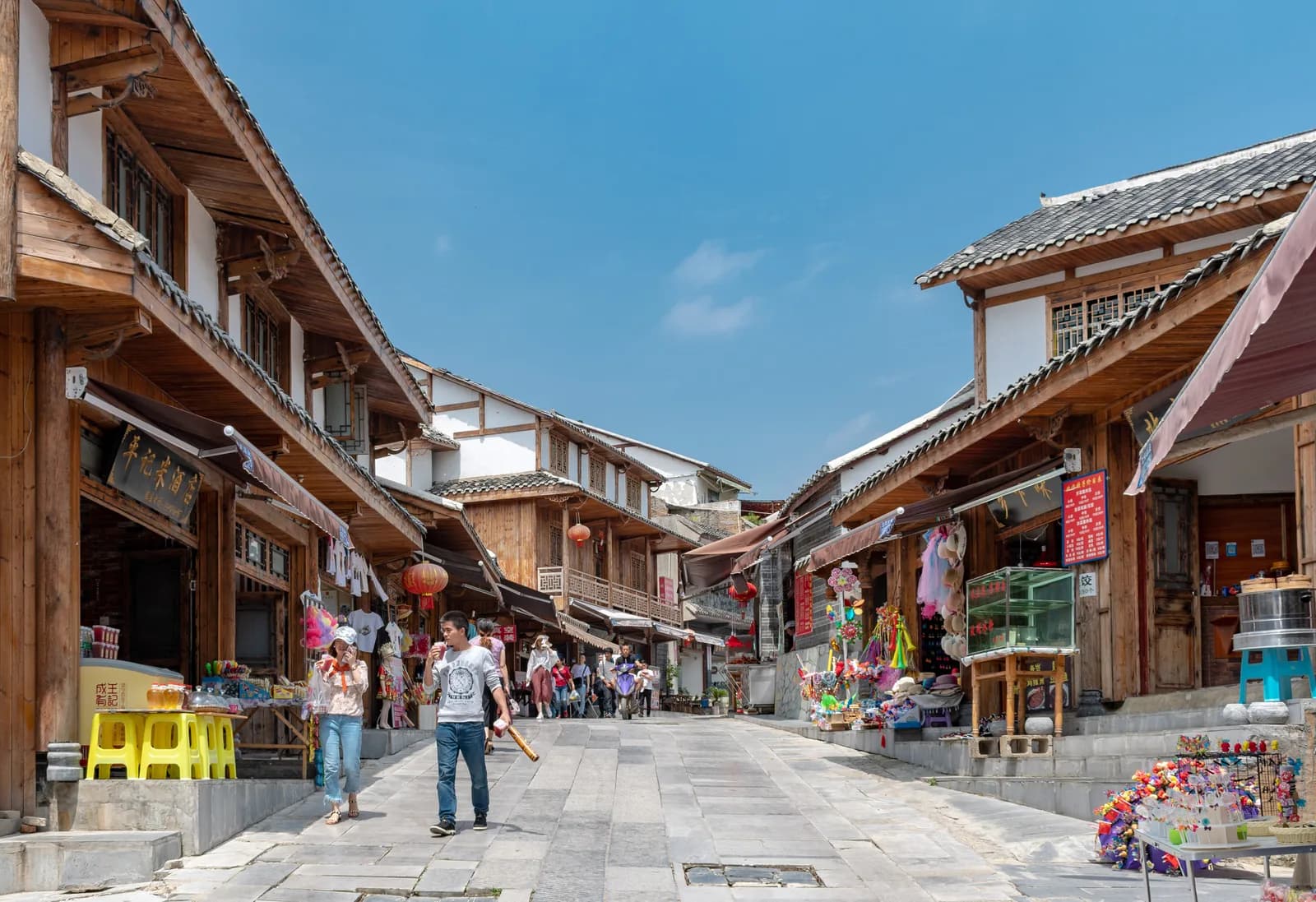
Qingyan is the day trip that suits a slow morning. It is a Ming-dynasty stone-walled town about 30 km south of Guiyang, roughly an hour out by Didi or local bus, and it is the one most first-timers pair with a relaxed lunch. Recent travelers are honest that it has become touristy, with souvenir shops and snack stalls filling the lanes, but the consensus is that the stonework, gates and street layout still carry the visit. The full route, tickets and what to eat there are in my Qingyan Ancient Town half-day guide.
Two practical notes that recent visitors keep repeating. First, the ticketing splits in two: a small fee (around RMB 10) gets you into the streets, while the through-ticket (roughly RMB 60) adds the Ming city wall and the courtyard sights, and the wall is the bit worth paying for — the walk along the southern stretch, looking down over the grey-tiled rooftops toward the karst hills, is the best photograph in the town. Second, timing: Qingyan is at its worst in the late-morning tour-group window and at its best toward late afternoon, so if you are pairing it with Tianhetan, do the nature site first and roll into Qingyan for the golden hour and an early dinner.
Go for the food as much as the architecture. Recent accounts single out the rose-sugar sweets, the Qingyan-style braised pig's trotters, tofu balls and bowls of iced jelly. It is an easy place to wander for two or three hours, which is why I would slot it alongside Tianhetan rather than treat it as a full day on its own. A guided Qingyan Ancient Town trip runs RMB 100-180 (US$14-25) and removes the slightly awkward public-transport leg, but DIY is genuinely fine here. Verdict: do it as a half-day, not a headline. For where it fits in a wider plan, see the Guizhou itinerary post.
Zhijin Cave: the long haul for cave lovers
Zhijin Cave is the wildcard. It is the largest show cave in China, spanning over 700,000 square metres across a dozen grand halls, and visitors routinely describe it as genuinely awe-inducing: lit stalactites, underground lakes, chambers tall enough to lose your sense of scale. The catch is the travel. There is no fast train, so you are looking at roughly two hours each way by long-distance bus from Guiyang's Jinyang or Qingzhen stations to Zhijin county (around RMB 45-50), then a local bus to the cave.
Inside, plan on two to four hours of walking, including one mid-route climb that recent reviewers flag as tough for older visitors. Admission is RMB 140 in peak season, RMB 120 off-peak. Add it all up and Zhijin is a genuine full day, often 11-12 hours door to door. Verdict: do it if you love caves and have a spare day, otherwise skip it in favour of Huangguoshu or Tianhetan. This is the one trip where an organised Zhijin Cave tour from Guiyang earns its fee, because the bus transfers are the weak point and a guide handles them for you.
Xijiang Qianhu Miao Village: book the overnight
Xijiang is the cultural heavyweight: the largest Miao ethnic-minority village in China, a thousand-plus wooden stilt houses stacked up two hillsides above a river in Leishan County, about 195 km from Guiyang. The recurring advice in recent traveler reports is blunt: do not do it as a day trip. The single best moment, the entire hillside lighting up after dark, only happens if you stay the night.
Getting there is straightforward. A direct bus from Guiyang East Bus Station runs at 09:00 and 15:00, about three hours for RMB 80 (US$11). Faster is a high-speed train to Kaili (30-60 minutes) and a shuttle onward to the village, roughly 1.5 hours total. Entry is RMB 100 plus a compulsory RMB 20 internal shuttle. If you are weighing how Kaili and the surrounding Dong and Miao villages fit a longer route, the Guizhou itinerary post lays out the multi-day version. Verdict: worth it, but as a one-night trip. A Xijiang Miao Village tour is the simplest way to get the long-distance transfer and a culture guide in one booking.
Libo Xiaoqikong: the nature trip the train unlocked
Libo Xiaoqikong is the one the high-speed rail genuinely transformed. The Guiyang to Libo run that used to take four hours by road is now about one hour by train for around RMB 65 (US$9), which suddenly puts Guizhou's first UNESCO World Natural Heritage site within reach. From Libo station a shuttle runs to the East Gate for RMB 10, about 25 minutes. Tickets are RMB 120 peak or RMB 100 off-peak, plus a mandatory RMB 40 internal shuttle because the area is huge.
Travelers describe Xiaoqikong (the "small seven-arch bridge") as the prettiest water-and-forest scenery in the province: jade-green pools, layered cascades, limestone arches. The honest caveat is scale. Visitors who spent two full days across Xiaoqikong and the larger Daqikong still did not see everything, so a single day is tight. Verdict: a day trip works if you start early, but if you can spare a night in Libo, do that instead. It is the strongest pure-nature day after Huangguoshu.
The Kaili direction: Zhenyuan and the eastern add-ons
Everything ranked above points west and south of the city. The direction I get asked about most, though, is east, because the Guiyang to Kaili train is absurdly quick: roughly 60 high-speed departures a day from Guiyang North to Kaili South, most taking 35-40 minutes for around RMB 60 (US$8) in second class. Kaili itself is a working prefecture city rather than a sight, but it is the gateway to the Miao and Dong village country (Xijiang included), and it is the jumping-off point for Zhenyuan, a 2,000-year-old town threaded along an S-bend of the Wuyang River that several recent travelers rate as the prettiest and least commercial ancient town in the province.
Honest call: Zhenyuan is not a day trip, and I am including it here mostly so you do not try. The direct trains from Guiyang are the slow conventional services at around four hours, and the faster combination — high-speed to Kaili South, then a local train or bus for the final leg, roughly another hour and a half — still burns too much daylight to justify a same-day return, especially since the riverside lighting after dark is half the reason to go. Treat it as one night minimum. The full logistics, including which station to use and where to sleep by the river, are in the Zhenyuan Ancient Town guide.
Further east again is Fanjingshan, the UNESCO-listed mountain with the rock-spire temples that look photoshopped and are not. It is about 1.5-2 hours by high-speed rail toward Tongren, then a bus to the mountain gate, so the same verdict applies: too far for a day trip from Guiyang, excellent as an overnight extension. The daily visitor cap and real-name booking system catch foreign travelers out constantly, which is exactly what the Fanjingshan guide for foreign visitors walks through. If you are stringing Kaili, Zhenyuan and Fanjingshan into one eastward run before looping back, that is the route the Guizhou itinerary is built around.
Tours or do-it-yourself?
The honest split, from recent reports: DIY is easy and cheap for Huangguoshu, Tianhetan, Qingyan and Libo, all of which lean on the train-plus-shuttle system that runs without a word of Mandarin. Book the high-speed seats a few days ahead on Trip.com or 12306 and you are sorted.
Tours earn their keep for Zhijin Cave and the Miao villages, where the transfers are clunky and a guide adds context you cannot get yourself. Expect RMB 100-600 (US$14-84) per person depending on the trip and the group size. Compare a Guiyang day tour search against the DIY cost before you book; for the easy trips the saving is real, for the awkward ones the convenience usually wins.
Getting to Guiyang: high-speed rail from Beijing, Shenzhen, Kunming and Chengdu
None of the above matters until you are actually standing in Guiyang, so here is the arrival maths, checked against current timetables as of August 2026. All four routes land at Guiyang North or Guiyang East, both on the metro and both covered in the where-to-stay section below. The one-line summary: from Kunming, Chengdu or Shenzhen, take the train without a second thought; from Beijing, think hard about flying.
| Route | Fastest train | Typical range | 2nd-class fare | Verdict |
|---|---|---|---|---|
| Beijing to Guiyang | ~8 hr | 8-12.5 hr | RMB 709-1,093 | Fly, or take the sleeper |
| Shenzhen to Guiyang | ~4 hr | 4.5-5.5 hr | RMB 400-450 | Train wins |
| Kunming to Guiyang | ~2 hr | 2-3 hr | RMB 140-160 | Train, easily |
| Chengdu to Guiyang | ~3 hr | 3-4 hr | RMB 235-320 | Train wins |
Beijing to Guiyang
This is a 2,297 km haul, so set expectations accordingly. The daytime G trains run from Beijing West to Guiyang North in 8 to 12.5 hours depending on stops, with second class at RMB 709-1,093 (US$99-153). There are also overnight D-class sleeper services on select nights (currently Friday through Monday), which are the clever play if you would rather trade a hotel night for a bed on rails and wake up in Guizhou. That said, most travelers fly this one: it is about 3.5 hours in the air and often cheaper than a first-class rail seat. Take the train if the journey is part of the point; fly if Guiyang is the point.
Shenzhen to Guiyang
Around 13 high-speed services a day leave Shenzhen North, the fastest doing it in just over 4 hours and most sitting in the 4.5-5.5 hour band, with second class at roughly RMB 400-450 (US$56-63). Departures run from early morning to mid-afternoon, and once you factor in airport transfers and security on both ends, the train is genuinely competitive with flying door to door — with better legroom and a rolling preview of the karst country you came for.
Kunming to Guiyang
The easy one. Guiyang and Kunming sit on the same Shanghai-Kunming high-speed line, and around 39 bullet trains a day make the run from Kunming South, the fastest in about 2 hours and most within 2-3, for roughly RMB 140-160 (US$20-22) in second class. This is the leg that makes a Yunnan-Guizhou combination trip trivial, and it is exactly how I would sequence it: Kunming's spring weather, then the train east into the karst.
Chengdu to Guiyang
The Chengdu-Guiyang high-speed line has made this pairing painless: something like 85 trains a day, the fastest around 3 hours and most within 3-4, second class at RMB 235-320 (US$33-45), departing mostly from Chengdu East. If your China route is the classic pandas-then-somewhere-less-visited arc, this is the somewhere: half a day of travel and you have swapped Sichuan's crowds for Guizhou's empty karst valleys.
Booking works the same on every route: Trip.com or the 12306 app a few days ahead (further out for holidays), your passport is your ticket, and 30 minutes of buffer at the station covers the ID checks. The same accounts then handle every day-trip train in this post.
Where to stay in Guiyang for day trips
Where you sleep changes your day-trip mornings more than most people expect, because the two launch points (Guiyang North high-speed rail station and the East Bus Station) sit on opposite sides of a big city. Pick a zone within metro reach of the station you will use most. For the full breakdown, the where to stay in Guiyang guide goes zone by zone.
Stay in Nanming if you want the old-town riverside, the densest food streets and an easy first night, accepting that you will metro out to Guiyang North on day-trip mornings. Pick Guanshanhu if day trips are your priority: the high-speed rail station for Anshun, Kaili and Libo is right here, and the newest international hotels cluster around it. Choose Yunyan for the modern coffee-and-mall Guiyang and central metro access, or Huaxi in the south if you are leaning toward Qingyan and Tianhetan and want a quieter, cheaper base.
Travel-style picks: first-timers should base in Nanming for walkable food and still-easy metro hops. Budget travelers also want Nanming, on the side streets back from the river where rooms start around RMB 180-280 (US$25-40). Comfort and HSR-focused travelers should book Guanshanhu for the station access and the Hilton and Hyatt-tier hotels. Coffee tourists or families wanting space fit Yunyan, with the Captain George coffee scene on the doorstep.
Day-trip launch points and when to go
Almost every long day trip leaves from Guiyang North Railway Station in Guanshanhu, on metro lines 1 and 3. The bus-only trips (Zhijin Cave, the cheaper Miao village run) leave from Jinyang or the East Bus Station instead, so check which station your trip uses the night before. Install Didi before you arrive and set up Alipay or WeChat Pay with a foreign card linked, because cash is close to useless and conventional taxis will not take a foreign card.
Timing matters more here than in the city. Recent visitors are unanimous: visit in spring (March to May) or autumn (September to October) for clear skies, green countryside and manageable crowds. Summer is the rainy season, which actually means fuller waterfalls but slippery paths and afternoon downpours. The hard rule across every report is to avoid the Chinese national holidays, Spring Festival, May Day (early May) and National Day (October 1-7), when day-trip queues triple and scenic-area shuttles back up for hours. The first impressions of Guiyang post covers the seasonal feel of the city itself.
Recommendations
A short list of things I would want a Kiwi friend to know before booking these out of Guiyang:
- Book high-speed rail seats 3-5 days ahead on Trip.com or 12306 for Anshun, Kaili and Libo. Day-trip trains sell out faster than you would expect, especially morning departures.
- Take the first train out. Every worthwhile trip here is 5-plus hours on site, and the last shuttles back to the stations stop running mid-evening. An early start is the difference between seeing everything and rushing.
- Pack a rain jacket for Huangguoshu even on a dry day. The spray behind the falls and inside the Water Curtain Cave soaks people regardless of weather, and the paths stay slick.
- Wear grippy waterproof shoes. The waterfall, cave and karst sites all involve thousands of wet stone steps, and recent visitors flag the slip risk repeatedly.
- Treat Xijiang Miao Village as an overnight, not a day trip. The illuminated hillside after dark is the whole point, and a same-day return means a six-hour round trip for the daytime version only.
- Stack the short trips. Qingyan and Tianhetan are both half-days close to the city, so pair them on one day and save a full day for Huangguoshu or Libo.
- Pre-book entry where you can in peak season. Several sites cap daily numbers, and turning up without a ticket on a March-to-November weekend can mean a long wait or a sold-out gate.
- Carry your passport. Train stations and some scenic-area ticket gates check it, and high-speed rail boarding is tied to it.
- Skip Zhijin Cave if your days are tight. It is excellent but it is a genuine full day with slow bus transfers, and the payoff per hour is lower than the train-served trips.
Final note
The short version: build a day around Huangguoshu, fill a half-day with Qingyan and Tianhetan, and if you have a third day, give it to either Zhijin Cave (cave people only) or an overnight at Xijiang or Libo. The high-speed rail has quietly turned Guiyang into one of the better day-trip bases in southwest China, and most of the friction is in the planning, not the doing.
Prices, train times and shuttle setups shift, so if you're reading this months on, double-check the current numbers before you commit. The things to do in Guiyang post, the Guiyang food guide and the full Guizhou itinerary cover the rest of the trip around these excursions.
Frequently asked
What is the best day trip from Guiyang?
Huangguoshu Waterfall is the headline day trip and the one most recent travelers rate as worth the effort. It is the largest waterfall in Asia, reachable by a 30-minute high-speed train to Anshun plus a shuttle. If you only have a half day, Qingyan Ancient Town or Tianhetan are the easy wins closer to the city.
How do you get to Huangguoshu Waterfall from Guiyang?
Take a high-speed train from Guiyang North to Anshunxi station (about 30 minutes, around RMB 47), then a tourist shuttle bus from beside the station to the scenic area (40-50 minutes, around RMB 25 one-way). An organised tour from Guiyang bundles the transport and entry and removes the transfers, which is why many travelers book one.
Can you do Xijiang Miao Village as a day trip from Guiyang?
Technically yes, but most recent visitors advise against it. It is roughly 195 km away (about 3 hours by direct bus, or a high-speed train to Kaili plus a shuttle). The night view of the illuminated hillside is the highlight, and a day trip means you miss it. Treat it as an overnight.
Is Zhijin Cave worth it from Guiyang?
Zhijin Cave is the largest show cave in China and consistently impresses visitors, but it is a long haul, around 2 hours each way by bus with no fast train. It works if you love caves and have a full day to spare. If your days are tight, Tianhetan or Huangguoshu give you more for less travel time.
How many days do you need for day trips around Guiyang?
Two to three days of excursions covers the best of it. One day for Huangguoshu, one for Qingyan plus Tianhetan, and a third for either Zhijin Cave or an overnight to Xijiang Miao Village. Libo Xiaoqikong is best as its own overnight rather than a rushed day trip.
Which day trips from Guiyang work by high-speed rail alone?
Huangguoshu Waterfall is the cleanest rail play: 30 minutes from Guiyang North to Anshunxi (around RMB 47), then the tourist shuttle from beside the station. Libo Xiaoqikong is about an hour on the train plus a shuttle. Xijiang Miao Village pairs a train to Kaili with a shuttle but really wants an overnight. Zhijin Cave and Tianhetan are the bus trips — no fast train — which is why Tianhetan's short transfer makes it the best no-booking-required option.
Are organised tours or DIY better for Guiyang day trips?
DIY is cheap and very doable for Huangguoshu, Tianhetan and Libo thanks to the high-speed rail and shuttle systems. Organised tours win for Zhijin Cave and the Miao villages, where transfers are awkward and a guide adds real context. Cost is roughly RMB 100-600 per person depending on the trip.
How do you get to Guiyang from Beijing?
Daytime high-speed trains run from Beijing West to Guiyang North in about 8 to 12.5 hours, with second class around RMB 709-1,093, and overnight D-class sleepers run on select nights. It is a long haul, so most travelers fly instead: about 3.5 hours in the air, often for less than a first-class rail fare. From Shenzhen (4-5.5 hours), Kunming (2-3 hours) or Chengdu (3-4 hours), the train is the better call.
How long is the train from Guiyang to Kaili?
About 35-40 minutes on the high-speed line from Guiyang North to Kaili South, for roughly RMB 60 second class, with around 60 departures a day. Kaili is the gateway to the Miao and Dong village country and the transfer point for Zhenyuan Ancient Town, though both really want an overnight rather than a same-day return.