Where to Stay in Guiyang, China: A Real Comparison of Every Zone
Where to stay in Guiyang, China: honest comparison of Nanming, Yunyan, Guanshanhu, and Huaxi, with hotels in each. From a Kiwi visiting family.
China Has the Best Coffee in the World and Nobody Is Talking About It
Captain George coffee was supposed to be the kind of place you walk into, order, sit down. Forty minutes later, my phone lit up with the order-status screen, and I realised the wait was real. I walked out, ducked into the cold-brew shop next door for a $5 NZD bridge coffee, and used the extra hour to wander the area: an "American-inspired" mall strip with elevated pedestrian crossings overhead, fancy outdoor seating, more Shiba Inu prints than I've seen anywhere outside Tokyo. Guiyang is my mum's hometown, but standing under those bridges drinking cold brew, it didn't look like the city she'd described. It looked like somewhere being rebuilt in real time.
That's the where-to-stay question in Guiyang in one image: a city that used to be one of the poorest in China, now hosting international coffee championships, and the part of town you sleep in will decide which version of it you actually see. Old-town riverside, glass-tower business district, university-park sprawl, modern mall scene with the coffee fanatics. They're not the same trip. Before you copy whatever the booking app surfaces first, here's what each zone is actually like, with the trade-offs spelled out for first-timers, diaspora visitors, and people who just came for the food.
Why your zone choice in Guiyang matters
Three things about Guiyang most posts skip:
The city is bigger than it looks on a map. Greater Guiyang is roughly 8,000 km² with around 6 million people, and the central districts (Nanming, Yunyan) blend into the newer Guanshanhu without obvious borders. A 10-minute taxi from your hotel to a restaurant is closer to 25 in real-world traffic, especially during the weekday morning crunch.
The metro is genuinely good but doesn't yet reach everything. Lines 1, 2, and 3 cover the city centre, the airport, and the high-speed rail station; the south end (Huaxi) is connected via Line 3, but the deeper attractions need bus or taxi. Pick a zone within walking distance of a metro stop and you'll save hours.
The food zones and the modern zones are not the same place. Real Guizhou cooking (sour-fish hotpot, miǎn fěn rice noodles, stuffed lǔ dumplings) is densest in Nanming and the older parts of Yunyan. Coffee culture and the international chains live around the Yunyan-Guanshanhu boundary. Pick wrong and you'll spend half your trip in a Didi crossing town for dinner. The first-impressions of Guiyang post covers the eating side in more detail.
The four Guiyang zones at a glance
| Zone | Best for | Walk to centro food | Metro access | Price tier |
|---|---|---|---|---|
| Nanming / Jiaxiu Tower | First-timers, foodies, riverside walkers | 0 min | Yes (Line 1) | $-$$ |
| Yunyan / Qianling Park | Coffee scene, modern malls, day-to-day buzz | 5-15 min | Yes (Lines 1, 2) | $$ |
| Guanshanhu (new district) | Business, HSR access, families needing space | 20-30 min by metro | Yes (Lines 1, 3) | $$-$$$ |
| Huaxi (south) | Quiet, parks, university feel, southern day-trips | 30-40 min by metro | Yes (Line 3) | $-$$ |
Where to stay in Guiyang, your real options
Four zones worth comparing, each suited to a different traveller. Picks below draw on traveller reports from the last 18 months plus my own time in the city.
Nanming District around Jiaxiu Tower, stay here if you want to walk to the historic core, the river, and the dense food streets without thinking about it. Jiaxiu Lou (the iconic three-tier riverside tower) is right here, the Dashizi and Xiaoshizi commercial squares are a 10-minute walk, and the densest cluster of mid-range hotels and a few boutique places sits along this stretch. This is the easiest zone for a first trip: you can metro to the rest of the city, walk to most of your meals, and still be in bed by 10pm without a Didi. Trade-off: it's the loudest zone in the evenings, and weekend traffic by the river can be brutal.
Yunyan District around Qianling Park, stay here if you want the modern Guiyang: the international coffee shops, the newer malls, the upmarket chain hotels. This is where the Captain George coffee scene lives, where the elevated pedestrian crossings carve up the streets, and where my hotel for this trip ended up. Qianling Park (the macaques are real, bring no food in your hand) is a 10-15 minute walk from most Yunyan hotels. Trade-off: less of the old-town riverside character, more glass-tower commercial sprawl, and if it's your only Guiyang stop you might miss the food culture that made the city worth visiting in the first place.
Guanshanhu New District, stay here if you arrived by high-speed rail and want a modern, quieter base, or if you're combining Guiyang with onward travel that needs the HSR station. Guanshanhu is the political-administrative northwest, with the Guizhou Provincial Museum, Guanshanhu Park, and the bulk of the newest international hotels (Renaissance, Hilton, Hyatt Regency). The Guiyang North HSR station sits right here. Trade-off: you're 20-30 minutes by metro from the old-town food density, and the streets are wider, leafier, and a bit dead at night.
Huaxi District (south), stay here if you want a quieter, more nature-leaning Guiyang and you're using the city as a base for southern day-trips. Huaxi Park (the Scenic Resort with the waterfalls and the karst-formation walks) is here, the Guizhou Minzu University campus gives the area a student-town energy, and the prices drop noticeably from the centre. Trade-off: you're committing to a longer commute for almost any city-centre activity. Most travellers don't pick this zone for their whole stay; pair it with two nights in Nanming if you want the full picture.
Travel-style picks
If you're picking on autopilot, here's the shortlist:
If you're a first-timer, stay in Nanming around Jiaxiu Tower. Walkability to food and the river is worth more than a modern lobby, and you can still metro out to the coffee scene or Guanshanhu when you need to.
If you're on a budget, also Nanming, on the side streets a few blocks back from the river. Budget hotels and decent business chains start around RMB 180-280 (US$25-40) per night. The cheap-eats around Dashizi and the Nanming River walking street run RMB 20-40 per meal.
If you want comfort or business, Guanshanhu New District. Hilton, Hyatt Regency, and Renaissance all sit here, with predictable international service, real gyms, and the easiest HSR-station access in the city.
If you're a diaspora visitor heading to family, ask your relatives first. Guiyang families tend to live in specific districts (often the older parts of Yunyan or in newer suburbs out toward Huaxi); staying within metro range of where they actually live beats picking a tourist zone they'll need to drive to. My mum's side is from a Yunyan neighbourhood, and being 15 minutes by Didi from family changed the whole rhythm of the trip.
If you're a coffee tourist, Yunyan around the Captain George area. The cluster of specialty shops and the modern mall stretch is here, and you can walk between five or six championship-grade cafes in an afternoon. The Captain George deep-dive covers whether the 2025 best-coffee-in-the-world title is real.
Things to do in Guiyang and the day trips to book in advance
The city itself anchors a 2-3 day visit; the wider Guizhou province is what makes a 5-7 day trip. Most travellers settle into 2-3 days in town with one or two day trips out into the karst countryside.
- Jiaxiu Tower on the Nanming River. The three-tier riverside pagoda is the visual anchor of the city. Walking access is free, the riverside walkway is open all day, and the evening lighting is the photo move.
- Qianling Park, 5 RMB entry. Famously full of wild macaques, who will absolutely steal a snack out of your hand. Hongfu Temple sits at the top of the hill, decent climb, good views.
- Qingyan Ancient Town day trip, around 100-180 RMB on a guided tour. Ming-dynasty stone-walled town about 30 km south of the city. Best half-day trip from Guiyang.
- Huangguoshu Waterfall day or overnight trip, the largest waterfall in Asia, about 130 km southwest of Guiyang. Most travellers do this as a 1-2 day trip combined with Longgong Cave and Tianlong Tunpu Ancient Village.
- Miao and Dong ethnic-village day trip out to Kaili and the Qiandongnan villages. Half-day to multi-day, depending on how deep you go. The single most under-rated cultural experience in Guizhou.
- Guizhou Provincial Museum, free entry, in Guanshanhu. Strong on ethnic-minority artefacts and the province's natural history.
- Hebin Park riverside walk, free, evenings only. Locals doing tai chi, fan dancing, riverside karaoke.
If you book one paid day trip, book the Huangguoshu Waterfall or a Miao village tour. They get crowded on weekends and during Chinese national holidays.
Day-trip comparison from Guiyang
If you've got 2-3 days in the city and want to pick one day trip:
| Day trip | Cost (RMB) | Round-trip time | Best for | Crowd factor |
|---|---|---|---|---|
| Qingyan Ancient Town | 100-180 | Half-day | History, photographers, food | Medium |
| Huangguoshu Waterfall | 250-450 | Full day | Waterfall hunters, nature | High weekends |
| Longgong Cave | 150-250 | Half to full day | Karst cave systems | Medium |
| Tianlong Tunpu Ancient Village | 120-200 | Half-day | Cultural / history | Low |
| Miao village (Kaili) | 300-600 | Full to overnight | Ethnic-minority culture | Lowest |
If you can only do one and it's your first visit, Qingyan Ancient Town for the half-day. If you have a full day, Huangguoshu Waterfall for the sheer scale. If you want the most under-rated experience, Miao village for the cultural depth.
Getting there and getting around
Most travellers arrive at Guiyang North Railway Station (in Guanshanhu) by high-speed rail. Beijing-Guiyang takes 8-9 hours direct, Shanghai-Guiyang is 10 hours, Guangzhou-Guiyang is 4-5 hours. Tickets are 600-1,400 RMB depending on class. Book on the Trip.com app or 12306 a few days ahead; sleeper trains on this route are now mostly replaced by daytime HSR.
If you're flying, Guiyang Longdongbao International Airport (KWE) sits 11 km southeast of the city. Direct flights from Beijing, Shanghai, Guangzhou, Shenzhen, Chengdu, and Bangkok. The Airport Bus into the main railway station runs every 30 minutes, 25 RMB, takes 40 minutes. Didi to a downtown hotel is 60-80 RMB and faster. Metro Line 2 now also serves the airport, 5-7 RMB to the centre.
For getting around inside Guiyang, the metro (Lines 1, 2, 3) covers the bulk of where you'd actually go. Buses are extensive but Mandarin-only on the signage. Didi is the default; install it before you arrive. Don't bother with conventional taxis; they don't take foreign cards and the metered fares often run higher than Didi.
When to go
Pick the right months and Guiyang is a 25°C-and-clear walking city. Pick the wrong ones and you're under a near-constant drizzle.
- March-May (spring): best window. 15-22°C, low rain, the karst countryside is green and the city is comfortable.
- June-August (summer): rainy season, monsoon peaks in late June and July. Cool by Chinese summer standards (rarely 30°C), worth it if you can plan around afternoon showers.
- September-November (autumn): second-best window. Clear skies, crisp air, low humidity, ideal for day trips out into the province.
- December-February (winter): damp, foggy, cold (5-12°C). Doable but the worst of the four windows.
Avoid Chinese national holidays (Spring Festival in late January or February, May Day in early May, National Day October 1-7) unless you genuinely want crowds the size of Disneyland. Booking-app prices double, day-trip queues triple.
Budget breakdown (rough daily costs in USD)
A sense of what a Guiyang trip actually costs by traveller type:
| Item | Backpacker | Mid-range | Comfort |
|---|---|---|---|
| Accommodation per night | $25-40 (budget hotel/B&B) | $50-90 (mid-range hotel) | $130-250 (Hilton/Hyatt tier) |
| Meals (3/day) | $10-15 | $20-35 | $45-75 |
| Day trip / activity (avg) | $0-20 | $30-60 | $80-150 |
| Metro / Didi per day | $3-5 | $5-10 | $15-25 |
| Daily total | $38-80 | $105-195 | $270-500 |
For a 3-night Guiyang-only trip, a backpacker can land under $250 USD all-in. A mid-range trip is more like $450-650 USD. Comfort trips climb to $900-1,500 USD for the same length.
Recommendations
A short list of things I'd want a Kiwi friend to know before they went:
- Set up Alipay or WeChat Pay before you fly. Link a Visa or Mastercard inside the app. Cash works but you'll feel like the only person in the city using it.
- Get an eSIM that handles China-mainland (Airalo or Holafly both work). The free wifi is patchy and you don't want to be stuck unable to pay a Didi at midnight because your hotel wifi dropped. In some of the modern coffee blocks in Yunyan the eSIM signal cuts out, so back up with an offline payment QR.
- Download Pleco for translating menus and street signs. The camera-translate is genuinely good, and Mandarin character coverage outclasses Google Translate in restaurants.
- Use the metro for cross-city moves. Lines 1, 2, and 3 cover most of where you'll go, and a single ride is 2-7 RMB versus 30-80 RMB by Didi.
- Eat in Nanming and the older parts of Yunyan, not the modern malls. The real Guizhou cooking (sour-fish hotpot, miǎn fěn noodles, the spicy lǔ flavour profile) sits in family-run streetside spots, not in the chain restaurants on the mall food courts.
- Bring a hoodie even in summer. Guiyang sits around 1,070 m elevation, the evenings cool fast, and the metro and mall AC runs colder than makes sense.
- Carry a small backpack at Qianling Park, not a tote. The macaques will grab anything they think might be food, and a zipped bag is the only defence.
- Film from the elevated pedestrian crossings in the modern zones if you're shooting on a GoPro or an iPhone. Sunset shots from the bridges over the Yunyan commercial strip are the best b-roll in the city.
- Buy your HSR onward tickets early. If you're heading to Kunming, Chongqing, or Chengdu after Guiyang, book the seats 3-5 days ahead. Last-minute HSR seats sell out faster than the airline equivalent.
- Visit a family member's kitchen if you have one. The single biggest unlock of a Guiyang trip if you're diaspora is dinner with relatives. The street food is great; the home cooking is on a different level.
Final note
Guiyang surprised me. The version my mum talked about, a small poor mountain capital that never made it onto the tourist circuit, isn't gone, but it's no longer the dominant story. The version I walked through in the modern coffee blocks, championship coffee at $10 a cup, elevated walkways over hectic streets, Hyatt and Hilton dropping into a city that didn't have them ten years ago, that's the new one. Pick the right zone and you can see both: stay near Jiaxiu Tower for two nights and feel the older Guiyang, switch to Yunyan or Guanshanhu for one or two more and feel the rebuilt one.
If you've made it this far and want the other angles, the Captain George coffee deep-dive covers the 40-minute wait and whether the title is real, and the first-impressions of Guiyang post covers everything that surprised me about the city in 24 hours. If you're coming from elsewhere in our travel cluster, the Bacalar where-to-stay deep-dive and the Cartagena equivalent walk the same zone-by-zone logic for those two cities, and the first-time Japan guide is the closest cousin to this post in "Asia trip prep for first-timers".
Frequently asked
Where's the best area to stay in Guiyang for first-time visitors?
The Nanming District core around Jiaxiu Tower and the Nanming River. It puts you walking distance from the old-town riverside, the Dashizi commercial strip, and the dumpling-and-noodle streets that make a first night easy. Mid-range hotels and a few boutique places cluster here, and you can still metro out to the modern coffee zone in Yunyan or to Guanshanhu when you need it.
How many days do you need in Guiyang?
Two to three days for the city itself, four to five if you want to do Huangguoshu Waterfall and a Miao village day trip. One day barely covers Qianling Park, Jiaxiu Tower, and a meal. Two days lets you add Qingyan Ancient Town and the coffee scene. Anything longer should pair Guiyang with the wider Guizhou province.
Is Guiyang safe for foreign tourists?
Yes. Guiyang is genuinely safe by both Chinese and international standards. Standard big-city precautions apply: watch bags on the metro, don't flash cash, use Didi after dark. Foreigners are rare enough that you'll attract curious looks, especially outside the tourist core, but it's friendly attention, not threatening.
Do I need to speak Mandarin to travel in Guiyang?
English signage and English-speaking staff are thin outside upper-tier hotels. You'll get by with a translation app, but expect more pointing and pantomime than you would in Beijing or Shanghai. Download Pleco for menus, set up WeChat translate, and you'll be fine for most situations.
What's the best time to visit Guiyang?
March-May (spring) and September-November (autumn) are the cleanest windows: 15-25°C, low rain, no monsoon. Summer (June-August) is the rainy season but stays cool, rarely above 30°C, so it's tolerable if you can plan around showers. Winter is damp and cold, doable but the bottom-tier choice.
How do I get from Guiyang airport to the city?
Guiyang Longdongbao International Airport (KWE) is about 11 km from the city centre. The Airport Bus runs to the main train station for around RMB 25, takes 40 minutes. Didi is faster at 25-30 minutes and runs RMB 60-80. Metro Line 2 also serves the airport now, RMB 5-7 to downtown, slightly slower but cheapest.
Can I pay with foreign credit cards in Guiyang?
Sometimes at upper-tier hotels, otherwise rarely. Alipay and WeChat Pay dominate everything, including the corner shop and the street-side coffee stand. Link a foreign card to either app before you arrive (both now accept Visa and Mastercard for international travellers) and you'll skip nearly every payment headache.
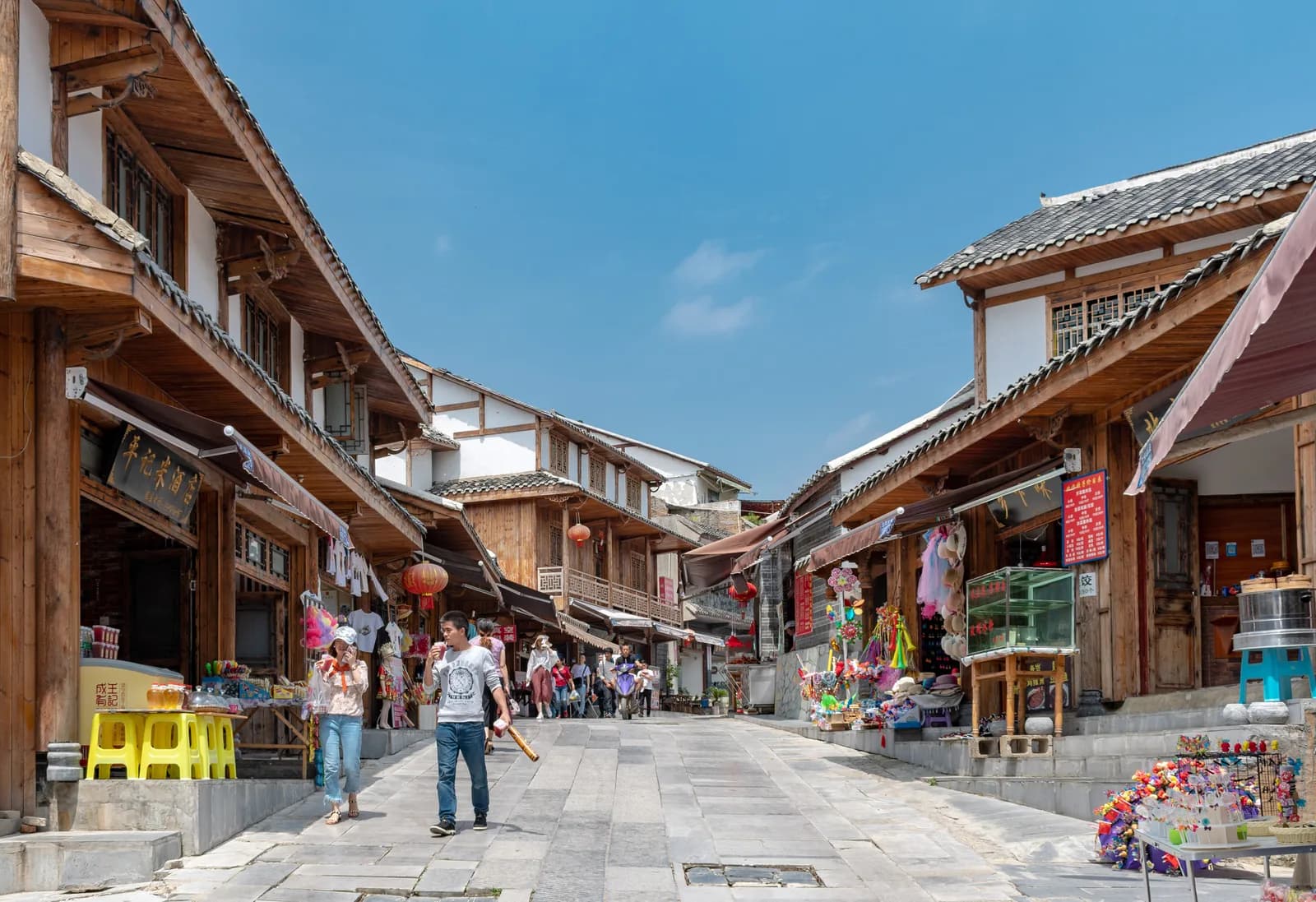
 14:06
14:06China's Most Under Rated Mega City - Walking the Streets of Guiyang 🇨🇳
 16:30
16:30Getting Drunk in China's Secret Capital City that NO ONE Knows About 🍻🇨🇳 — Guiyang Nightlife
 14:11
14:11China's Capital City That Nobody Talks About 🇨🇳 — Guiyang Surprised Me
 6:47
6:47