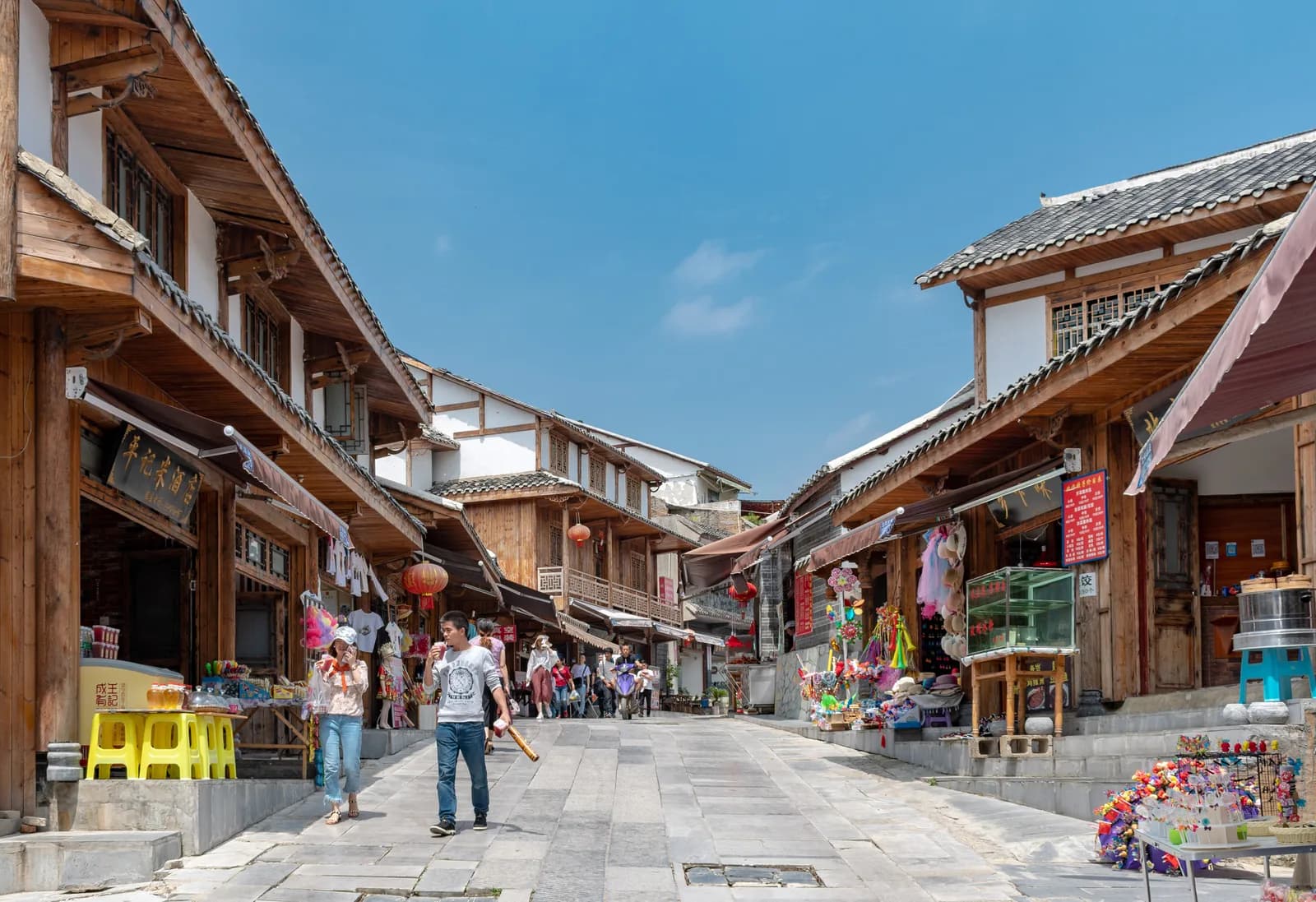
Guizhou Itinerary: A 7-10 Day High-Speed-Rail Loop from Guiyang
A realistic 7-10 day Guizhou itinerary from Guiyang: Huangguoshu, Xijiang, Zhaoxing and Libo by high-speed rail, with transit times, costs and where to base.
Guiyang I know inside out, it is my mum's hometown and I have spent real time in the city, and the wider province is where Guizhou really opens up: the Miao and Dong villages, the karst country to the south, the waterfalls. The train and ticket data has shifted fast since the new high-speed lines opened, so this is the current version of the loop, the one I would book next week, built around how the province actually connects now rather than how the old guidebooks say it does.
The recurring question in nearly every recent thread is the same one. How many days do you need in Guizhou, and does the province actually link up by high-speed rail or do you need a driver? The short answer: seven to ten days, and yes, the rail backbone is real, with two or three short gaps you plan around. Here is the version that works.
How many days do you need in Guizhou?
Across recent itineraries the consensus is clean. Seven days is the floor for the full loop, 10 is the comfortable version, and anything under five means you are doing Guiyang plus day trips, not a province circuit.
The reason is the spread. Huangguoshu sits west of Guiyang, the Miao and Dong villages sit east and south-east, and Libo sits due south. You are not looping a compact ring; you are running spokes out of a hub and stitching the ends together. Five days forces you to drop either the Dong villages or Libo, and since the entire case for Guizhou is variety (Asia's widest waterfall, the largest Miao village in China, timber Dong drum towers, and UNESCO karst water), cutting one of those is cutting the reason you came.
If you genuinely only have four or five days, do not attempt the loop. Base in Guiyang and run the day trips from Guiyang instead, with Huangguoshu and a Miao village as your two big swings. The things to do in Guiyang post covers the city side, and the Guiyang food guide covers what to eat while you are based there. Save the full circuit for a trip where you have got the week.
The rail backbone, and where it breaks
Guizhou's bullet-train network has transformed this trip since 2023. The Guiyang-Libo line opened in August 2023 and cut a four-hour drive to about an hour. The province now hangs off Guiyang North and Guiyang East stations like spokes. But the last few kilometres into each site, and one cross-country leg, are not on rails. Here is the honest map of every hop.
| Leg | Mode | Time | Rough cost (RMB) |
|---|---|---|---|
| Guiyang North to Anshun West | High-speed rail | 30-40 min | 50-80 |
| Anshun West to Huangguoshu scenic area | Bus | ~40 min | 22 |
| Guiyang to Kaili South | High-speed rail | 31-58 min | 49 |
| Kaili South to Xijiang village | Coach / shuttle | ~1 hr | 20-35 |
| Kaili to Congjiang (for Zhaoxing) | Coach | ~2.5-3 hr | 60-90 |
| Congjiang station to Zhaoxing | Minibus | ~15 min | 10-20 |
| Zhaoxing to Libo | Private car / charter | ~2-2.5 hr | 600-900 (split) |
| Libo to Guiyang | High-speed rail | ~1 hr | 80-100 |
Two things to flag. First, Kaili South (on the Shanghai-Kunming line) and Congjiang (on the Guiyang-Guangzhou line) sit on different rail corridors, so there is no neat bullet train between them; the realistic move east is a coach, or backtracking to Guiyang. Second, the Zhaoxing-to-Libo leg has no public rail or direct bus that travellers actually recommend. You either charter a car (best split between two to four people) or backtrack by rail through Guiyang, which eats most of a day. This one leg is the reason I would consider reordering, more on that below.
The day-by-day Guizhou itinerary (7-10 days)
Here is the loop in the brief's order, with the 10-day version as the spine and the 7-day cuts noted. Sleep where the experience is, not where the train is convenient: the villages are worth waking up in.
| Day | Base | Doing |
|---|---|---|
| 1 | Guiyang | Arrive, Jiaxiu Tower, Nanming riverside, first Guizhou meal |
| 2 | Anshun | Rail to Anshun West, afternoon Huangguoshu |
| 3 | Xijiang | Rail Anshun-Kaili, coach to Xijiang, night view |
| 4 | Xijiang | Sunrise terraces, Miao long-table lunch, performances |
| 5 | Zhaoxing | Coach to Congjiang, into Zhaoxing, drum-tower evening |
| 6 | Zhaoxing | Tang'an or Huanggang Dong villages, hiking |
| 7 | Libo | Transfer to Libo, ancient town, rest |
| 8 | Libo | Xiaoqikong (Small Seven Holes) full day |
| 9 | Guiyang | Rail back, coffee and city wind-down |
| 10 | Guiyang | Buffer / depart |
Days 1 (Guiyang). Start in the capital. You do not need long here on arrival, half a day at Jiaxiu Tower and the Nanming River sets the tone. Use the night to buy onward rail tickets on the 12306 app. If you have read the first impressions of Guiyang post, you already know the food is the reason to linger.
Day 2 (Huangguoshu). Rail to Anshun West in well under an hour, then the RMB 22 bus to the scenic area. Admission is RMB 160 plus a compulsory RMB 50 sightseeing shuttle, valid two days, covering the main waterfall, Tianxingqiao and Doupotang. Travellers consistently flag the Water Curtain Cave behind the falls: you will get soaked, so pack a poncho. Base in Anshun for the night.
Days 3-4 (Xijiang via Kaili). Rail east to Kaili South, then the direct coach to Xijiang Qianhu, the largest Miao village in China. This is the stop recent reviews argue about most. It is commercialised and the food is overpriced, but the night view of the lit hillside is the image that sells the province, and an overnight here beats the day-tripper rush. Sleep inside the village. The afternoon song-and-dance performances and the long-table banquet are touristy but most visitors still rate the night and the dawn over the terraces.
Days 5-6 (Zhaoxing). Coach from Kaili to Congjiang (the rail gap), then a 15-minute minibus into Zhaoxing, the largest Dong village, ringed by five timber drum towers. Entrance is around RMB 80. This is the quieter, more lived-in counterpoint to Xijiang. Use day 6 to hike up to Tang'an Dong village or visit Huanggang. On a 7-day trip, this is where you cut to a single night.
Days 7-8 (Libo). The hard transfer: charter a car to Libo (about two hours) or backtrack by rail through Guiyang. Spend day 8 at Xiaoqikong, the Small Seven Holes, part of the South China Karst UNESCO site. Admission runs RMB 110-130 depending on season, plus the sightseeing bus, with the entrance ticket valid for several days. The water colour is the draw.
Days 9-10 (Guiyang). Rail back to Guiyang in about an hour. Decompress with the Captain George coffee scene and a final round of the Guiyang food you skipped on day one. Day 10 is your buffer or departure.
Where to base each night
Your hotel choices on this loop are less about districts and more about which hub you sleep in. The trade-off is always the same: sleep in the villages and you trade modern comfort for the night and dawn that justify the trip; sleep only in the cities and you save money but miss the part everyone remembers. Here is the menu, with a Booking.com search filtered to each base.
Base in Guiyang at the start and end. The Nanming district around Jiaxiu Tower is the easiest first and last stop: walkable food streets, metro access, and the widest hotel range in the province. The full breakdown is in the where to stay in Guiyang post, which compares all four city zones in detail.
Base in Xijiang inside the Miao village, not in Kaili. Guesthouses on the hillside put you above the night lights and within walking distance of the viewing platform at dawn. They book out on weekends and holidays, so reserve early. Kaili itself is a functional transit town with little reason to sleep there unless you arrive late.
Base in Zhaoxing inside the Dong village for the drum-tower evenings. Family-run lodges here are simple and cheap, and being on-site means you see the village empty out after the tour buses leave. This is the most atmospheric night of the loop by most accounts.
Base in Libo near the old town or the scenic-area distribution centre. The high-speed station sits about 10 minutes from Xiaoqikong, so anywhere central works. Libo is more resort-town than village, so expect standard mid-range hotels rather than character lodges.
Travel-style picks
- First-timer: two nights in Guiyang's Nanming core to find your feet, then villages. The capital is the soft landing.
- Budget: village guesthouses in Xijiang and Zhaoxing (RMB 150-300) plus a cheap business hotel in Anshun and Libo. The loop is cheap if you skip the city chains.
- Comfort: the international hotels in Guiyang's Guanshanhu district bookend the trip; accept that the villages only offer simple rooms and lean into that.
- Family or slow traveller: add the buffer day in Libo or Zhaoxing rather than rushing the cross-country transfer, and consider a private driver for the Zhaoxing-Libo leg with kids.
Tours worth pre-booking
You can run this loop independently, the rail and coaches are straightforward, but a few segments are smoother booked ahead, especially on holidays.
- A Huangguoshu Waterfall day trip if you would rather not deal with the Anshun bus transfer and the shuttle queues yourself.
- A Miao village experience around Kaili and Xijiang if you want a guide to translate the performances and the long-table customs.
- A general Guiyang and Guizhou tour search if you want the awkward Zhaoxing-Libo leg handled by a private driver as part of a package.
The single best money spent, by recent traveller consensus, is a private car for the Zhaoxing-to-Libo transfer. Split between a few people it removes the only genuinely annoying logistics problem on the whole route.
Getting there and when to go
Most travellers reach Guiyang by high-speed rail from a major hub: Guangzhou is 4-5 hours, Chongqing and Chengdu are both close on the new lines, and Guiyang Longdongbao airport (KWE) has direct flights from across China plus a few regional international routes. From the airport, metro Line 2, the airport bus, or a Didi all reach the centre easily.
On timing, April to June and September to November are the windows recent visitors recommend: mild temperatures, green karst, and the spring and autumn ethnic festivals that make the villages livelier. Summer is the rainy season, but the altitude keeps it cool, rarely above 30C, so it is workable if you plan around afternoon downpours. Winter is damp and grey and the bottom choice. The hard rule across every report: avoid Spring Festival, the May Day break, and the October 1-7 National Day week, when scenic-area queues and room prices roughly double.
Budget breakdown (rough daily costs)
What the loop actually costs per day, by traveller type. Scenic-area tickets and their compulsory shuttles are the line item that surprises people.
| Item | Budget | Mid-range | Comfort |
|---|---|---|---|
| Room per night | RMB 150-300 | RMB 350-600 | RMB 800-1,500 |
| Food (3 meals) | RMB 80-120 | RMB 150-280 | RMB 350+ |
| Transport (rail/coach) | RMB 60-150 | RMB 100-250 | RMB 300+ (private car) |
| Tickets / activities | RMB 0-160 | RMB 100-220 | RMB 200-400 |
| Daily total | RMB 400-600 | RMB 900-1,400 | RMB 2,000+ |
In rough foreign terms, the budget end runs about US$55-85 (NZ$90-140) a day, and mid-range about US$125-195 (NZ$210-330). A full week comes in under US$600 for a careful traveller and around US$1,200-1,500 mid-range, before flights.
Recommendations
- Buy every rail ticket on the 12306 app a few days ahead; the Guiyang-Kaili and Guiyang-Libo seats sell out faster than you expect on weekends.
- Treat the Zhaoxing-to-Libo leg as the one real logistics problem and solve it first, ideally a shared private car booked before you arrive in Zhaoxing.
- Sleep inside Xijiang and Zhaoxing, not in the transit towns; the night and dawn are the entire point and day-trippers miss them.
- Set up Alipay or WeChat Pay with a foreign card before you fly, almost nothing on this route takes cash comfortably anymore.
- Pack a poncho for Huangguoshu's Water Curtain Cave and waterproof shoes for the Xiaoqikong riverside walks.
- Budget for the compulsory sightseeing shuttles on top of every scenic-area ticket; they are not optional and they add up.
- Bring a warm layer even in summer: Guiyang and the villages sit at altitude and the evenings cool fast.
- If you are short on time, cut a night in Zhaoxing before you cut Libo or Huangguoshu; the Dong villages compress better than the other two.
Final note
This is the Guizhou loop I'd book next week. The rail backbone makes it far more doable than the four-hour-drive era it replaced, and the only genuine friction left is that one cross-country leg between the Dong villages and the karst water.
If you have run this loop recently and the coach times or ticket prices have shifted, tell me and I will update this. For the gateway city itself, start with the where to stay in Guiyang comparison and the day trips from Guiyang post, then come back here to stitch the week together.
Frequently asked
How many days do you need in Guizhou?
Seven days is the realistic floor for the Guiyang-Huangguoshu-Xijiang-Zhaoxing-Libo loop, and 10 days is the comfortable version. Recent traveller reports almost all converge on the same conclusion: five days forces you to cut either the Dong villages or Libo, and the province's appeal is the variety, so cutting one defeats the point. If you only have four or five days, drop the loop and base in Guiyang with day trips instead.
Is Guizhou easy to travel by high-speed rail?
Mostly. Guiyang connects to Anshun (for Huangguoshu), Kaili (for Xijiang), Congjiang (for Zhaoxing) and Libo by bullet train, all in roughly 30 minutes to two hours. The gaps are the last legs: Kaili to Xijiang and Congjiang to Zhaoxing are short bus or minibus hops, and the Zhaoxing-to-Libo cross-country leg has no rail at all. That single leg is the one to plan around.
What is the best order for a Guizhou loop from Guiyang?
Guiyang, then Anshun for Huangguoshu, then east to Kaili and Xijiang, then Congjiang for Zhaoxing, then Libo, then back to Guiyang. The one awkward stretch is Zhaoxing to Libo. If that transfer worries you, swap Libo to right after Huangguoshu (both are easy direct rides from Guiyang) and finish in the Dong villages instead.
How do you get from Guiyang to Huangguoshu Waterfall?
Take a high-speed train from Guiyang North to Anshun West (around 37 trains a day, 30-40 minutes, roughly RMB 50-80). From Anshun West, walk to the adjacent bus terminal and buy a ticket straight to the scenic area for about RMB 22, around 40 more minutes. Most travellers base a night in Anshun or near the waterfall to catch it early.
Is Xijiang Qianhu Miao Village worth visiting or too touristy?
Recent reviews are split. It is heavily commercialised, with souvenir shops, paid performances and steep food prices, and some travellers call it the weakest stop on their trip. But the night view of the lit hillside and an overnight stay still win most people over. Sleep inside the village, skip the worst of the day-tripper crowds, and treat the Dong villages around Zhaoxing as your quieter cultural fix.
When is the best time to visit Guizhou?
April to June and September to November give the mildest weather and the greenest karst landscape. Summer is the rainy season but stays cool at altitude, so it works if you plan around afternoon showers. Avoid the big national holidays (Spring Festival, May Day, October 1-7), when scenic-area queues and hotel prices spike hard.
How much does a week in Guizhou cost?
A budget traveller can run the loop on roughly RMB 400-600 (US$55-85, NZ$90-140) a day including transport, tickets and a simple room. Mid-range sits around RMB 900-1,400 a day. Scenic-area tickets are the hidden cost: Huangguoshu alone runs RMB 160 plus a mandatory RMB 50 shuttle, and most sites add a compulsory sightseeing bus on top of admission.