Libo Xiaoqikong Guide: Guizhou's Turquoise Karst Park, Done Independently
A Libo Xiaoqikong guide for foreigners: Guiyang to Libo by high-speed rail, tickets and shuttle logistics, the downhill route, Daqikong, and where to stay.
Guiyang is my mum's hometown, and I have written a small pile of posts about that end of Guizhou. Xiaoqikong is the gap in the middle of all of them. It is the province's single most famous natural sight, a UNESCO-listed karst park two hours south of the city, and the place recent foreign visitors keep calling the best thing they saw in China. One couple who spent six weeks crossing the country over 2025 and 2026 ranked it first outright.
I have not been yet. But the English-language coverage is so thin, and the questions so consistent (which gate, what ticket, how long, where to sleep), that this is the post I would want before booking. It is built from traveller reports dated 2024 to 2026, current ticket and rail data, and enough family Guizhou context to filter the marketing. I will update it once I have walked the park myself.
What Xiaoqikong actually is
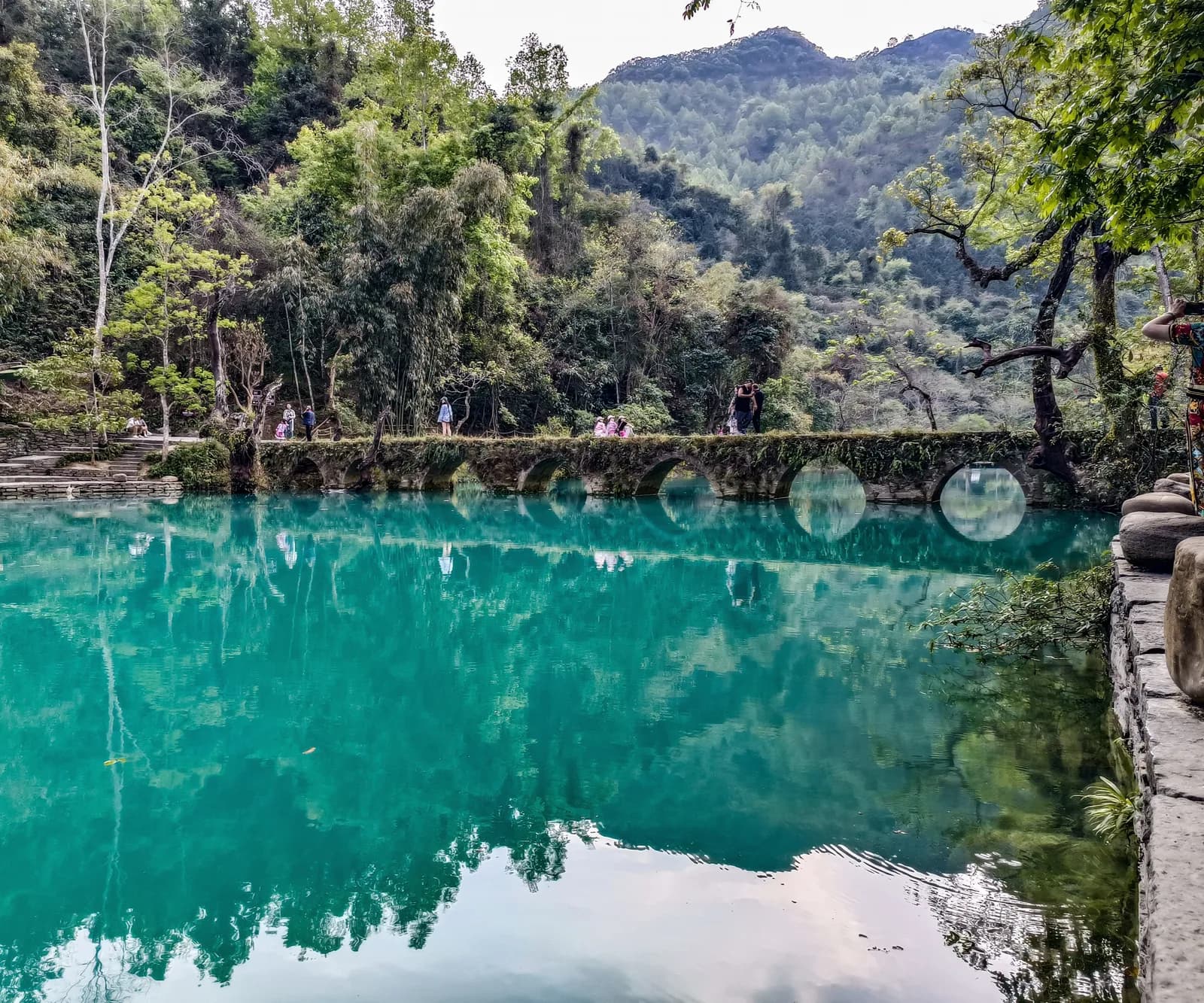
Xiaoqikong ("small seven arches") is a gorge park in Libo county, in Guizhou's far south near the Guangxi border, named for a seven-arch stone bridge built in 1835. It is the headline piece of the South China Karst World Heritage listing, and in practice it is a roughly 7-kilometre chain of sights along one river valley: deep green pools, tiered waterfalls, a lake pinched between cliffs, and a stretch of forest growing directly out of the rapids. Domestic tourism has treated it as a superstar for years; it holds 4.7 out of 5 across about 24,000 reviews on Trip.com, and Chinese travellers routinely rank it above Jiuzhaigou for water colour.
What it is not is a wilderness experience. This is a fully managed Chinese scenic area: gates, face-recognition tickets, a daily visitor cap and a mandatory internal shuttle covering distances far too long to walk end to end. Recent foreign visitors are clear that the packaging is worth tolerating. A traveller reviewing in January 2025 flagged "few people and no pollution" midweek in low season, and the December 2025 China Survival Kit guide calls the water forest section unlike anything else in the country. The consistent complaints are holiday crowds and mediocre food inside the park, both solvable with timing and snacks.
If you are still deciding whether Guizhou deserves a slot at all, my first impressions of Guiyang covers why I think this province is the most underrated corner of China, and the full Guizhou itinerary shows where Libo fits in a one-to-two-week loop.
Getting there from Guiyang
This trip changed completely in August 2023, when the Guiyang-Nanning high-speed line opened with a stop at Libo. What used to be a four-hour mountain bus ride is now barely an hour on a 350 km/h train, which is exactly why Libo is turning up on day trips from Guiyang lists at all.
| Leg | Option | Time | Rough cost (RMB) |
|---|---|---|---|
| Guiyang to Libo | High-speed rail from Guiyang North or East | 1 hr - 1 hr 20 min | ~65 second class |
| Guiyang to Libo | Long-distance bus | ~4 hr | 80-120 |
| Libo station to East Gate | Direct scenic-area shuttle | ~25 min | ~10 |
| Libo station to East Gate | City bus 11 or 13 | ~35 min | 5-7 |
| Libo town to West Gate | Taxi or Didi | ~20 min | ~60 |
The play is simple: book the high-speed train on Trip.com or the 12306 app a few days out, catch a 7-something departure, and you are at the park before the day heats up. From Libo station, the direct shuttle to the Xiaoqikong East Gate runs from early morning until late evening, and the cheap city buses cover the same 12 kilometres slightly slower. Recent reports agree the public buses from town serve the East Gate only; reaching the West Gate means a taxi or a Didi, which foreigners can call through the Didi mini-app inside Alipay.
A genuine day trip from Guiyang works: travellers doing it catch the earliest train down and a 7 or 8pm train back. But almost everyone who has done both recommends the overnight version, and the where-to-stay section below is the argument. Libo also has a tiny airport, but with a handful of flights it is a curiosity rather than a plan.
Tickets, reservations and the shuttle
This is the section that confuses people, so here is the current picture from 2025-2026 reports, with the caveat that Chinese scenic-area pricing moves around.
Entry in peak season (roughly March to November) is about RMB 120, dropping to about RMB 80 in winter, plus a RMB 40 sightseeing-bus pass that is effectively mandatory because the full circuit inside the park runs tens of kilometres. Call it RMB 160 all-in; some recent write-ups still quote RMB 110 entry, so treat anything from RMB 150 to 170 as normal. The ticket is valid for two days with unlimited re-entry, tied to your ID and face at the turnstiles, which quietly makes the overnight stay better value than a day trip: one ticket, two mornings.
The park caps entry at 10,000 people a day under a real-name reservation system. Domestic visitors book through a Guizhou mini-program that is painful without a Chinese ID; the workaround every recent foreign visitor lands on is booking Xiaoqikong entry tickets on Trip.com or Klook, then presenting your passport at the ticket desk to collect. A September 2025 guide written for international visitors describes exactly this flow, passport at the desk and all. Outside holidays you can usually buy on the day; on any weekend or holiday, book ahead. Hours are roughly 7:30 or 8am to 5:30pm, with last entry around 4 to 4:30pm.
Two smaller practical notes from recent travellers: the park runs on Alipay and WeChat Pay like everywhere else in Guizhou, so have at least one working before you arrive, and food inside is limited enough that a December 2024 reviewer's advice to carry your own still stands.
The route: which gate, and how long you need
Xiaoqikong has two entrances at opposite ends of the valley, and your whole day hangs on how you use them. The West Gate sits high, the East Gate sits low near the famous bridge, and a free-with-your-pass shuttle links the stops between them.
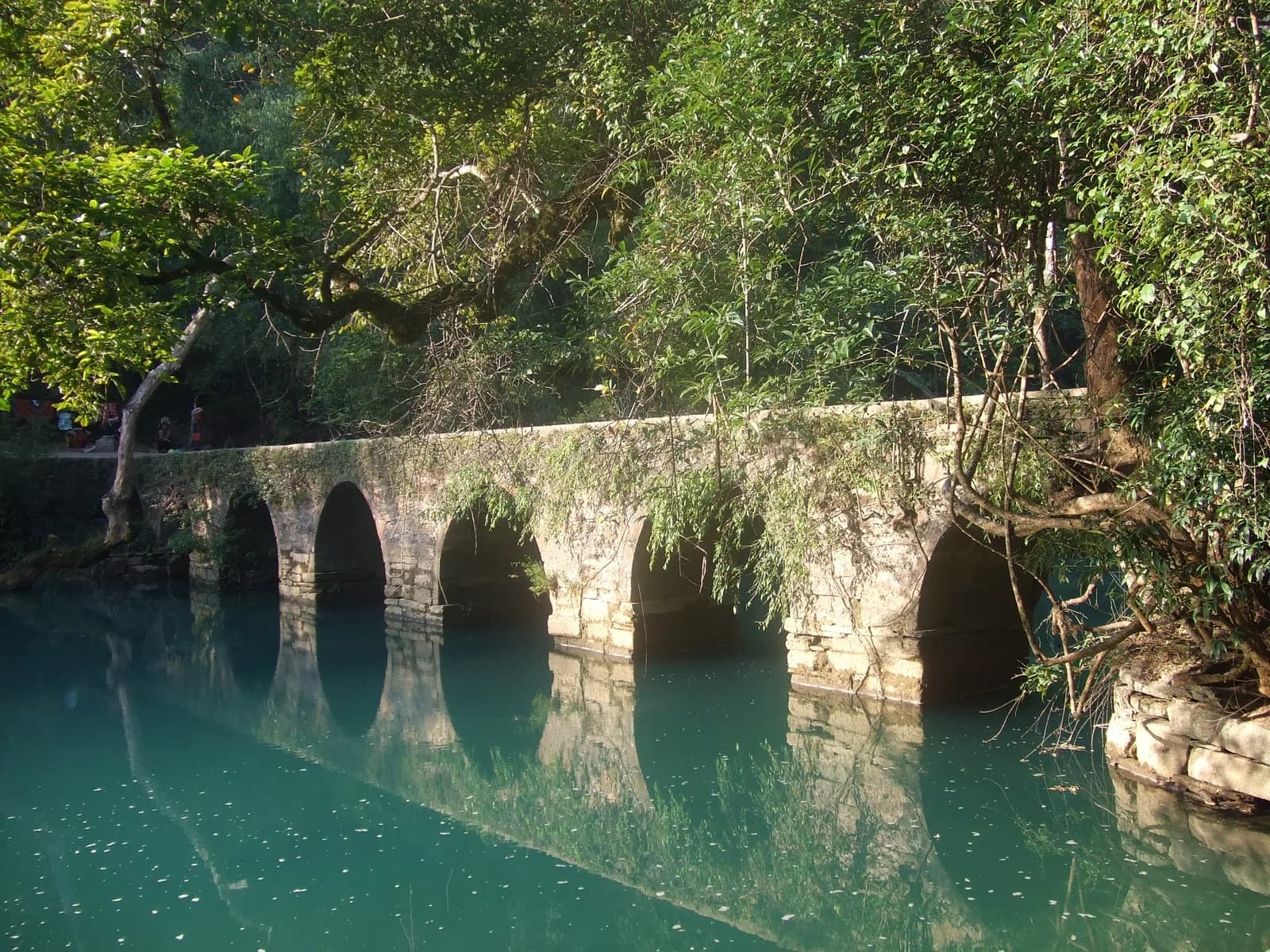
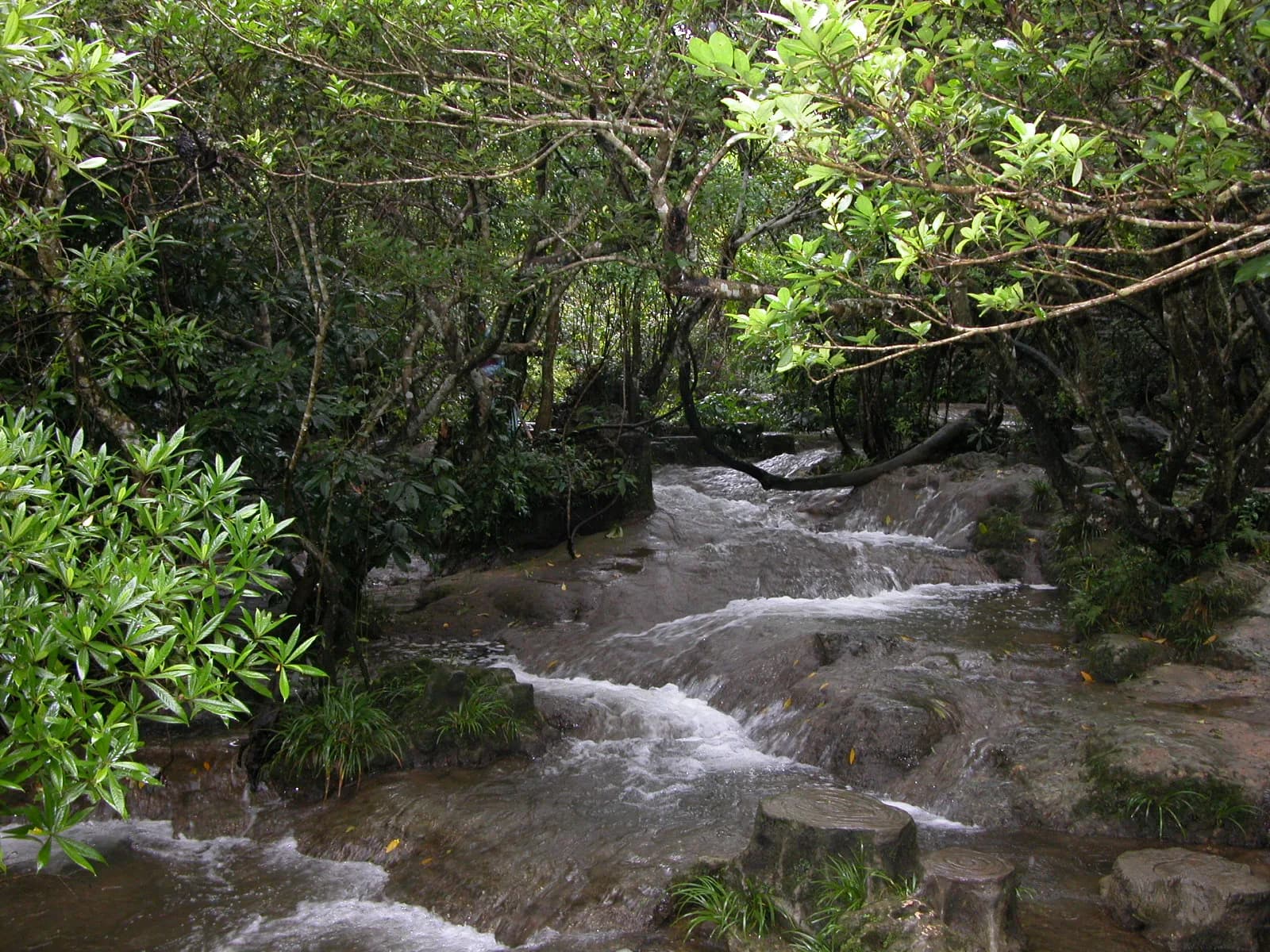
The standard advice, repeated in a July 2026 route guide and most recent reviews, is to walk west to east because the entire path then runs downhill: Wolong Pool, an unnervingly still emerald pool below a low dam, then Mandarin Duck Lake, where rowboats go for about RMB 50, then Cuigu Waterfall, the wide fan-shaped cascade people wade below, the Water Forest, where the boardwalk runs through trees growing straight out of the rapids, the 68-level cascades, a kilometre of stacked falls beside the path, Laya Waterfall, which drops practically onto the road, and finally the ancient bridge near the East Gate. Since town buses only reach the East Gate, the clean version of this is: enter at the East Gate, ride the shuttle to the far western stop, and walk home downhill.
A worthwhile contrarian note from a Trip.com reviewer this year: entering from the east and walking up also works, precisely because the big tour groups shuttle straight to the bridge for photos and thin out fast beyond it. Either way, two warnings recur: the ancient bridge is not at the East Gate itself and Wolong Pool is not at the West Gate, so budget shuttle hops at both ends, and the wet stone paths punish smooth-soled shoes.
On time: the walk itself is 4 to 6 hours at photo pace. A June 2026 reviewer's verdict was that the area properly needs a whole day, and the self-rowing boat into Golden Bell Cave (small extra fee) is the extra most reviewers say not to skip. If you would rather have the logistics handled end to end, there are Xiaoqikong day tours from Guiyang on GetYourGuide, but this is one of the easiest big sights in China to do independently.
Daqikong: add it or skip it?
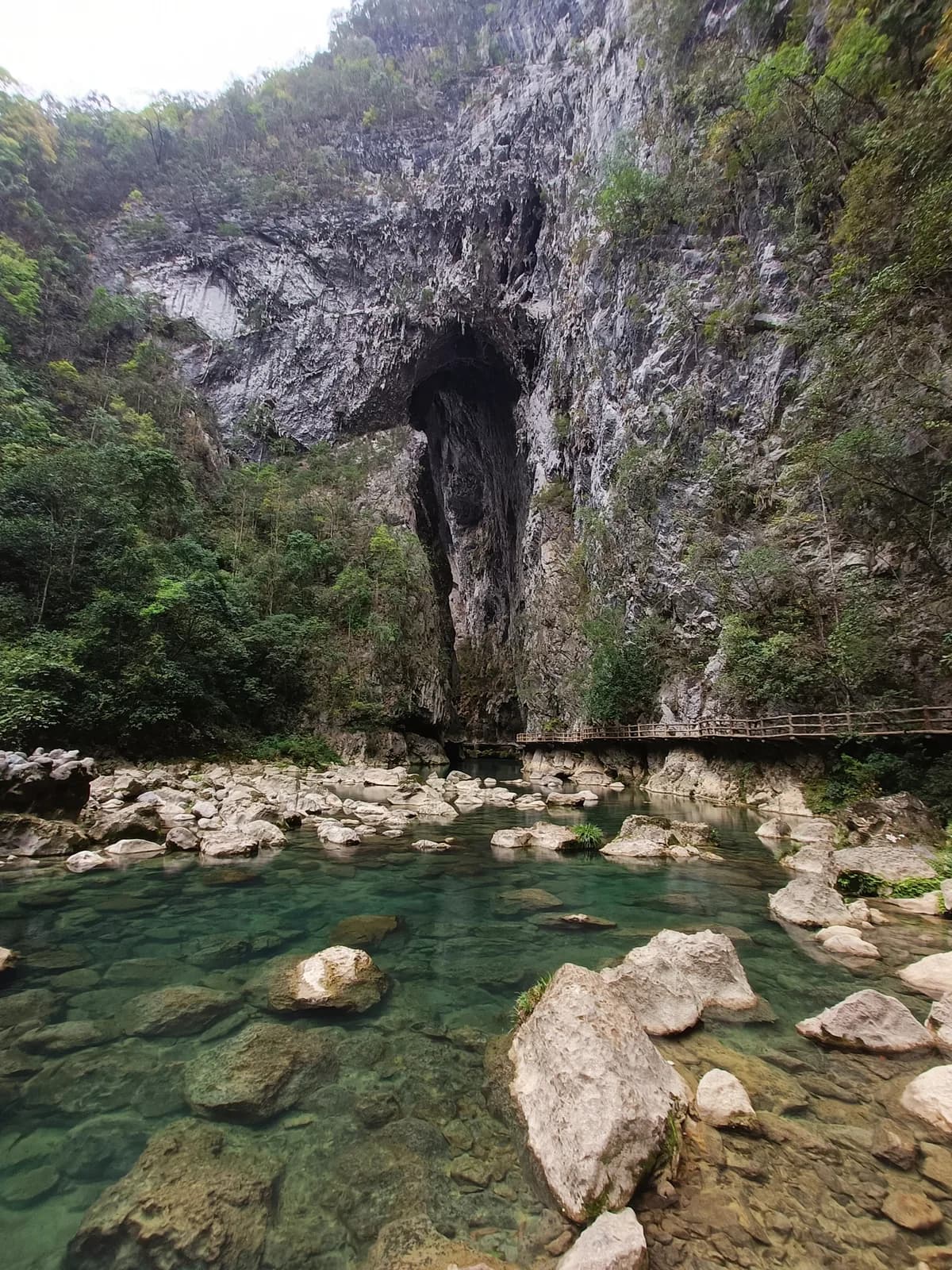
Daqikong ("big seven arches") is the neighbouring park a few minutes' drive from the East Gate, and the naming misleads: it is the smaller visit. Where Xiaoqikong is a chain of pools and waterfalls, Daqikong is one dramatic gorge walk, past a cave mouth and along cliffs to Tiansheng Bridge, a natural rock arch tall enough to swallow a building. Entry runs about RMB 100 with its own internal transport, though combined two-park tickets around RMB 170 appear regularly on Chinese booking platforms, so check what your ticket actually covers before paying twice.
The recent consensus is consistent enough to state as a rule. With one day, do Xiaoqikong only. With a night in Libo, do Xiaoqikong on day one, Daqikong the next morning: it needs only 1 to 2 hours, it is noticeably quieter, and hikers tend to rate it more highly than photo-first travellers. And if you finish Xiaoqikong with nothing left in your legs, skip Daqikong without guilt; almost every trip report that tried to cram both into one day recommends against it.
This ordering logic is the same one I gave for pairing sights in my Fanjingshan guide for foreigners: in Guizhou, one anchor sight per day beats two rushed ones, because the shuttles and queues eat more clock than the maps suggest.
Where to stay: Libo town vs the East Gate
The real accommodation question at Xiaoqikong is not which hotel but which base, and recent travellers split cleanly into two camps with two smaller options behind them.
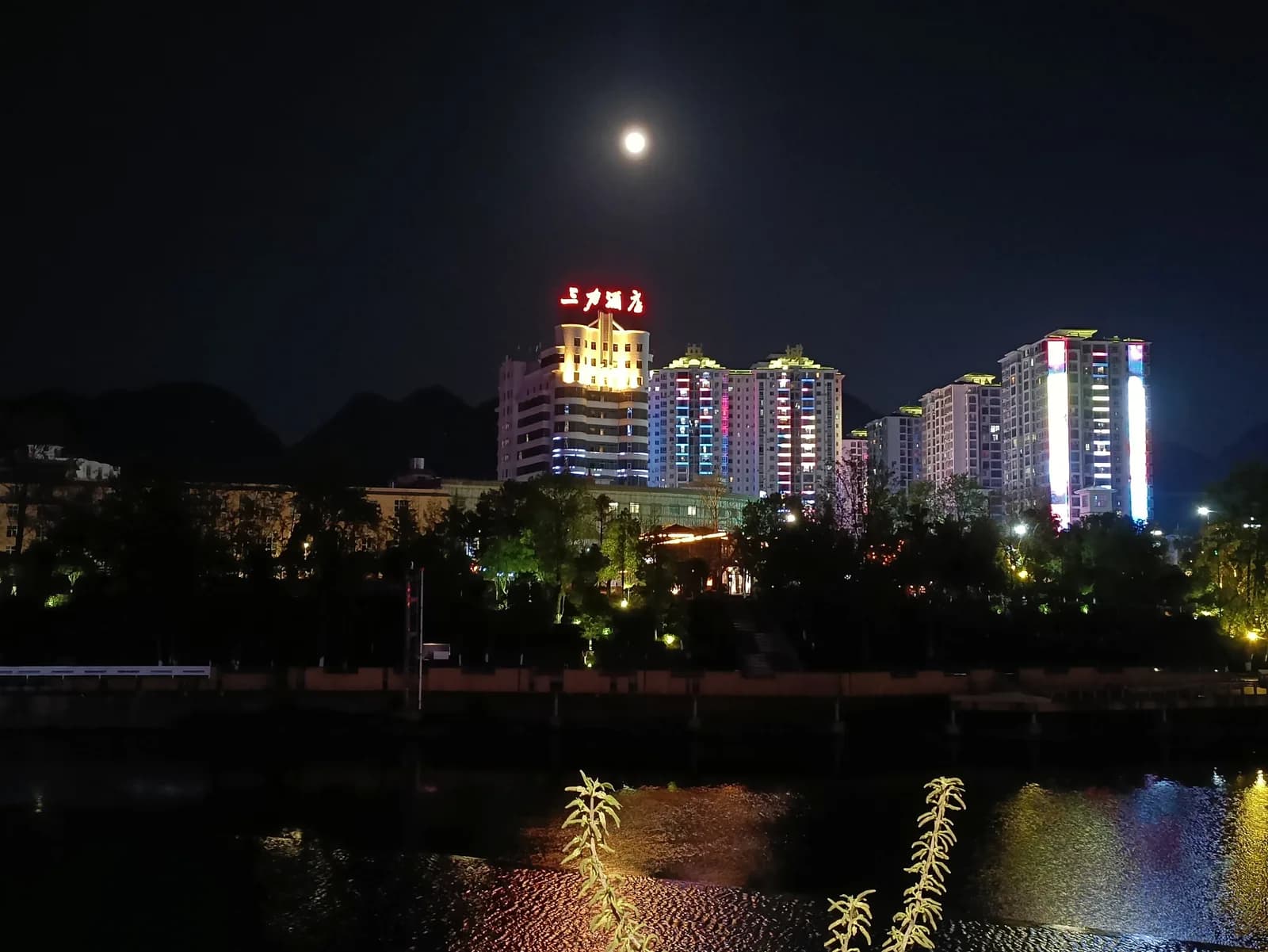
Stay in Libo county town if you want an actual evening. The county seat, about 25 minutes from the East Gate, has the night market and food street where Buyi and Miao dishes meet standard Guizhou cooking, a rebuilt old-town square with evening performances, and the widest spread of rooms, from RMB 100-something guesthouses to full-service hotels like the GuiZhou Park Hotel Libo. Bus 11 runs to the East Gate every 15 to 20 minutes from early morning, so the logistics still work. This is the base I would pick, mostly because sour soup fish after a day of waterfalls is the correct Guizhou ending; the same dish logic as my Guiyang food guide.
Stay at the Xiaoqikong East Gate village if beating the tour buses is the mission. A small strip of homestays, restaurants and hotels has grown up at the gate, and a June 2026 reviewer notes many homestays here collect guests from Libo station for free. The flagship is the Steigenberger Icons Guizhou Xiaoqikong, about 500 metres from the East Gate, with boutique options like the Xiangyue Xiaoqikong Hotel sitting right against the entrance and its food street. Sleeping here is the difference between walking in at 7:30am and arriving with everyone else at 10.
Stay at a hot-spring resort near the gate if the trip is a treat. Libo has quietly built a resort tier: Rongzhuang Hot Spring Resort and private-onsen homestays like Xingyue (from around US$45) turn the park into a soak-and-walk weekend rather than a box-tick. For Guizhou, this is the splurge that makes sense; the province's luxury hotels are far cheaper than their coastal equivalents.
Stay near Libo railway station only if you arrive on the last train. The station sits in open country between town and park, and there is nothing to do around it; take the 20-minute ride into town if you possibly can.
Travel-style picks
- First-timer: an East Gate homestay with free station pickup, inside the park at opening on day one.
- Budget: a Libo town guesthouse near the food street (roughly RMB 100-250), bus 11 both ways.
- Luxury: Steigenberger Icons or a hot-spring resort night; RMB 700-1,200 buys what would cost triple in Yangshuo.
- Family or slow traveller: Libo town for the restaurants and evening square, with the direct station shuttle for gear-heavy days.
What a Libo trip costs
Using mid-2026 prices, per person, from Guiyang:
| Item | Budget | Mid-range | Comfort |
|---|---|---|---|
| Return high-speed rail | RMB 130 | RMB 130 | RMB 130 |
| Xiaoqikong ticket + shuttle | RMB 160 | RMB 160 | RMB 160 |
| Daqikong (optional) | skip | RMB 100 | RMB 100 |
| Room per night | RMB 100-250 | RMB 300-600 | RMB 700-1,200 |
| Food and local transport | RMB 80-120 | RMB 150-250 | RMB 300+ |
| Overnight total | RMB 470-660 | RMB 840-1,240 | RMB 1,390+ |
Call it US$65-90 (about NZ$110-150) for a comfortable budget overnight, all transport and tickets included. A pure day trip from Guiyang runs about RMB 350-450. Both numbers are low enough that the deciding constraint is time, not money, which is exactly the pattern across the province in my Guizhou itinerary.
When to go
May through October is high-water season, when the 68-level cascades and Laya are at full volume; it is also when Chinese domestic tourism is loudest. The shoulder weeks, April and late October into early November, are the value play: still-green valley, thinner crowds, full-price ticket. Winter drops entry to about RMB 80 but the falls run thin, which for a park that is entirely about water is a real trade.
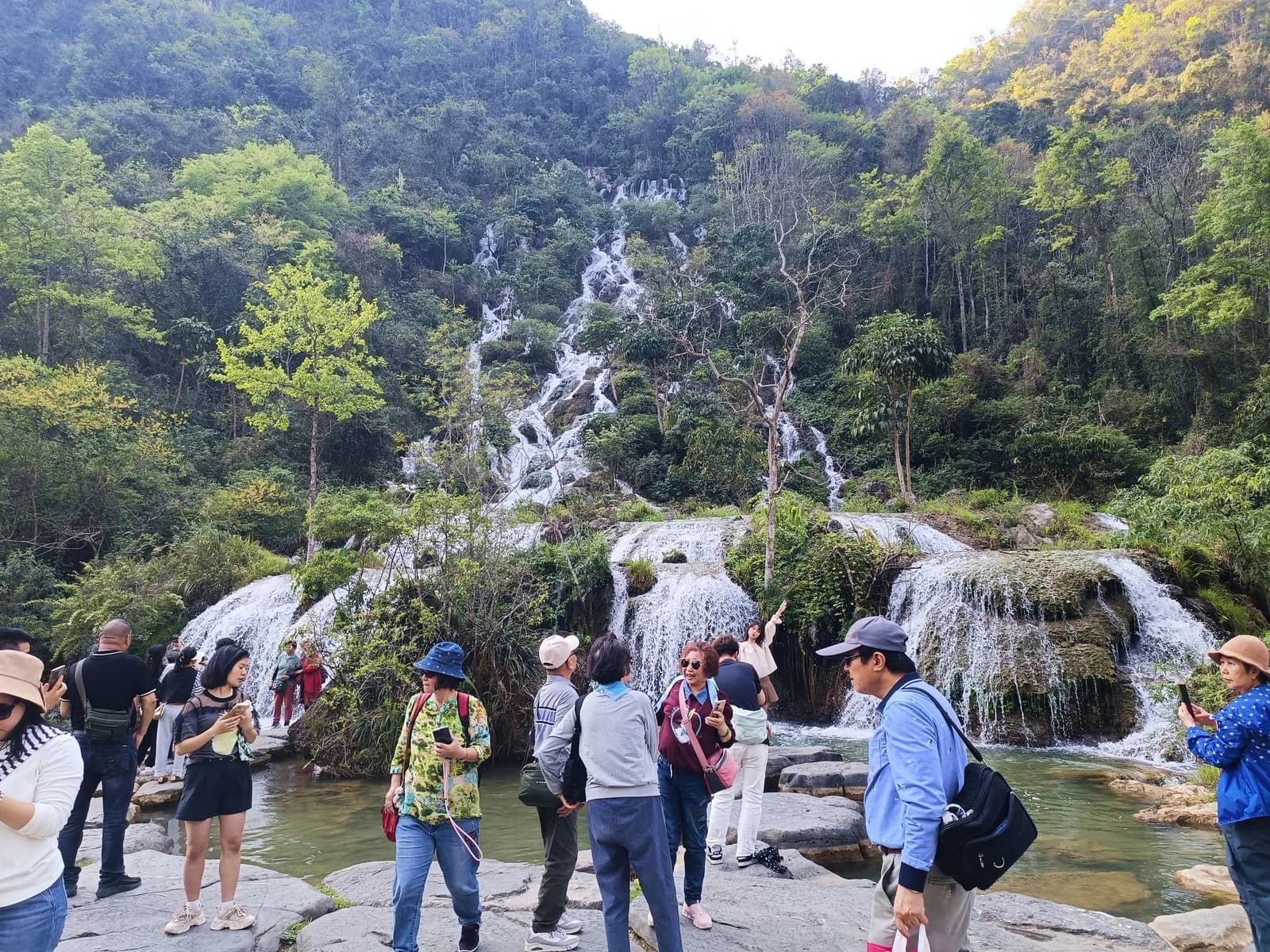
The hard avoids are the national holidays: the first week of October, May Day, and the summer school-holiday weekends. The park's 10,000-a-day cap sells out, and the 2025-2026 traveller who loved Xiaoqikong most still warned there is no real crowd management once the quota is inside. Timing also matters inside a single day: through the gate before 9am and the first hours are startlingly quiet, because most tour groups land between 10 and 2.
One more scheduling note: Guizhou is fully covered by China's 240-hour visa-free transit policy, so a Guiyang plus Libo run fits inside a visa-free itinerary. If you are building that trip, base yourself using my where to stay in Guiyang post and slot Libo in midweek, saving weekends for city things.
Recommendations
- Sleep in Libo the night before and be at a gate for opening; the two hours before the tour groups land are the best two hours in the park.
- Book your entry on Trip.com or Klook before any weekend visit, and carry the passport you booked with; the desk matches it to your reservation.
- Ride the shuttle to the far western stop and walk back downhill to the East Gate, unless dodging tour groups matters more to you than gradient.
- Your ticket is good for two days, so use the second morning for a quiet re-entry or Daqikong instead of sprinting everything in one go.
- Pay the RMB 50 for the Mandarin Duck Lake rowboat and the small fee for the Golden Bell Cave boat; both are the reviews' most repeated "glad I did it" items.
- Wear shoes with real grip and pack food; wet stone paths and thin park catering are the two most repeated complaints in recent reviews.
- Set up Alipay (with Didi inside it) and WeChat Pay before leaving Guiyang; rural Guizhou runs on QR codes, not cards.
- If you have a second Guizhou weekend, pair this southern run with the east: Zhenyuan ancient town and Fanjingshan make the matching rail loop.
Final note
I have tried to write this the way I wrote my Zhenyuan guide: honestly secondhand, built from dated reports rather than pretending I have stood on the seven-arch bridge myself. The pattern in those reports is unusually clean. Nobody regrets Xiaoqikong; people only regret their logistics, the missed reservation, the midday arrival, the one-day sprint through two parks. Sort the gate, the ticket and the overnight, and this looks like the single best value big sight in China right now.
If you have been recently and the prices or shuttle patterns have moved, tell me and I will update this. And if Libo is your first stop in the province, start with the day trips from Guiyang post to see what else the high-speed line unlocked.
Frequently asked
Is Libo Xiaoqikong worth visiting?
Yes, and recent visitors are unusually unanimous about it. Xiaoqikong is part of the South China Karst UNESCO World Heritage listing, and travellers in 2025 and 2026 consistently describe it as the most beautiful stop of their whole China trip: turquoise pools, a 1830s seven-arch stone bridge, cascading waterfalls and a forest growing straight out of the river. It holds a 4.7 out of 5 rating across roughly 24,000 Trip.com reviews. The honest caveat is that it is a big, managed, shuttle-bus park, not a wilderness hike, and holiday crowds are real.
How do you get from Guiyang to Xiaoqikong?
Take the high-speed train from Guiyang North or Guiyang East to Libo station, about 1 hour to 1 hour 20 minutes for roughly RMB 65 second class, on the Guiyang-Nanning line that opened in August 2023. From Libo station, a direct shuttle runs to the Xiaoqikong East Gate for about RMB 10 in 25 minutes, or city buses 11 and 13 do it for RMB 5-7. Book train tickets on Trip.com or the 12306 app a few days ahead; it is an easy day trip, but an overnight is better.
How much are Xiaoqikong tickets, and do I need to book ahead?
Budget about RMB 160 in peak season: roughly RMB 120 entry (RMB 80 from December to February) plus a mandatory RMB 40 sightseeing-bus pass. The ticket is valid for two days with re-entry, linked to your face and ID at the gate. Entry is capped at 10,000 visitors a day under a real-name reservation system, so on weekends and holidays book ahead: foreigners find Trip.com or Klook far easier than the Chinese-only mini-program, then show your passport at the ticket desk to collect.
How long do you need at Xiaoqikong?
A fit visitor doing the one-way downhill walk between the gates needs 4 to 6 hours. Add the Mandarin Duck Lake rowboat, the cave, and proper photo stops and it becomes a full day; recent reviewers who tried to rush it in a morning regretted it. If you also want Daqikong next door, plan on a night in Libo and give the two parks a day and a half.
Should you stay in Libo town or near the Xiaoqikong East Gate?
Near the East Gate if Xiaoqikong is the whole reason you came: you can be inside at opening before the tour buses, and many gate-side homestays collect you from Libo station for free. Libo county town is the better all-round base, with the night market, more restaurants, cheaper rooms and the bus 11 connection to the gate. The area around the railway station itself is only worth it for a very late arrival.
Is Daqikong worth visiting as well?
If you have the time and legs, yes, but as the supporting act. Daqikong is a separate, smaller gorge park a few minutes from the East Gate, about RMB 100 with its own ticket, and 1 to 2 hours of walking to a genuinely huge natural arch. Recent travellers agree on the order: Xiaoqikong first while you are fresh, Daqikong after, and skip it without guilt if you are out of energy.
When is the best time to visit Xiaoqikong?
May to October is when the waterfalls are at full volume, at the cost of summer crowds; April and late October shoulder weeks trade a little water for much more space. Winter entry is discounted to about RMB 80 but the falls run thinner. Whatever you do, avoid Chinese national holidays, especially the first week of October and May Day, because the park hits its 10,000-person daily cap and travellers report no meaningful crowd control at peak.