Where to Stay in Chongqing: Jiefangbei, Nanbin Road, Guanyinqiao Compared
Where to stay in Chongqing: honest comparison of Jiefangbei, Chaotianmen, Nanbin Road, Guanyinqiao, and Liziba, with real hotels and prices in each.
I haven't been to Chongqing yet. Which is starting to feel like an oversight, because my mum's hometown of Guiyang is two hours away by high-speed rail, and every family trip so far has ended before I got on that train. Meanwhile Chongqing went viral. CNN ran the "cyberpunk city" coverage, the monorail-through-a-building clips did their rounds, and inbound tourism jumped 184% year on year. The where-to-stay question got harder at the same time: a city of 30-plus million people, split by two rivers, stacked vertically up a mountainside, where picking the wrong bank of the Yangtze means a bridge crossing every time you want dinner.
So this is the researched version, not the memoir version: what recent travelers consistently report about each zone, which hotels keep coming up, and where I'd book for my own first trip.
Why your zone choice in Chongqing matters more than in most cities
Three things come up in nearly every recent traveler report, and all three affect where you should sleep.
First, the geography is vertical. Chongqing is built on a mountain at the confluence of the Yangtze and Jialing rivers. Streets cross above other streets, a building's "ground floor" can be its 10th, and a 500 m walk on the map can involve more stairs than a day of tramping. Travelers consistently underestimate this. A hotel next to a metro station is worth more here than in any flat Chinese city.
Second, the rivers are real borders. The Yuzhong peninsula (Jiefangbei, Hongya Cave, Chaotianmen) is the tourist core. Nanbin Road sits across the Yangtze to the south; Guanyinqiao and Jiangbeizui sit across the Jialing to the north. Each crossing is a bridge or a metro ride, and evening traffic on the bridges is slow. Sleep on the wrong bank for your plans and you'll feel it daily.
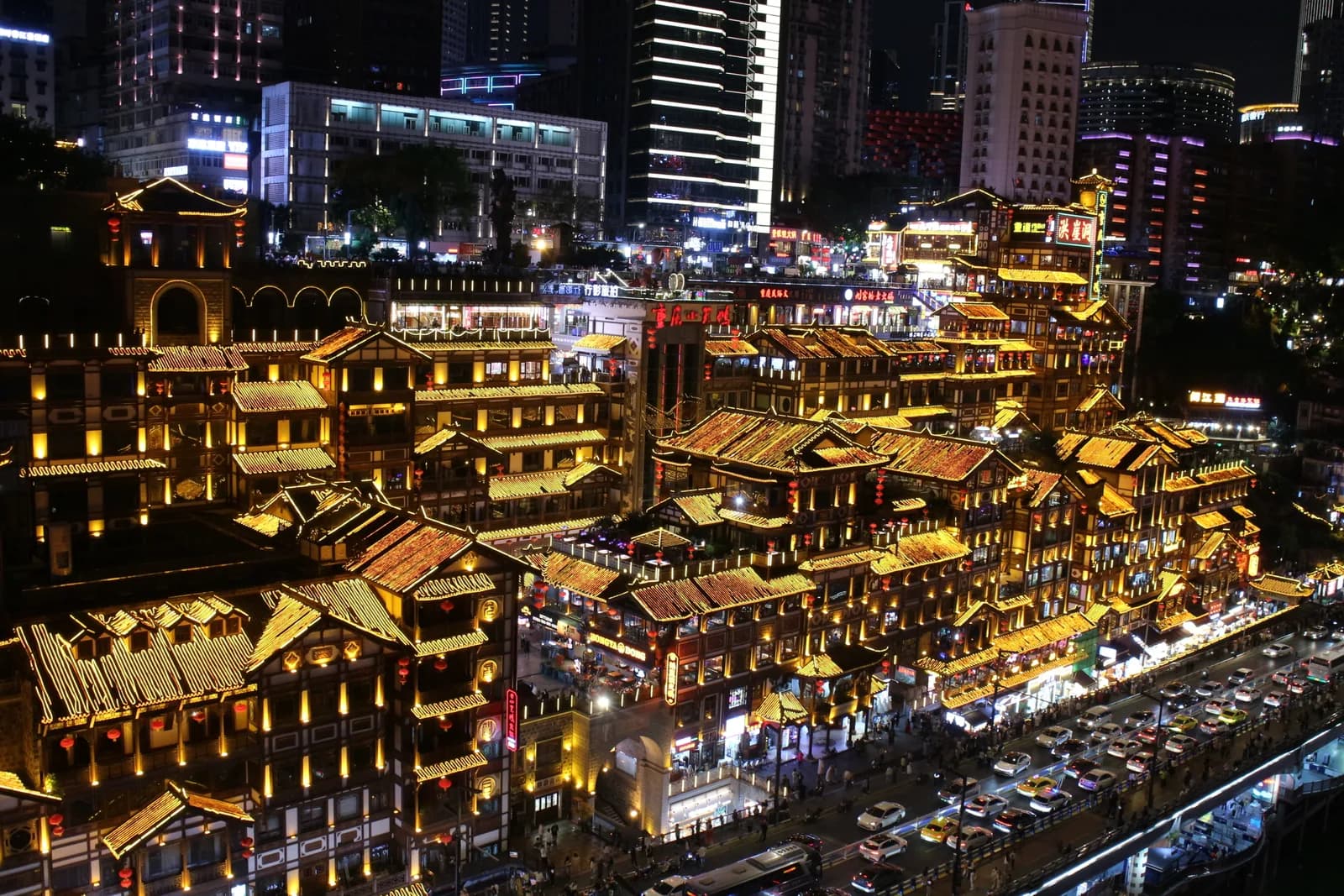
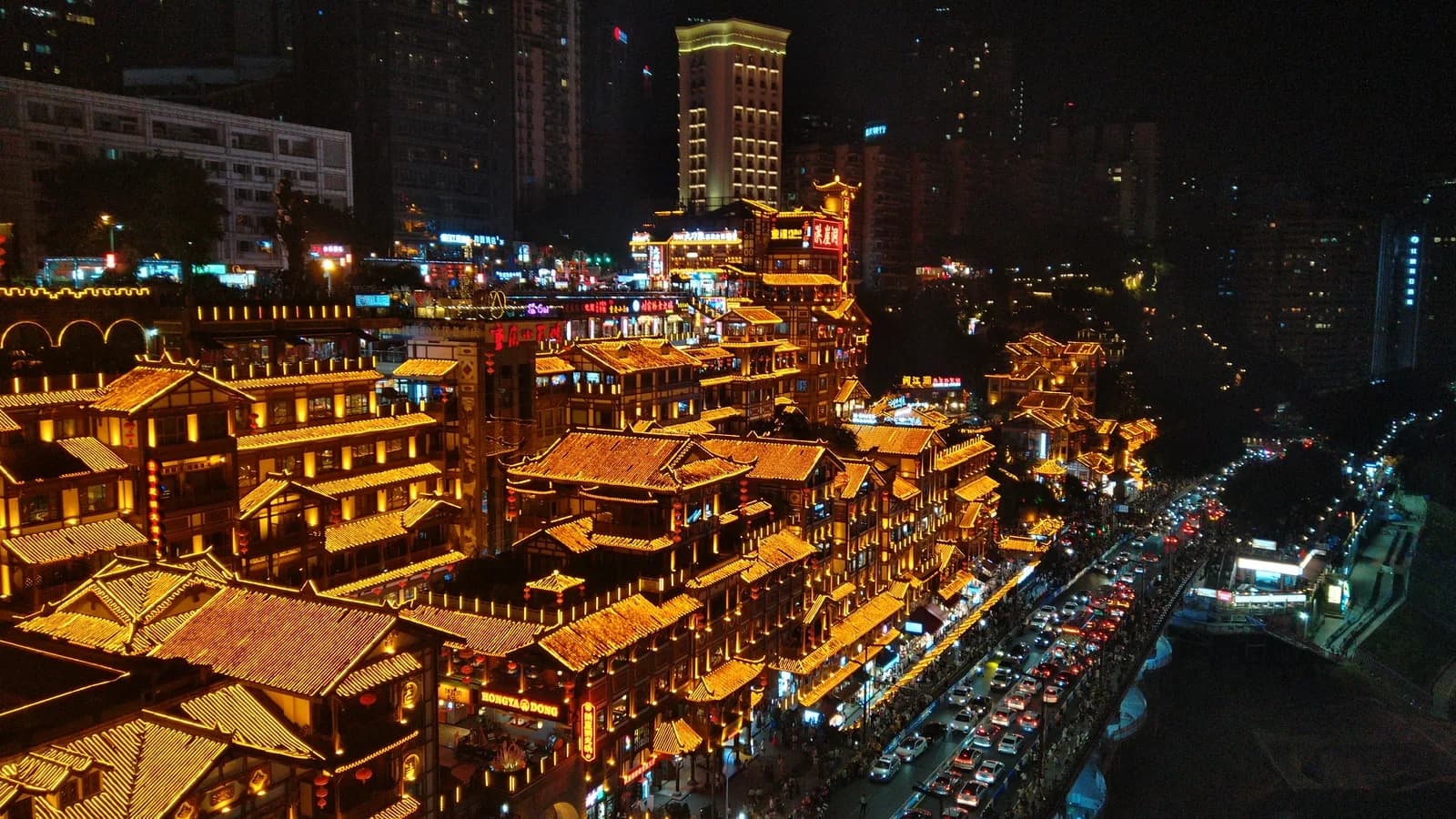
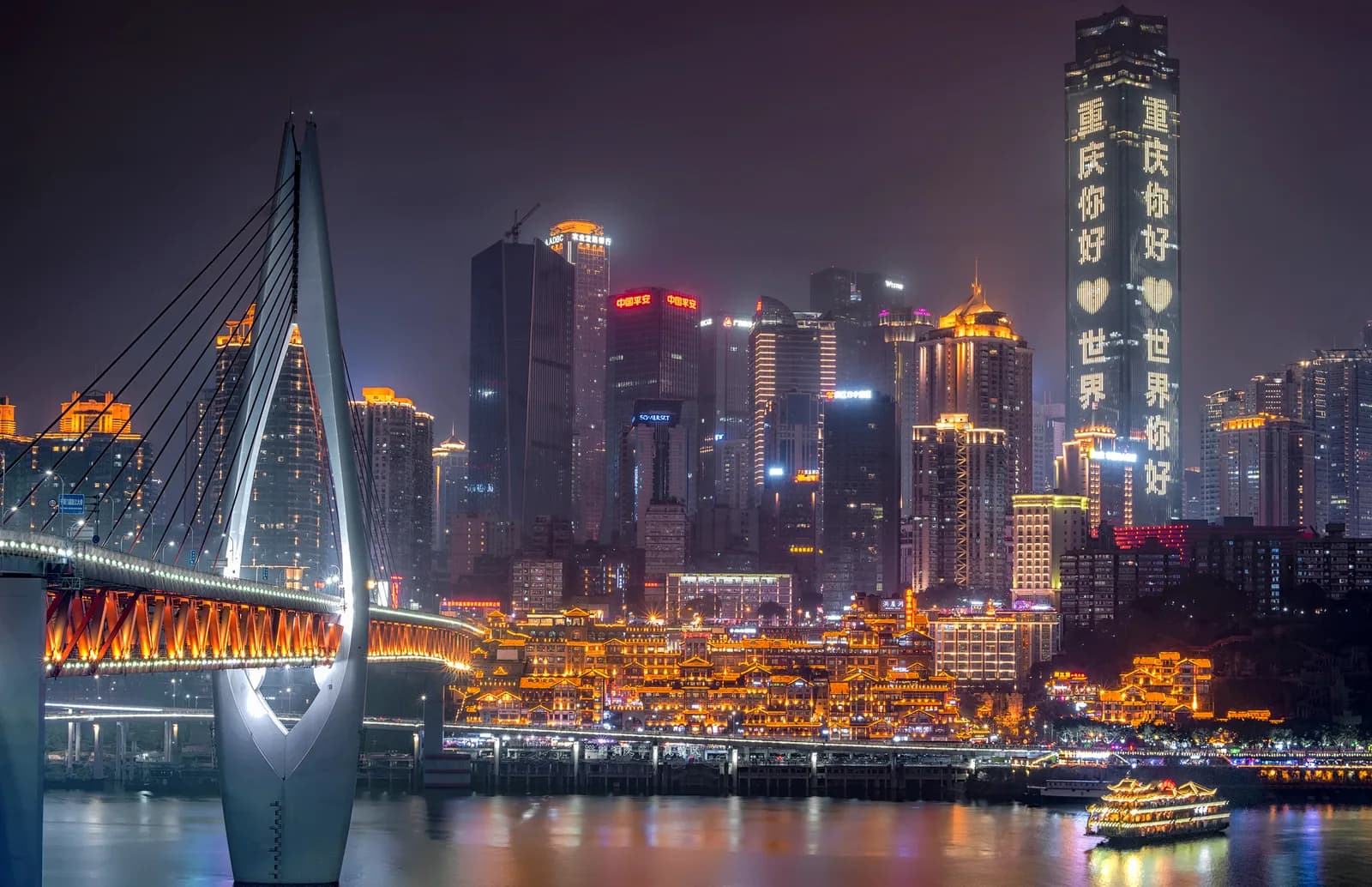
Third, the famous views point at the peninsula, not from it. Hongya Cave is best seen from across the Jialing River; the full skyline is best seen from the south bank. So there's a genuine trade-off between staying inside the postcard (Jiefangbei) and staying where you can see it (Nanbin Road). Recent reports flag this constantly, and it's the most useful framing I found for choosing a zone.
The five Chongqing zones at a glance
| Zone | Best for | Walk to Hongya Cave | Metro access | Price tier |
|---|---|---|---|---|
| Jiefangbei | First-timers, night walkers | 10-15 min | Lines 1, 2, 6 | $-$$$ |
| Chaotianmen / Raffles City | Architecture, cruise departures | 12 min | Line 1 | $$$ |
| Nanbin Road (Nan'an) | Skyline views, quieter nights | Across the river | Thin, Didi territory | $$-$$$ |
| Guanyinqiao (Jiangbei) | Nightlife, value, local energy | 15 min by metro | Lines 3, 9 | $-$$ |
| Liziba / Eling | The viral monorail, quieter Yuzhong | 4 stops on Line 2 | Line 2 | $-$$ |
Where to stay in Chongqing, your real options
Five zones worth comparing, each suited to a different trip. Everything below is synthesized from traveler reports and hotel data from the last 18 months, not from my own nights in the city, so treat it as a well-researched shortlist rather than gospel.
Jiefangbei, stay here if it's your first time and you want to walk to everything. This is the commercial heart of the Yuzhong peninsula: the Liberation Monument, the pedestrian shopping streets, the dense noodle-and-hotpot alleys, and Hongya Cave a downhill walk away. The hotel spread is the widest in the city, from local business chains around RMB 200-350 a night to the Westin Chongqing Liberation Square and JW Marriott in the RMB 700-1,100 band. The niche worth knowing: dedicated view hotels occupying high floors of office towers, like the Houju High-altitude River-view Hotel on the 46th floor of the Xinhua International Building, where river-view rooms run roughly RMB 500-750. Trade-off: this is the loudest, most crowded zone in the city, and on weekend nights the Hongya Cave crush spills into the surrounding streets.
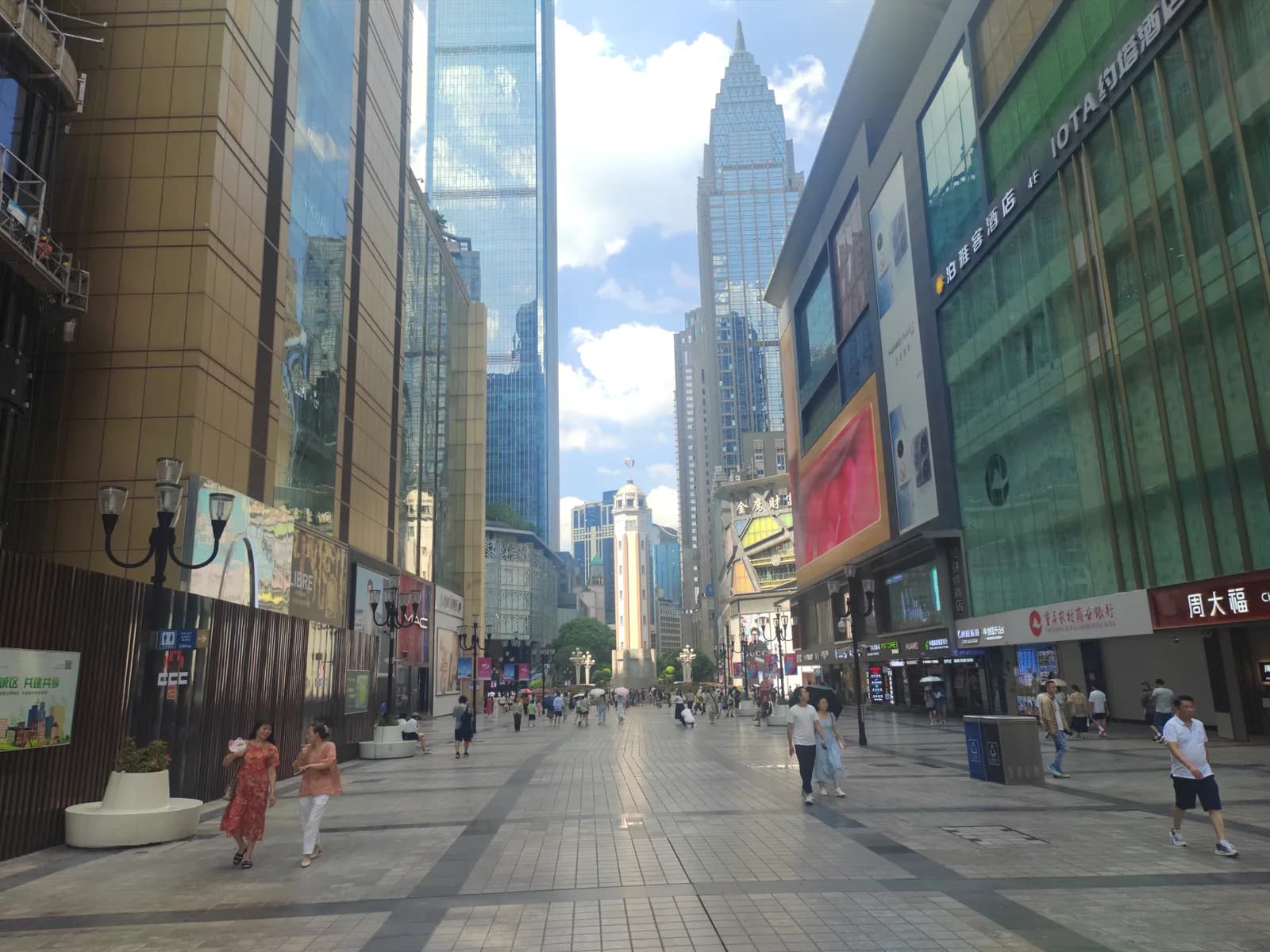
Chaotianmen, stay here if you want the architectural set piece or you're boarding a Yangtze cruise. The tip of the peninsula is dominated by Raffles City, the Moshe Safdie complex (same architect as Marina Bay Sands) with a 300 m crystal walkway spanning four towers at the 42nd floor. The InterContinental Chongqing Raffles City inside it is the single most-mentioned splurge hotel in recent Chongqing reports, with rooms framing the exact point where the two rivers meet, generally RMB 1,100-1,800. Cruise boats leave from the docks below. Trade-off: outside the mall complex the immediate area is thinner on street food and local texture than Jiefangbei, a 10-15 minute walk away.
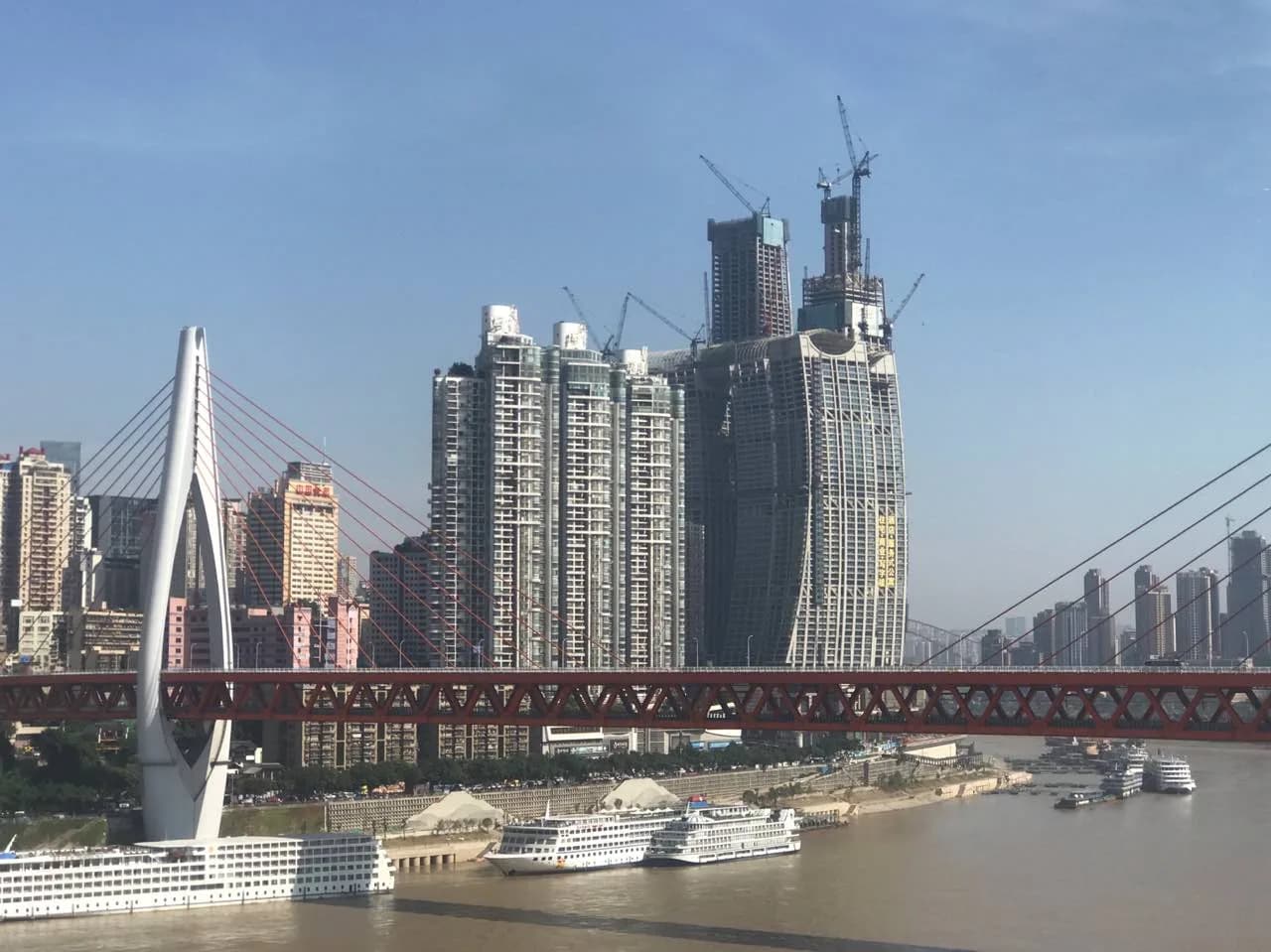
Nanbin Road, stay here if the skyline is the point. The south bank of the Yangtze faces the whole glowing wall of the Yuzhong peninsula, and travelers who stayed here consistently describe evening walks along the riverfront promenade with the city lit up opposite. The Sheraton Chongqing (the twin gold towers on the river, roughly RMB 600-900) is the anchor hotel, with high-floor rooms looking straight across the water, and Longmenhao Old Street sits a 10-minute walk away. Trade-off: metro coverage is thin along the riverfront, so you're relying on Didi, and every itinerary item on the peninsula means a bridge crossing. Better for a second visit, or for the half of a couple who cares more about the view than the food alleys.
Guanyinqiao, stay here if you want the local version of the city and better value. North of the Jialing River in Jiangbei District, Guanyinqiao is a massive commercial hub where recent reports describe malls, live-music bars, the Jiujie night-market strip, and a food street that runs later than anything in Jiefangbei. Hotels are noticeably cheaper for the quality: the Hyatt Regency Chongqing is the top-end anchor, and mid-rangers like the Ramada Encore Guanyinqiao or the ShangQi NOOK Hotel (pedestrian street literally downstairs) sit in the RMB 250-450 band. Metro Lines 3 and 9 put Jiefangbei about 15 minutes away. Trade-off: you're a river away from the tourist core, and almost no English anywhere, which is either the appeal or the problem depending on your trip.
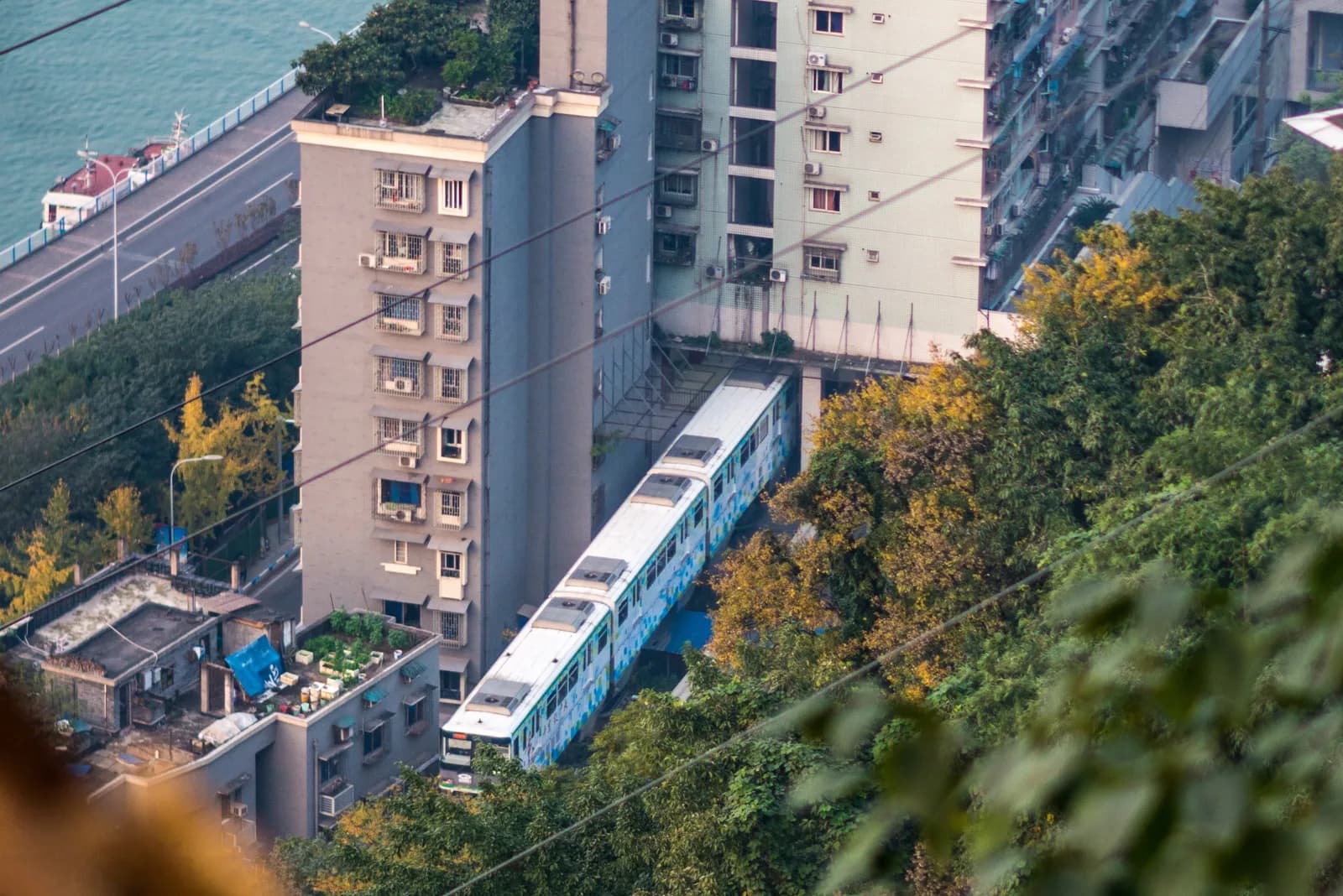
Liziba / Eling, stay here if you want the novelty shot downstairs and a quieter base on the peninsula. Liziba is the station where the Line 2 monorail runs through the middle of a 19-storey residential building, and it now pulls millions of visitors a year to a free viewing platform outside Exit 2. The surrounding stretch of western Yuzhong is mostly local apartments, small hotels, and river-facing towers in the RMB 150-350 range, with Eling Park up the hill for the best free panorama over both rivers. Trade-off: this is a residential zone with limited restaurant density at night, and you'll ride Line 2 or Didi for most sights. A left-field pick, but the kind that makes a trip.
Travel-style picks
If you're choosing on autopilot, here's the shortlist I'd give a Kiwi friend:
If you're a first-timer, book Jiefangbei. Walking distance to Hongya Cave and the food streets beats any view, and the metro interchange gets you everywhere else.
If you're on a budget, Guanyinqiao or the side streets of Jiefangbei. Solid business chains run RMB 200-350 (US$28-50) a night, and meals in the food streets are RMB 20-50. Chongqing remains one of the cheapest big cities in China to sleep in.
If it's a splurge or a honeymoon, the InterContinental Raffles City at Chaotianmen for the building itself, or a high-floor river room at the Sheraton on Nanbin Road if you'd rather look at the skyline than sleep inside it.
If you're a nomad or staying a week, Guanyinqiao. Cheaper long-stay rates, real supermarkets, local gyms and cafes, and a 15-minute metro ride to the tourist core whenever you want it, without living inside the crowds.
Things to do while you're there
The city itself fills two or three days before you touch a day trip.
- Hongya Cave at night. The lights come on at 7:30pm and the crowd starts building an hour before. Recent visitors are consistent on the strategy: walk through the complex early, then cross Qiansimen Bridge for the full postcard view instead of fighting the crush at the base.
- Liziba and Eling Park. The monorail-through-the-building is free from the platform outside Exit 2, trains every 3-8 minutes. Continue up to Eling Park for the two-river panorama.
- Yangtze River Cableway, about RMB 30 return. The old commuter cable car across the Yangtze, now the classic tourist crossing. Queues run long after dark; go at dusk.
- Ciqikou Ancient Town, free entry, on Line 1. Restored porcelain-village streets, crowded but genuinely good for snacks. Go on a weekday morning.
- Wulong Karst day trip, entry RMB 155 plus transport, about 2.5 hours each way. The Three Natural Bridges from the Transformers films; the single most recommended day trip in recent reports.
- Dazu Rock Carvings day trip, UNESCO-listed Buddhist cliff carvings under two hours away. Quieter than Wulong and better for a culture-heavy day.
- Hotpot, obviously. Chongqing hotpot is spicier than anything in Guiyang's food scene, and that's saying something. Ask for weila (micro-spicy) unless you've trained for it.
Getting there and getting around
Chongqing is one of the best-connected cities in western China, which is exactly why it pairs so well with a Guizhou trip.
From Guiyang: direct high-speed trains from Guiyang North reach Chongqing West in about 2 hours, second class RMB 113-159 (US$16-23), running all day. If you're already following our Guizhou itinerary, Chongqing is the logical two-or-three-day extension on the way out, and the Guiyang where-to-stay guide covers the other end of that train line. Note that Chongqing West station is a long way southwest of the centre; budget 40-60 minutes by metro or Didi to Jiefangbei.
From elsewhere: Chengdu is 1-2 hours by HSR (the classic pairing), Xi'an about 5, and Shenzhen roughly 7 hours by rail or a 2.5-hour flight. Jiangbei International Airport (CKG) has direct international routes and sits on metro Line 3 and Line 10, about 45-60 minutes from Jiefangbei for RMB 7 or so, versus RMB 60-90 by Didi.
Getting around: the metro-and-monorail network covers the tourist zones well, and rides cost RMB 2-7. Didi is the default for everything else; install it before you fly. One warning that recurs in recent reports: walking navigation apps struggle with the stacked streets, so when the blue dot says 400 m, expect stairs. Lots of stairs.
When to go
- March-May: the best window. 15-25°C, comfortable for the hills, decent night visibility for the skyline.
- June-August: avoid if you can. Chongqing is a famous Chinese "furnace city" and 40°C+ days are normal in July and August. If you must come in summer, do sights at night, which is when the city looks best anyway.
- September-November: second-best. Warm, gradually clearing, good day-trip weather.
- December-February: foggy and grey (Chongqing is nicknamed the Fog City), 5-12°C, but hotel prices drop and the crowds thin. The night lights still work in fog; the daytime views don't.
Avoid Chinese national holidays entirely, especially National Day week (October 1-7) and Spring Festival. Chongqing is now one of China's most-visited domestic destinations, and Hongya Cave during Golden Week is a one-in one-out crowd event.
Budget breakdown (rough daily costs in USD)
| Item | Backpacker | Mid-range | Comfort |
|---|---|---|---|
| Accommodation per night | $28-50 (business chain, Guanyinqiao/Jiefangbei) | $70-130 (Sheraton/Westin tier, view room) | $160-260 (InterContinental Raffles City tier) |
| Meals (3/day) | $10-18 | $20-40 | $50-80 |
| Activities / day trips (avg) | $5-25 | $30-60 | $80-150 |
| Metro / Didi per day | $2-5 | $6-12 | $15-25 |
| Daily total | $45-98 | $126-242 | $305-515 |
A 3-night city-only trip lands under US$300 for a backpacker, US$500-800 mid-range. Add roughly US$50-100 per person for a Wulong or Dazu day trip with transport.
Recommendations
The list I'd hand a friend booking Chongqing this year, distilled from the reports I trawled:
- Set up Alipay or WeChat Pay before you fly and link a foreign Visa or Mastercard. Cash still works but you'll be the only one using it.
- Book a hotel next to a metro station, not just near one on the map. Chongqing's verticality means "300 m away" can be 300 m and eleven flights of stairs.
- Go to Hongya Cave before 7pm if you want a spot at the front when the lights come on at 7:30, or skip the crush entirely and shoot it from Qiansimen Bridge.
- Pay for a high-floor room or don't pay for a view at all. Low-floor "river view" rooms across multiple recent reviews turn out to face a flyover.
- Ride the Yangtze cableway at dusk, when you get daylight on the way over and the lit skyline on the way back for the same RMB 30.
- Trains sell out around holidays, so book the Guiyang or Chengdu HSR legs 3-5 days ahead on Trip.com or 12306.
- Get an eSIM before arrival (Airalo or similar) so Didi, translation, and payments work from the moment you land at CKG.
- Order hotpot at least one level milder than your instinct. Chongqing's spice baseline is higher than almost anywhere in China, and every traveler report that ignores this regrets it.
- Build in one slow morning at Eling Park or Ciqikou. The viral city rewards night owls, but the quieter daytime version is what recent long-stayers rate highest.
Final note
Chongqing is the trip I keep not taking, and writing this made that harder to justify: a two-hour train from my family's city, hotels cheaper than Auckland motels, and a skyline that made CNN reach for the word cyberpunk. My honest read after all the research: book Jiefangbei for a first visit, Guanyinqiao if you want the local version for less, Nanbin Road if the view is the point. If you've been recently and think I've got a zone wrong, tell me, and I'll update this when I finally ride that train myself.
For the rest of the China cluster, the Guiyang where-to-stay guide and first impressions of Guiyang cover the other end of the HSR line, the Guizhou itinerary puts the whole region together, and the Shenzhen where-to-stay guide plus things to do in Shenzhen cover the other Chinese megacity on this blog. If you like the zone-by-zone logic, the Cartagena version walks the same playbook on the other side of the world.
Frequently asked
What's the best area to stay in Chongqing for first-time visitors?
Jiefangbei, the commercial core of the Yuzhong peninsula. It puts you within walking distance of Hongya Cave, the pedestrian shopping streets, and the metro interchange at Jiaochangkou, and it has the widest spread of hotels from RMB 200 business chains to the Westin and JW Marriott. Nearly every recent traveler report lands on the same answer for a first trip.
Is it worth paying extra for a Hongya Cave river-view room?
If it's your first visit and you're staying two or three nights, most recent travelers say yes, but book a high-floor room specifically. Dedicated view hotels like the Houju High-altitude River-view Hotel run roughly RMB 500-750 for river-view rooms, about double a standard Jiefangbei room. The alternative is to stay anywhere cheaper and walk to Jiangbeizui or Qiansimen Bridge for the same view free.
How many days do you need in Chongqing?
Two to three days covers the city: Hongya Cave at night, Jiefangbei, Liziba, the Yangtze cableway, and Ciqikou. Add a fourth day for a Wulong Karst or Dazu Rock Carvings day trip, both under three hours away. Chongqing is also the departure point for Yangtze cruises, so many travelers bolt two city days onto the front of a cruise.
How do I get from Guiyang to Chongqing?
High-speed rail, and it's easy. Direct trains from Guiyang North reach Chongqing West in about two hours, with second-class seats at RMB 113-159 (roughly US$16-23). Trains run all day; book on Trip.com or the 12306 app a few days ahead during holidays. It makes Chongqing the obvious add-on to a Guizhou trip.
Is Chongqing safe for foreign tourists?
Yes, by any big-city standard. The recurring cautions in recent traveler reports are practical, not safety-related: the crowds at Hongya Cave after the lights come on at 7:30pm, the vertical walking (streets stack on top of each other), and summer heat. Standard precautions like using Didi late at night are enough.
When is the best time to visit Chongqing?
March-May and September-November. Spring and autumn give you 15-25°C walking weather and clear-enough nights for the skyline. Summer is the dealbreaker season: Chongqing is one of China's 'furnace cities' and July-August regularly passes 40°C. Winter is grey and foggy but workable, and hotel prices drop noticeably.
Can I pay with foreign cards in Chongqing?
At international hotels yes, elsewhere rarely. Alipay and WeChat Pay run everything from hotpot restaurants to the monorail. Both apps now accept foreign Visa and Mastercard, so link a card before you fly and payment stops being an issue. Keep a little cash as backup for the odd market stall.