Chongqing Itinerary: 2 or 3 Days in China's Vertical Megacity
A researched 2-3 day Chongqing itinerary for first-timers: Jiefangbei, Hongya Cave, the Yangtze cableway, Liziba, Ciqikou and Wulong, with transit tips.
I haven't been to Chongqing yet, which gets harder to justify every year, because my mum's hometown of Guiyang is two hours away by high-speed rail and the trip keeps not happening. What has happened is research: I wrote a full where to stay in Chongqing guide from recent traveler reports, and the same pile of 2025 threads and trip write-ups kept answering a second question nobody asked me: what do you actually do with two or three days there? The reports converge hard. The same day-one loop, the same timing mistakes, the same verdict on Wulong. So this is that consensus, assembled into the itinerary I'd follow myself, with the transit details checked against current schedules.
How many days does Chongqing actually need?
Two full days for the city, three if you want a day trip. That's the near-universal answer in recent threads, and it holds from both directions. A traveler who spent three months crossing China in early 2025 called Chongqing "the city-est city" they had ever seen and still framed it as a place to wander for a couple of days rather than a sight-ticking marathon. At the other extreme, a May 2025 thread arguing Chongqing is overrated conceded that even skeptics should give the cityscape one to two days.
The overrated argument is worth taking seriously for planning, because its core points are true: the city is foggy and grey by day, the food and dialect are close cousins of Chengdu's, and the three viral sights (Hongya Cave, Liziba, the stacked skyline) are genuinely crowded. The counterpoint, made by locals and long-stay travelers in the same threads, is that Chongqing rewards the traveler who treats it as a night city and walks past the photo spots into the stacked residential streets behind them. Both camps agree on the practical conclusion: schedule your outdoor time for late afternoon and evening, keep middays for markets, museums and transit, and don't budget five days.
Here's the shape of the itinerary before the detail:
| Day | Daytime | Evening |
|---|---|---|
| Day 1 | Jiefangbei, Shancheng Lane walk, Yangtze cableway | Hongya Cave lights from Qiansimen Bridge, hotpot |
| Day 2 | Ciqikou in the morning, Liziba and Eling Park | Two Rivers night cruise or Jiujie nightlife |
| Day 3 | Wulong Karst or Dazu Rock Carvings day trip | Back by dinner, slow night in your zone |
Two-day visitors: run Day 1 and Day 2 as written and drop the day trip. That's the version recent two-day travelers were repeatedly told to do, and nobody in those threads reported regretting it.
Day 1: Jiefangbei, the cableway, and Hongya Cave after dark
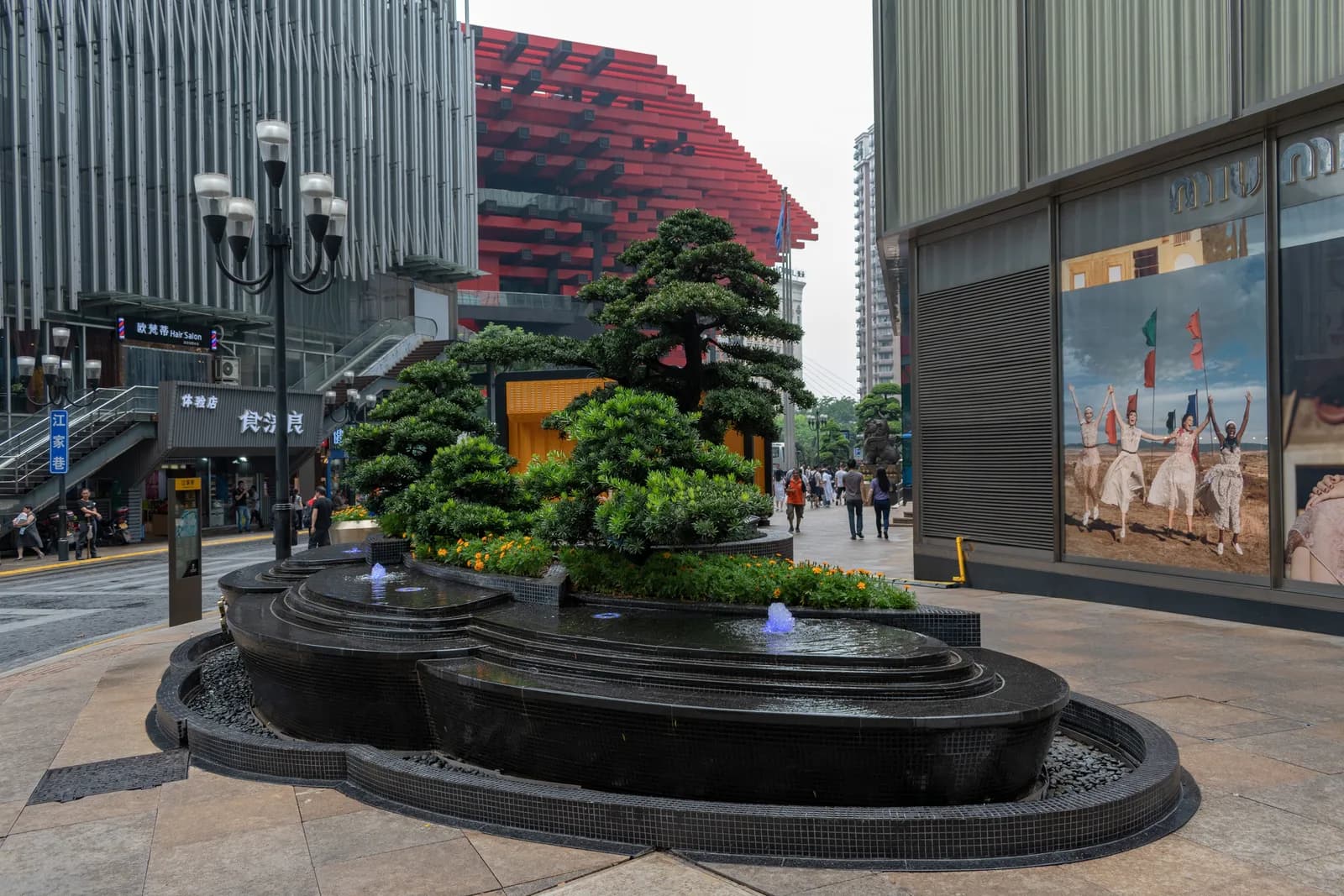
Start at street level in Jiefangbei, the commercial heart of the Yuzhong peninsula and the zone I'd book for a first visit (the where-to-stay guide compares all five zones properly). The Liberation Monument sits in the middle of a pedestrian shopping district dense enough to spend a morning in, and Bayi Road food street, a couple of blocks from the monument, handles lunch: it came up by name in a 2025 thread as the snack street worth finding. From there, walk a stretch of the Shancheng Lane (Mountain City Trail) path along the peninsula's southern edge for the stacked-city views that explain the whole Chongqing phenomenon on foot.
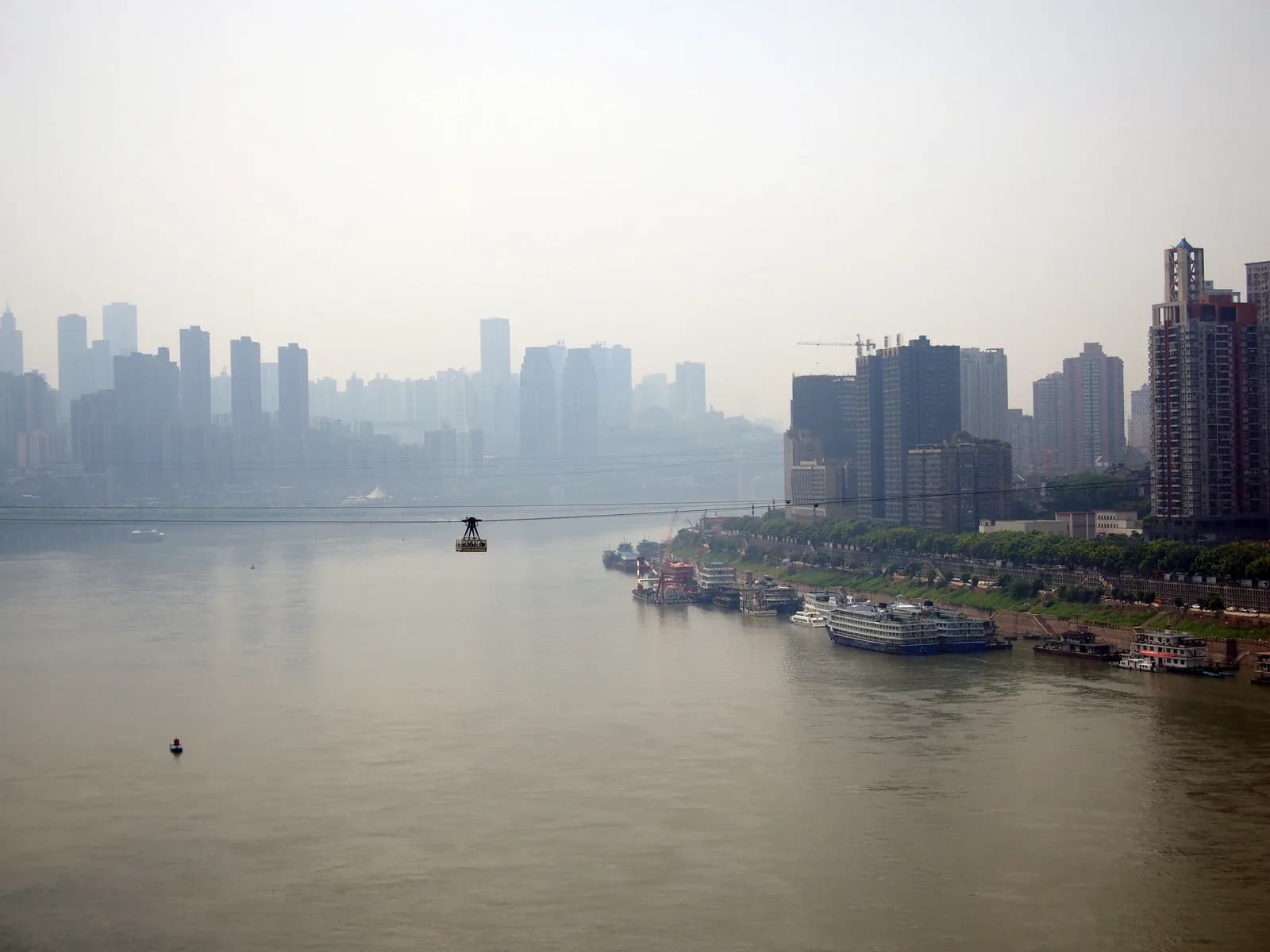
Mid-afternoon, ride the Yangtze River Cableway, the 1980s commuter cable car that is now the classic tourist crossing. It runs 7:30am to 10:30pm, RMB 30 one way and RMB 50 return, and the queue is the whole game: waits of two hours are reported at sunset. Two tricks recur in recent threads. First, ride one way and come back by metro rather than queueing twice. Second, a February 2025 traveler was advised to take the metro to the south-bank station and ride the cableway back toward the skyline, since that side's queue runs shorter. Dusk is the ideal slot if the line is bearable: daylight on the way over, lit skyline behind you.
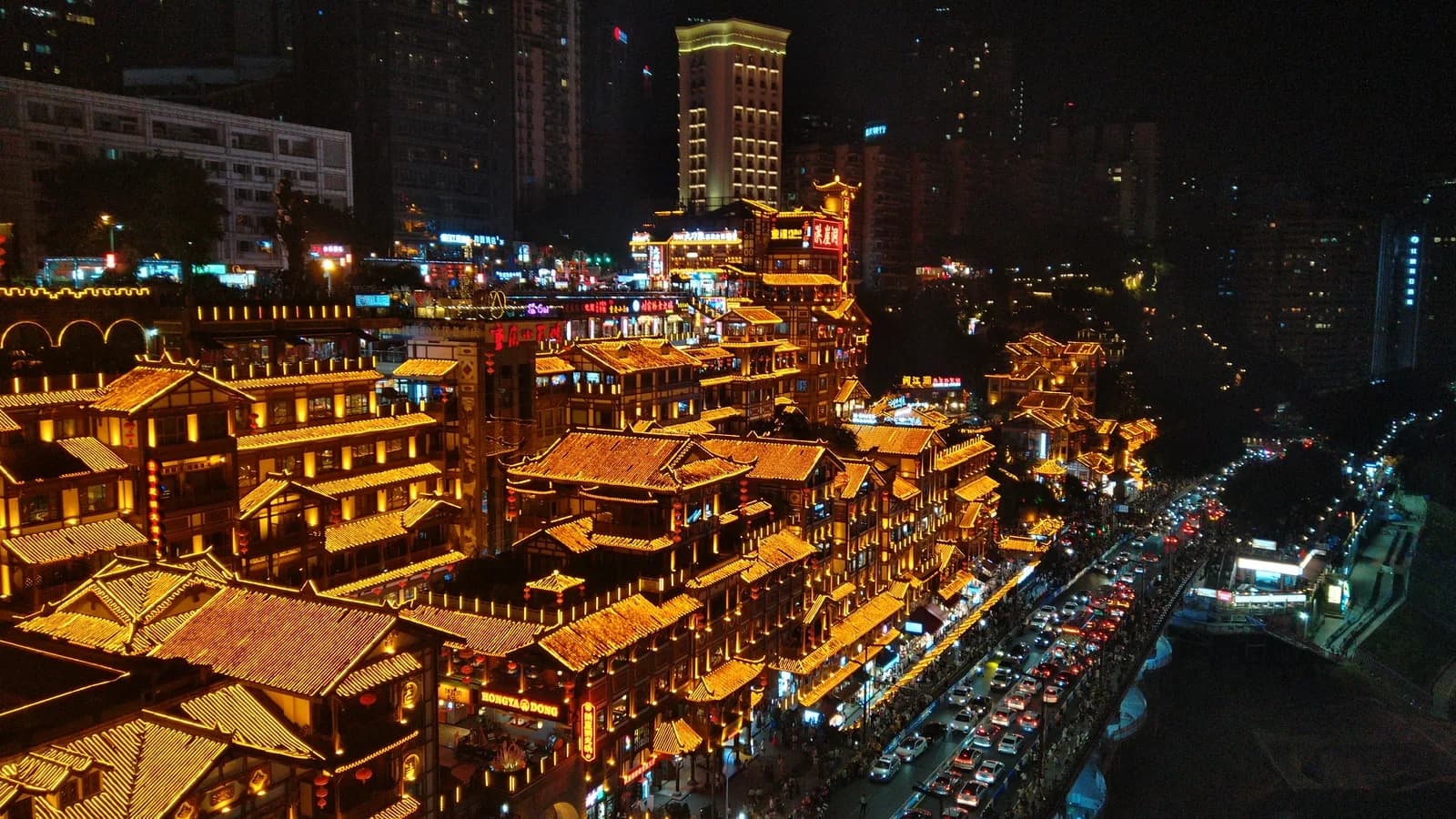
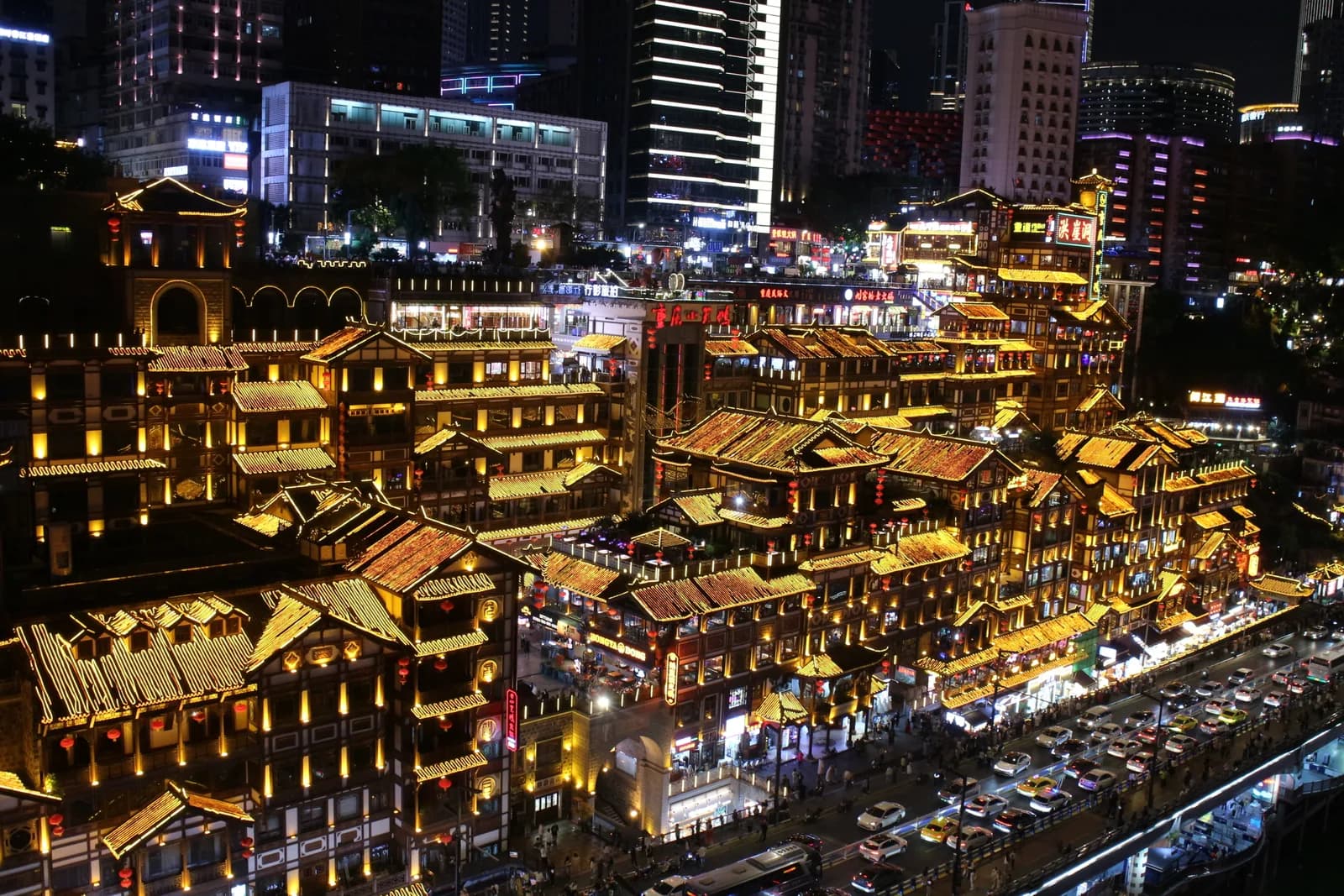
Evening is Hongya Cave, and the strategy from recent visitors is consistent: walk through the stilt-house complex itself early, eat something on the food floors if you want, then get out and cross Qiansimen Bridge before the lights come on at 7:30pm. The postcard view is from the bridge and the far bank, not from inside the crush. One traveler put it bluntly in a February 2025 thread: Hongya Cave is for looking at, not for being in. Finish with hotpot near your hotel; day two's dinner section covers how to order it without hurting yourself.
Day 2: Ciqikou early, Liziba, and the hotpot initiation
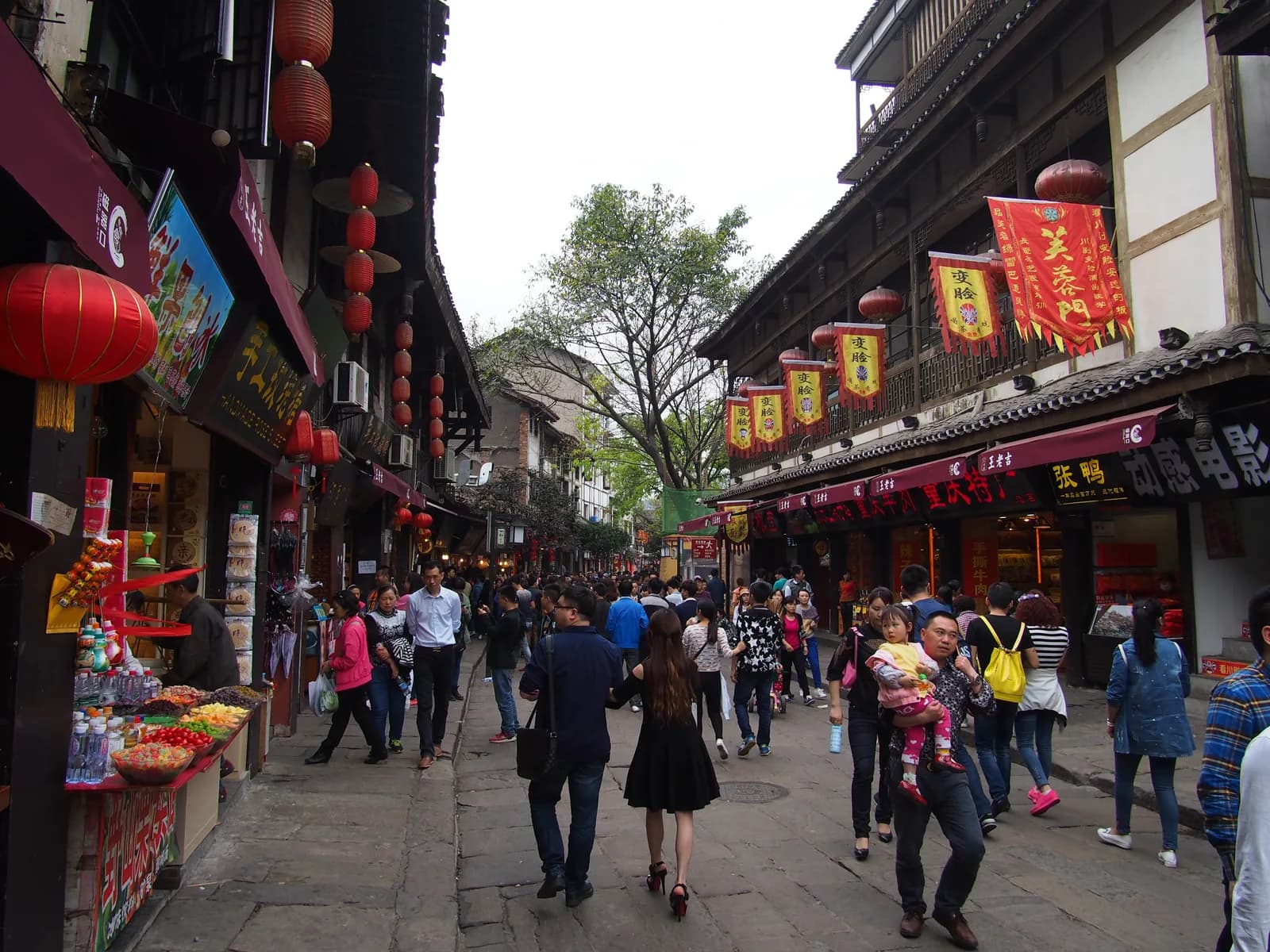
Take metro Line 1 to Ciqikou Ancient Town first thing, because every recent report agrees on the timing: weekday morning before the tour groups, or accept shoulder-to-shoulder lanes. Entry is free. It's a restored porcelain-trade village, and yes, parts are souvenir-stall theatre, but travelers keep rating the snack alleys and the temple climb anyway. A solo traveler who did it in April gave it most of a day happily; two to three hours is enough for most people before the crowds peak.
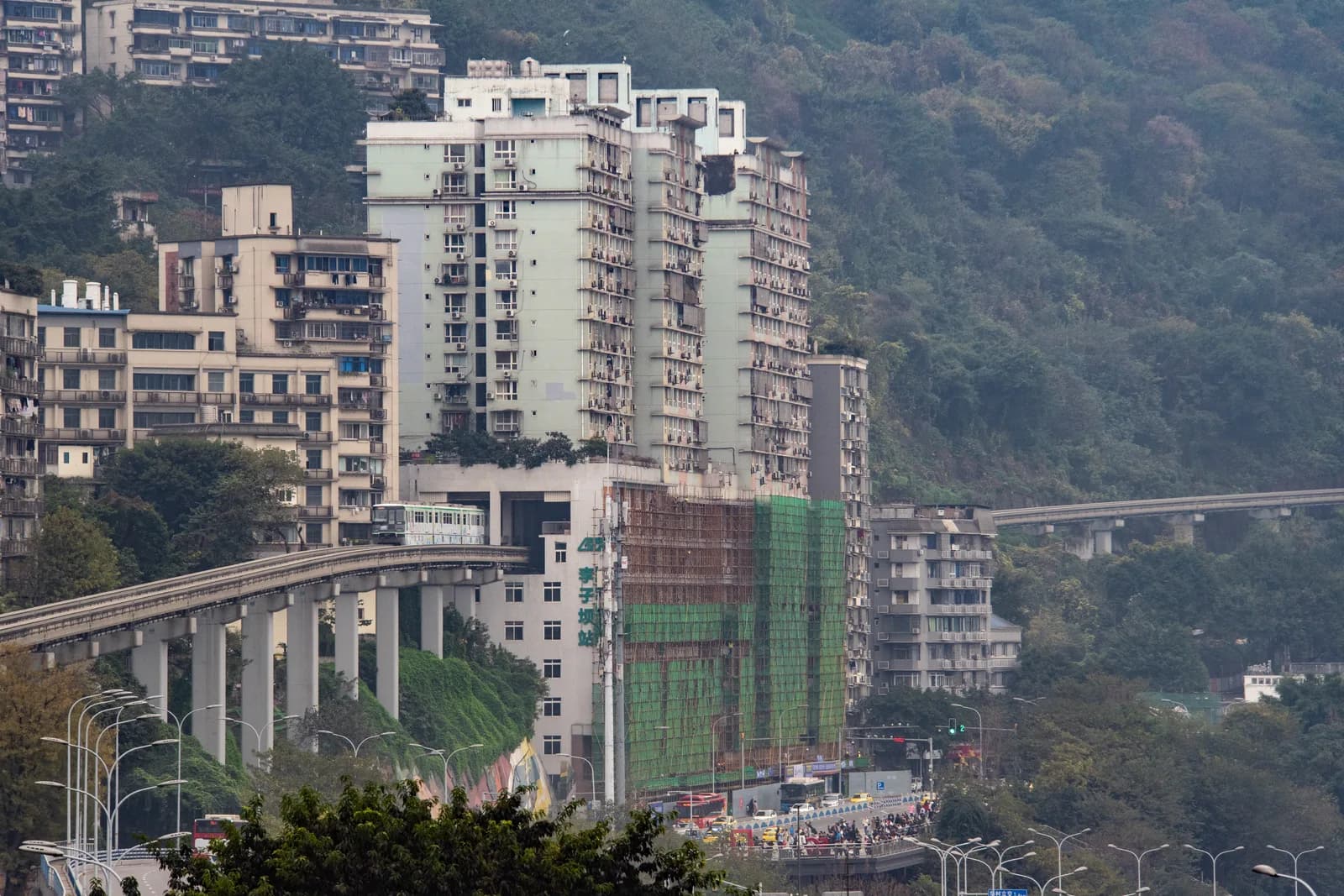
Ride Line 1 back and switch to Line 2 for Liziba, the station where the monorail passes through the middle of a 19-storey apartment block. The viewing platform outside Exit 2 is free and trains come every few minutes, so this is a 30-minute stop, not a half-day. A Chongqing local posting in May 2025 offered the upgrade most visitors miss: instead of squeezing onto the ground-level platform, walk up to the eighth-floor level for a side-on view of the train entering the building. The same local's broader point is the best single tip in this post: at every famous spot, walk one layer beyond the platform everyone is standing on. From Liziba, continue up to Eling Park for the free two-river panorama, the best daytime view on the peninsula.
Dinner is the hotpot initiation. Chongqing hotpot runs hotter than anything in Guiyang's food scene, which is itself no gentle baseline, and the recurring advice from travelers is to order at least one level milder than instinct (ask for weila, micro-spicy, or a split yuanyang pot with a mild broth). Ordering happens by QR code almost everywhere; scanning through Alipay gets you English menus more reliably than WeChat, a workaround an April traveler landed on after some hungry evenings. Afterwards, pick your night: the Two Rivers night cruise from Chaotianmen (about RMB 128-168 for roughly an hour on the water, boats from 7pm) or the Jiujie bar district in Jiangbei, which a former resident described in a 2025 thread as the city's proper nightlife zone.
Day 3: Wulong, Dazu, or a slower city day
The third day is a fork, and recent threads have effectively voted. Wulong Karst is the headline option: the Three Natural Bridges, the giant karst arches that appeared in Transformers, about 2.5 hours away door to door. The math changed in late 2024 when the new high-speed line opened: trains from Chongqing North or Chongqing East now reach Wulong South in 40-60 minutes for roughly RMB 70-100, versus about two hours on the older line to Wulong station. From either station you connect to a shuttle (around 45 minutes) to the visitor center, then a bus and elevator drop you into the gorge for a 2-3 hour walking loop. Entry runs around RMB 135-155 including the scenic shuttle. A March 2025 couple did it independently, booking trains on Trip.com and catching the RMB 10 local bus, and reported the whole thing was easier than online guides made it look; their one warning was fog, which can blank the views. If you'd rather not stitch the legs together yourself, Wulong day tours from Chongqing bundle transport, tickets and lunch.
The quieter alternative is the Dazu Rock Carvings, UNESCO-listed Buddhist cliff sculpture 25-45 minutes away by HSR (RMB 32-43 to Dazu South). The catch recent visitors flag: the station sits about 40km from the Baodingshan site, so budget a Didi (RMB 80-100) or a slow two-bus connection on top, or take a Dazu day tour and skip the logistics. Culture-heavy, far less crowded than Wulong.
And if you only have two days, the answer is already settled: a comment with the most agreement in a May 2025 thread said flatly that with two days in Chongqing there's no need for Wulong, because it takes the whole day. Spend the extra time on the peninsula instead: Baixiangju's stilted apartment towers, Luohan Temple (which an April visitor called the best temple of their whole China trip), or the 22nd-floor "ground level" square at Kuixing Building.
Where to stay for this itinerary
Short version, because the full zone-by-zone comparison is its own post. This itinerary is built around the Yuzhong peninsula, so sleep on it or one metro ride from it.
- Jiefangbei, the first-timer answer: walking distance to Hongya Cave, Bayi Road and the Jiaochangkou metro interchange, with hotels from RMB 200 business chains to the Westin.
- Guanyinqiao, the value answer: cheaper rooms, the Jiujie nightlife strip downstairs, 15 minutes to Jiefangbei on Line 3 or 9.
- Nanbin Road, the view answer: the whole lit peninsula across the water, at the cost of a bridge crossing for every itinerary item.
- Liziba / Eling, the left-field answer: RMB 150-350 rooms in a residential stretch of Yuzhong with the monorail shot downstairs.
Travel-style picks: first-timers book Jiefangbei and stop thinking about it; budget travelers get the most per yuan in Guanyinqiao; for a splurge it's the InterContinental Raffles City at Chaotianmen, the most-mentioned high-end hotel in recent reports; nomads and week-long stays do better in Guanyinqiao with its supermarkets and long-stay rates. The reasoning behind all four calls is in the dedicated guide.
Getting there and when to go
From Guiyang: this is the pairing I keep planning. Direct high-speed trains from Guiyang North reach Chongqing West in about 2 hours, second class RMB 113-159, running all day. If you're doing my Guizhou itinerary, Chongqing bolts onto the end as a two-or-three-day extension, and the same line works as the long-range option in my day trips from Guiyang post. Note that Chongqing West is a long way southwest of the centre: 40-60 minutes to Jiefangbei by metro or Didi.
From elsewhere: Chengdu is 1-2 hours by HSR and the classic combination; Xi'an about 5 hours; Shenzhen roughly 7 hours by rail or a 2.5-hour flight. Jiangbei International Airport (CKG) sits on metro Lines 3 and 10, about 45-60 minutes from Jiefangbei for a few RMB. Book domestic trains on Trip.com or the 12306 app 3-5 days ahead near holidays. At the time of writing, Kiwi passport holders enter China visa-free for stays up to 30 days, and Chongqing is on the 240-hour visa-free transit list for eligible nationalities, but check the current policy before booking.
Getting around: metro and monorail rides cost RMB 2-7 and cover everything in this itinerary; Didi handles the rest. Set up Alipay or WeChat Pay with a foreign card before you fly, since both now accept international Visa and Mastercard and cash is a fallback, not a plan. And trust the recurring warning over your map app: Chongqing's streets stack vertically, so a 400m walk can mean eleven flights of stairs.
When to go: March-May and September-November are the windows, 15-25°C and clear enough at night for the skyline. July-August is furnace season, regularly past 40°C; if you must come then, flip the itinerary nocturnal. Winter is foggy and cheap. Skip National Day week (October 1-7) and Spring Festival entirely.
Budget breakdown (rough daily costs in USD)
| Item | Backpacker | Mid-range | Comfort |
|---|---|---|---|
| Accommodation per night | $28-50 | $70-130 | $160-260 |
| Meals (3/day) | $10-18 | $20-40 | $50-80 |
| Sights and activities | $5-15 | $20-45 | $60-120 |
| Metro / Didi per day | $2-5 | $6-12 | $15-25 |
| Daily total | $45-88 | $116-227 | $285-485 |
The city itself is cheap to sight-see: Hongya Cave, Liziba, Eling Park, Ciqikou and the bridges are all free, so the paid line items are the cableway (RMB 30-50), the night cruise (RMB 128-168) and hotpot. A Wulong day adds roughly US$50-90 per person independently, more with a tour; Dazu lands similar once transport is counted.
Recommendations
The tips I'd actually forward to a friend flying in next month, distilled from the reports:
- Set up Alipay before you fly and use its QR scanner to order in restaurants; travelers consistently find it smoother than WeChat for English menus.
- Be on Qiansimen Bridge before 7:15pm for the Hongya Cave lights at 7:30, and treat the inside of the complex as a quick walk-through, not the event.
- Ride the cableway one way and metro back, or start from the south bank where the queue is reported shorter.
- Do Ciqikou on a weekday morning; by noon on weekends it is shoulder-to-shoulder.
- At Liziba, go up a level: the eighth-floor angle beats the crowded ground platform, per a local's 2025 write-up.
- Book HSR legs 3-5 days ahead around holidays on Trip.com or 12306; Wulong and Guiyang trains sell out first.
- Order hotpot one level milder than your instinct, or get a split pot; every report that skipped this step regrets it.
- Pick a hotel beside a metro entrance, not just near one on the map; the vertical streets turn "300m away" into a stair workout.
- Leave one unplanned hour per day to walk into whatever stacked alley is behind the sight you came for; it's the consistent highlight in long-stayers' reports.
The honest closing note
This is the itinerary I've assembled but not yet walked, which is exactly the deal on this corner of the blog: researched hard, flagged honestly, updated when I finally take the two-hour train from my family's city. The shape I'm confident in, because dozens of recent travelers keep confirming it: two city days built around evenings, Wulong only if you have a third, Jiefangbei as base. If you've done Chongqing recently and I've got a timing or a price wrong, tell me and I'll fix it. For the rest of the region, the where to stay in Chongqing guide picks your zone, the Guizhou itinerary covers the mountain province two hours south, first impressions of Guiyang introduces the city at the other end of the line, and the Shenzhen itinerary handles the other Chinese megacity on this blog.
Frequently asked
How many days do you need in Chongqing?
Two full days covers the city core: Jiefangbei, Hongya Cave at night, the Yangtze cableway, Liziba, Eling Park and Ciqikou. Add a third day for a Wulong Karst or Dazu Rock Carvings day trip. Recent traveler reports are consistent that two city days plus one day trip is the sweet spot; much longer and the marquee sights start repeating.
Is 2 days in Chongqing enough?
Yes, if you stay on and around the Yuzhong peninsula and skip the day trips. Day one handles Jiefangbei, the cableway and Hongya Cave after dark; day two covers Ciqikou, Liziba and a hotpot dinner. Travelers with only two full days are consistently advised to keep Wulong for a future visit, since it eats an entire day.
Is the Wulong Karst day trip worth it from Chongqing?
With three or more days, yes: the Three Natural Bridges are the most recommended day trip in recent reports, and the new high-speed line reaches Wulong South in under an hour. With only two days, the consensus in 2025 threads is to skip it, because between trains, the shuttle to the visitor center and the 2-3 hour walking loop it consumes a full day.
What order should I see the main Chongqing sights in?
Do Jiefangbei and the Yangtze cableway in daylight, then be in position for Hongya Cave when the lights come on at 7:30pm, viewed from Qiansimen Bridge. Save Ciqikou for a weekday morning before the tour groups, and hit Liziba station early too. Chongqing is a city that improves after dark, so plan indoor or transit-heavy things for midday.
How do I get to Chongqing from Guiyang?
Direct high-speed trains from Guiyang North reach Chongqing West in about 2 hours, second class RMB 113-159 (roughly US$16-23), running all day. Book on Trip.com or the 12306 app a few days ahead around holidays. Chongqing West is 40-60 minutes from Jiefangbei by metro or Didi, so build that into your first-day plan.
When is the best time to visit Chongqing?
March to May and September to November, when walking weather sits around 15-25°C and the night skyline is usually visible. Avoid July and August: Chongqing is one of China's furnace cities and 40°C days are normal. Avoid National Day week (October 1-7) and Spring Festival entirely, when Hongya Cave becomes a one-in one-out crowd event.
Is Chongqing overrated?
A minority of travelers argue yes: it is foggy by day, culturally close to Chengdu, and the viral sights are crowded. The majority view in recent reports, including from people who have traveled China for months, is that it is one of the most distinctive cities in the country if you treat it as a night city and wander beyond the three famous photo spots.