Shenzhen Itinerary: 3 Days in China's Strangest, Best-Value City
A 3-day Shenzhen itinerary that actually works: Huaqiangbei and Futian day one, Nanshan and Shenzhen Bay day two, Shuibei, Dafen and the spa day three.
Shenzhen is the city I keep telling people to stop skipping. I went in expecting a stopover and came out with a haul from the world's biggest electronics market, a $40 five-star hotel story I still lead with, and a night of reggaeton I didn't see coming. The catch is that Shenzhen punishes bad planning. It's not one city with a centre; it's four or five centres that grew at once, and if you bounce between them at random you'll spend your three days underground on the metro.
So this is the hub post: the exact three-day sequence I'd run, one district per day, with the full things to do breakdown and the where to stay comparison linked where you need them.
How this itinerary works
The whole plan rests on one rule: one district per day. Futian, Nanshan and Luohu each hold a full day of the good stuff, they each have their own skyline, and they're 30-60 minutes apart on the metro. Cluster by zone and you walk most of the day. Ignore the zones and you commute.
The order matters too. Futian goes first because it's the arrival point (the high-speed rail from Hong Kong lands there), it holds the single signature experience in Huaqiangbei, and its evening light show is the best free welcome to the city. Nanshan goes second because it's the relaxed day: galleries, old lanes, seaside food, sunset over the bay. Luohu goes last because it's the shopping-and-spa day, and finishing your trip in a bathhouse you can technically sleep in is the correct way to leave Shenzhen.
Getting around is genuinely easy now. The metro takes contactless foreign bank cards at the gate, or you can set up the Shenzhen Metro ride code in Alipay with a Visa or Mastercard. Fares run about ¥3-14 by distance, and there's a ¥20 one-day pass (unlimited rides for 24 hours from first use) that pays for itself on days one and two of this plan. The booking rule from the where to stay guide still applies: sleep within a 5-10 minute walk of a station and everything else falls into place.
The 3-day Shenzhen itinerary at a glance
| Day | Zone | Morning | Afternoon | Evening |
|---|---|---|---|---|
| 1 | Futian | Huaqiangbei electronics market | Lianhuashan Park, Civic Center | Skyline light show, Coco Park |
| 2 | Nanshan | OCT-Loft galleries and coffee | Nantou Ancient City, Shekou | Shenzhen Bay Park at sunset |
| 3 | Luohu | Shuibei jewellery district | Dafen oil painting village | 24-hour spa (stay the night if you like) |
Day 1: Futian, Huaqiangbei and the light show
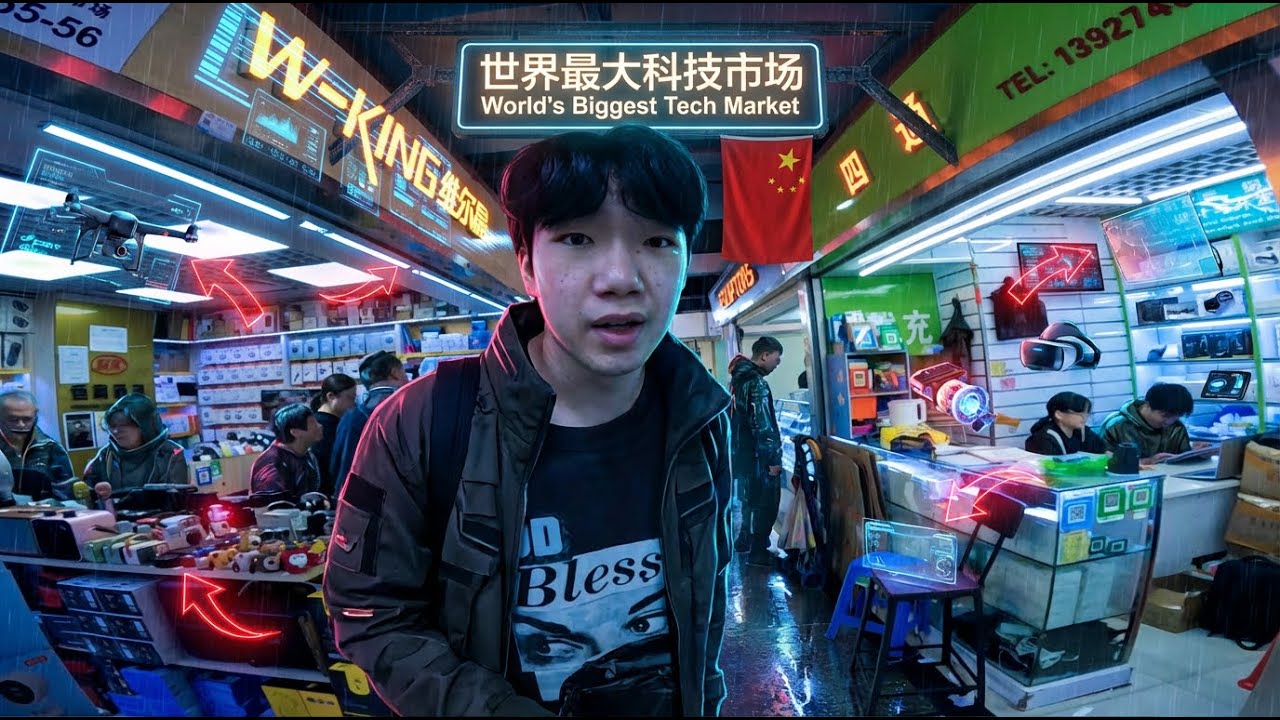
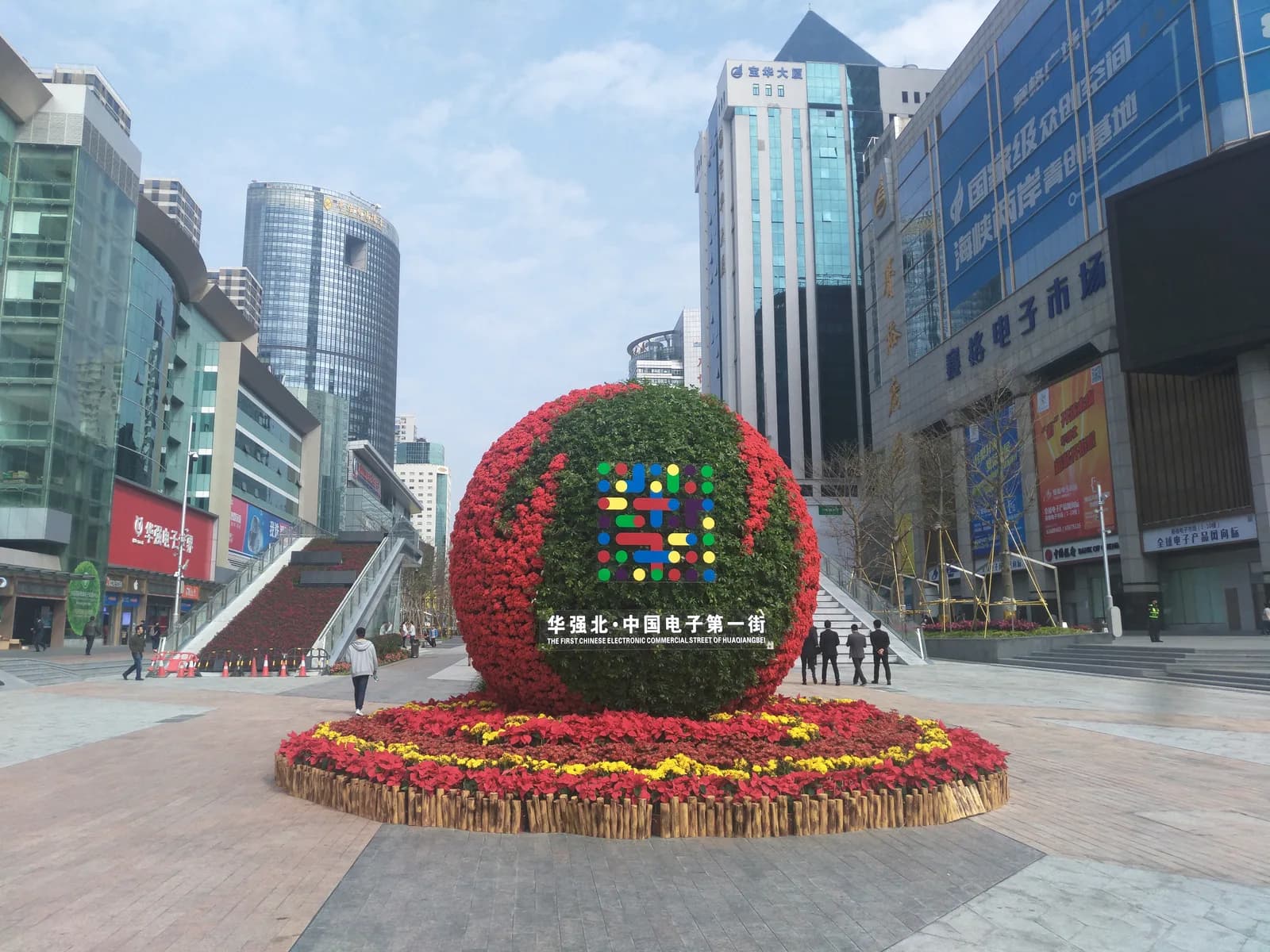
Start at Huaqiangbei, and go in the morning before the crowds compound. This is the world's biggest electronics market: over 200,000 square metres, north of 20,000 sellers, floors of components giving way to floors of drones, then speakers, then things you can't identify. When I was bargaining there, the vendor was enjoying it more than I was, and that's the right spirit to bring. Haggle cheerfully, bench-test anything before you pay, and treat it as a spectacle first and a shop second. Two hours if you're not a hardware person, half a day if you are. Tuesday to Friday has the best stock and energy. The things to do guide has the full market playbook, including the tourist mark-up problem.
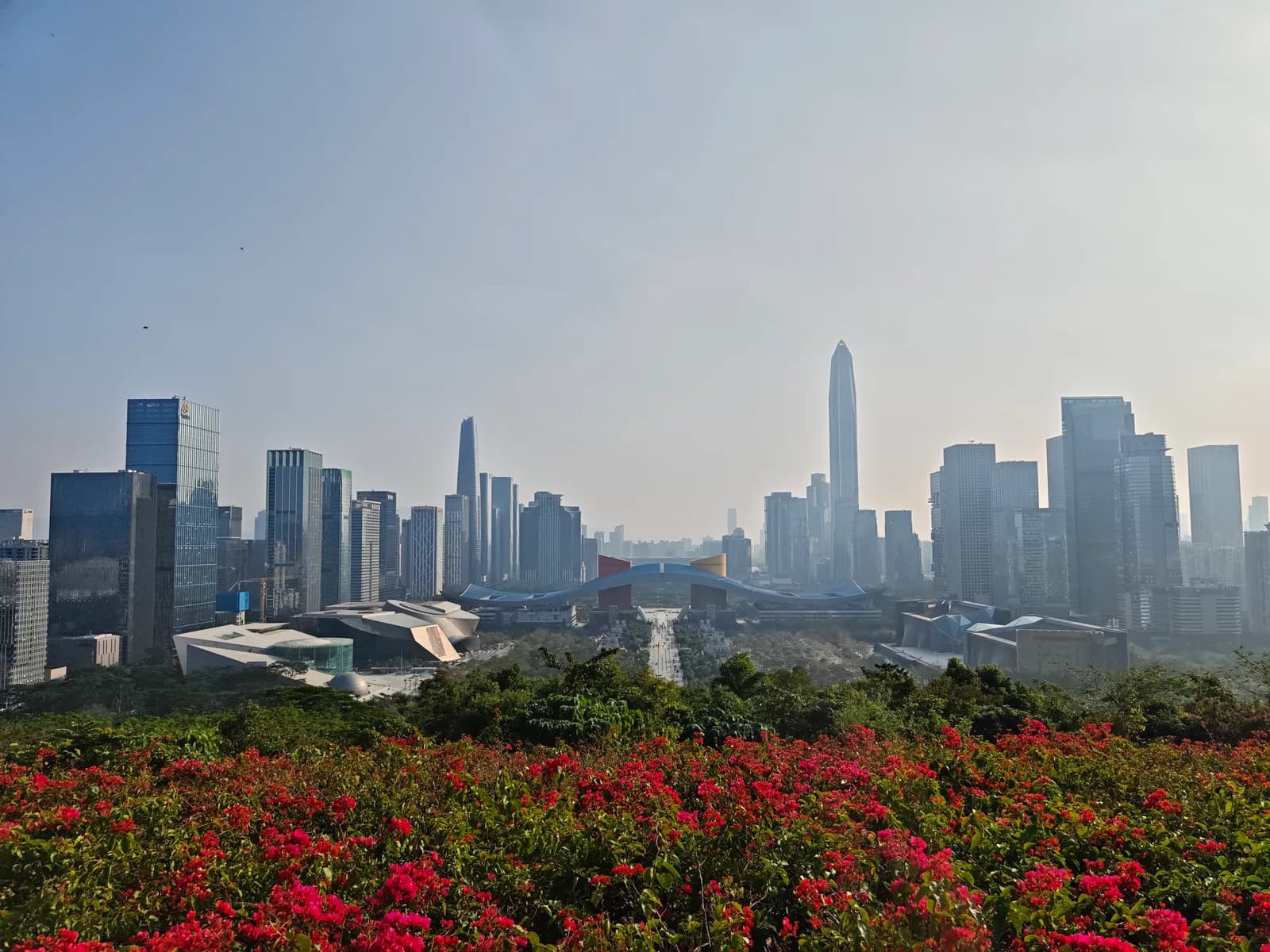
Lunch in the district, then take the metro two stops to Lianhuashan Park and do the short climb to the Deng Xiaoping statue. It's the classic view: the whole Futian CBD laid out below you, and the fastest way to understand how young and enormous this city is. Wander down through the Civic Center area afterwards; if the heat is on, the Link City underground mall network connects the metro stations and is air-conditioned the whole way.
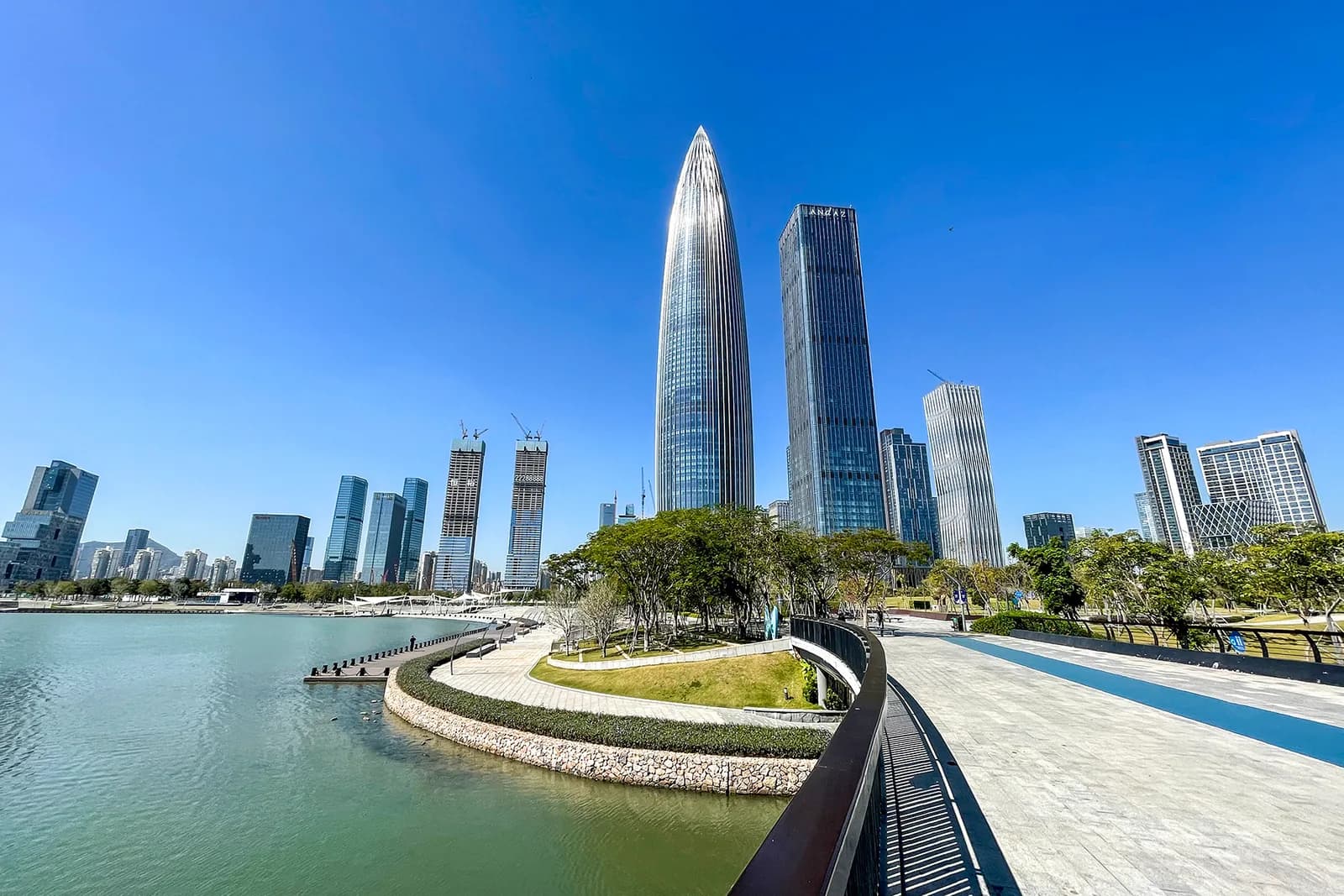
Stay for dark, because the skyline light show across the CBD towers is the best free thing in Shenzhen. If a drone show is scheduled at Talent Park, it's also free with a reservation; anyone selling drone show tickets is scamming you. Finish at Coco Park, the main bar cluster. Nightlife here caught me completely off guard: this is where we found China's biggest Latino party and $2 tequila shots, and the full story is in the things to do post.
Day 2: Nanshan, old lanes and Shenzhen Bay at sunset
Day two is the slow day, and it's the one that changes people's minds about Shenzhen having no culture.
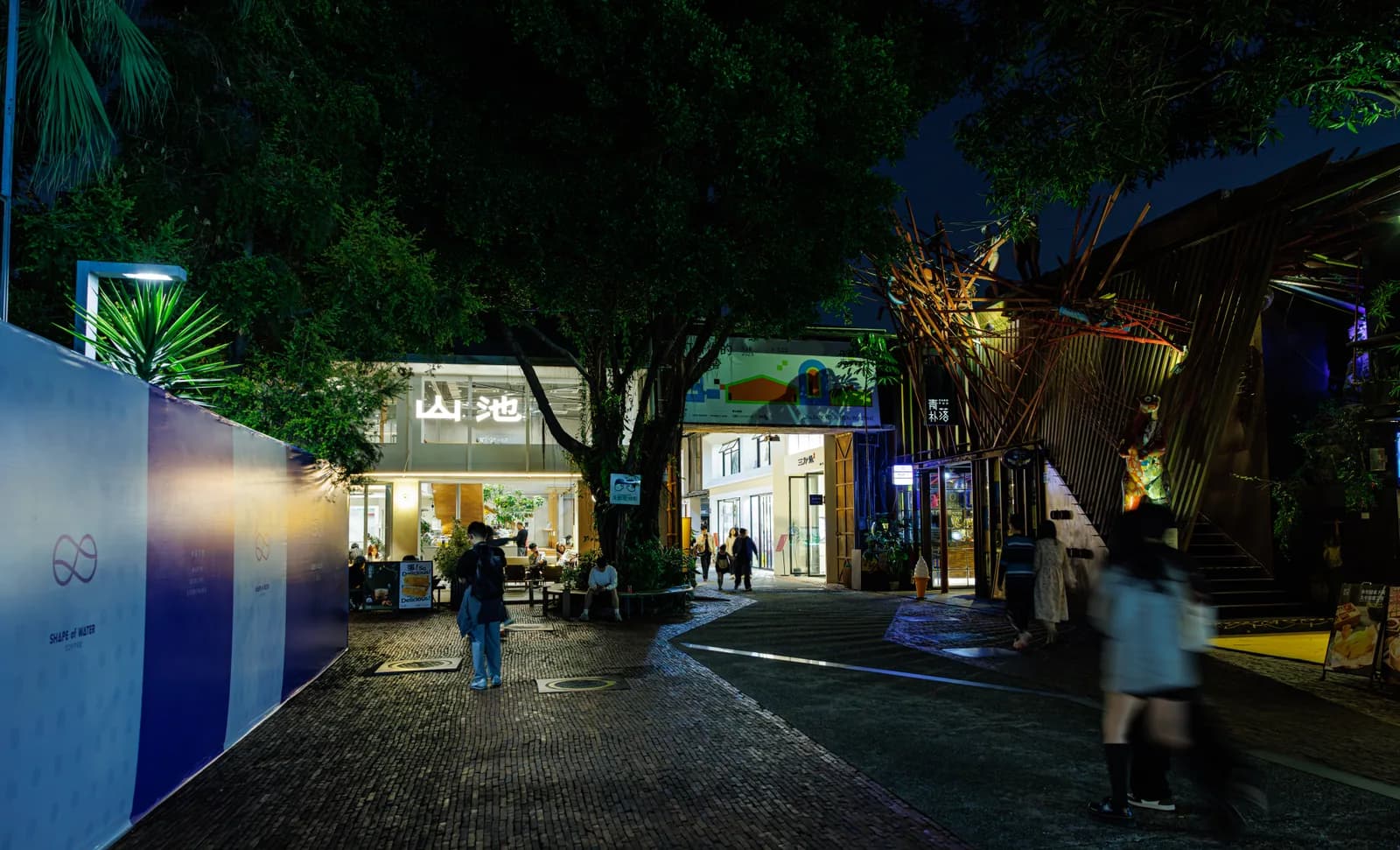
Start at OCT-Loft, the converted-factory arts precinct (Line 1 to Qiaocheng East, then an 8-10 minute walk). It's free, it's galleries and indie coffee in repurposed industrial lanes, and I'll repeat my honest take: if you've done this genre in Melbourne or Berlin it won't floor you, but as a two-hour caffeinated morning it's exactly right.
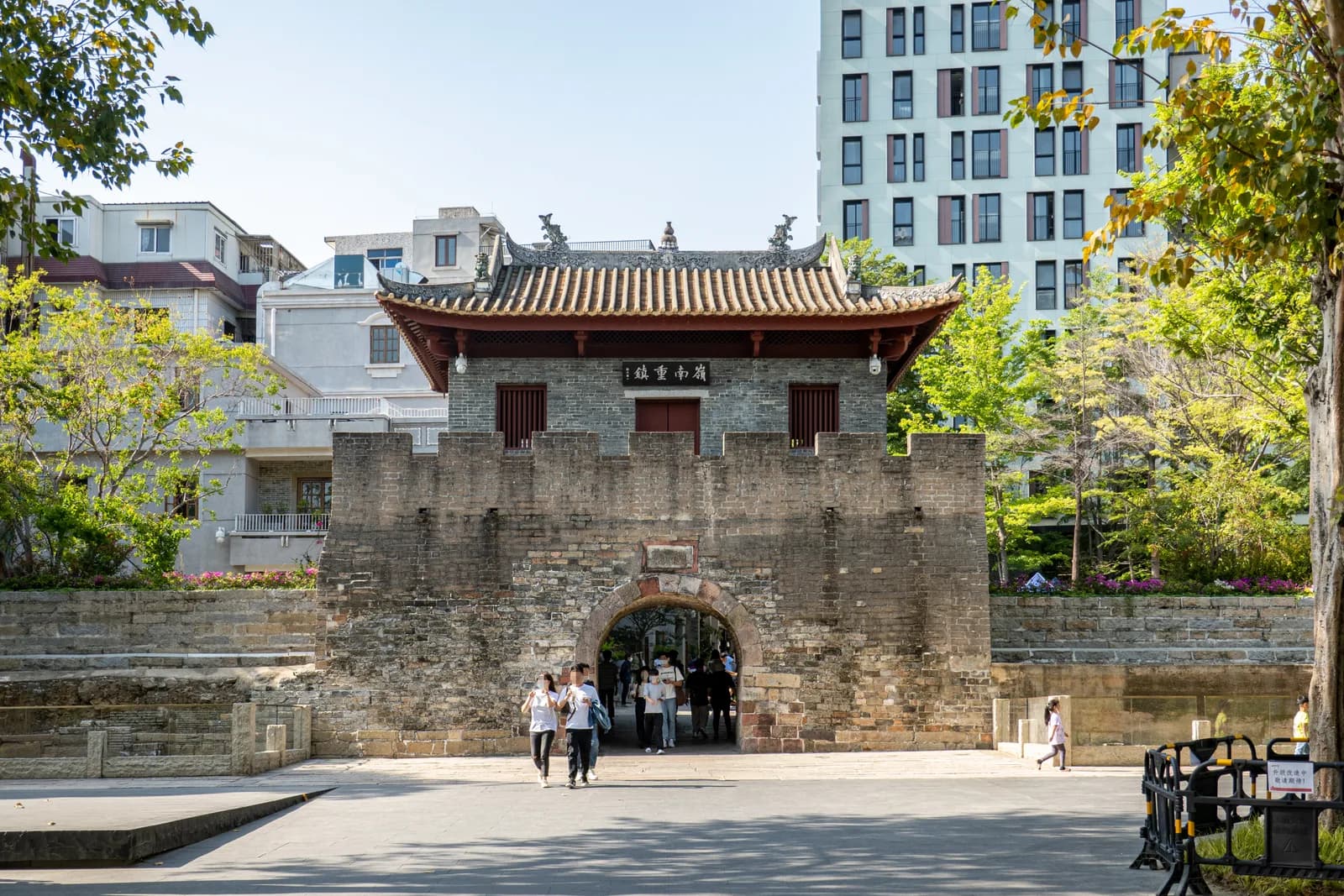
Next, Nantou Ancient City. This is the closest thing Shenzhen has to a historic core: the old walled county seat that governed the region for centuries before Shenzhen existed, now a restored maze of Lingnan-style lanes, the old South Gate, small museums and a lot of food stalls. It's free, it photographs beautifully, and it's the counter-argument to "Shenzhen has no history" (the honest version is that it has exactly one block of it, and this is the block).
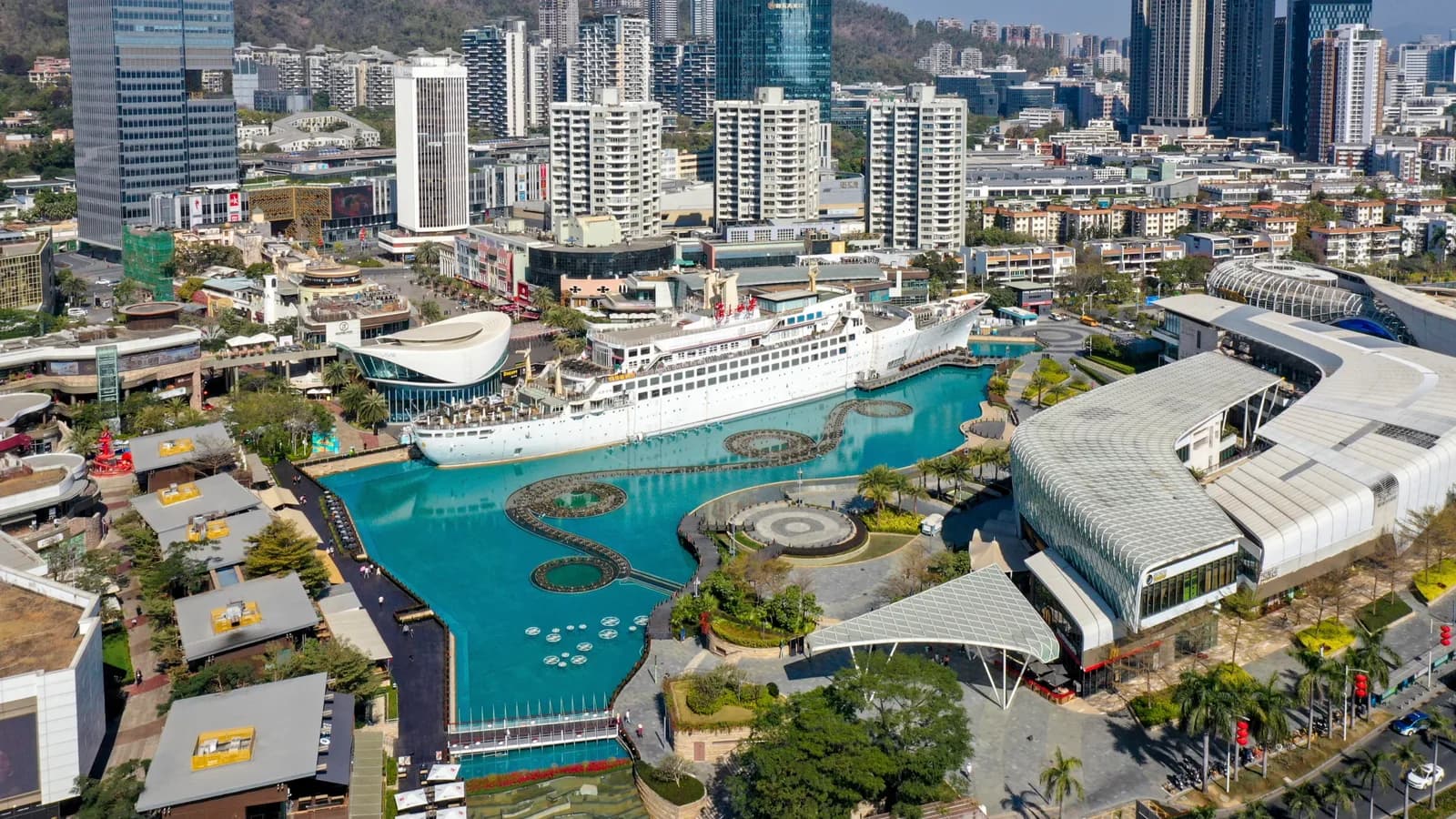
Late afternoon, head to Shekou. Take Line 2 to Sea World station, walk the waterfront plaza with the landlocked ship, and eat on Wanxia Road or Shekou Old Street, which locals push over the CBD for actual food. This is the most relaxed, most English-friendly corner of the city, and the food streets are the best in Shenzhen.
Then time your evening around sunset at Shenzhen Bay Park and Talent Park. The coastal path runs about 13 kilometres with a mangrove boardwalk and Hong Kong's hills across the water, bikes rent for around ¥30 an hour, and there's a guided Shenzhen Bay bike tour if you'd rather have the route handled. Arrive an hour before sunset, watch the towers light up, and you've had the best evening in the city for the price of a bike.
Day 3: Luohu, gold by the gram and the spa
Start in Shuibei, the jewellery district, and give it the morning. Gold sells near spot price by weight plus a workmanship fee, lab-grown diamonds are the current draw, and the dupe floors ($10 pieces styled after the luxury houses, quality ranging from junk to startlingly good) are half the fun. I came out of here with a haul and a permanently rearranged sense of what jewellery costs. If you want the counterfeit-bag version instead, that's Luohu Commercial City at the border crossing.
For lunch, skip the malls and go to the Luohu underground food court, which is a genuinely good wander: Peking duck, dumplings, dessert, all cheap.
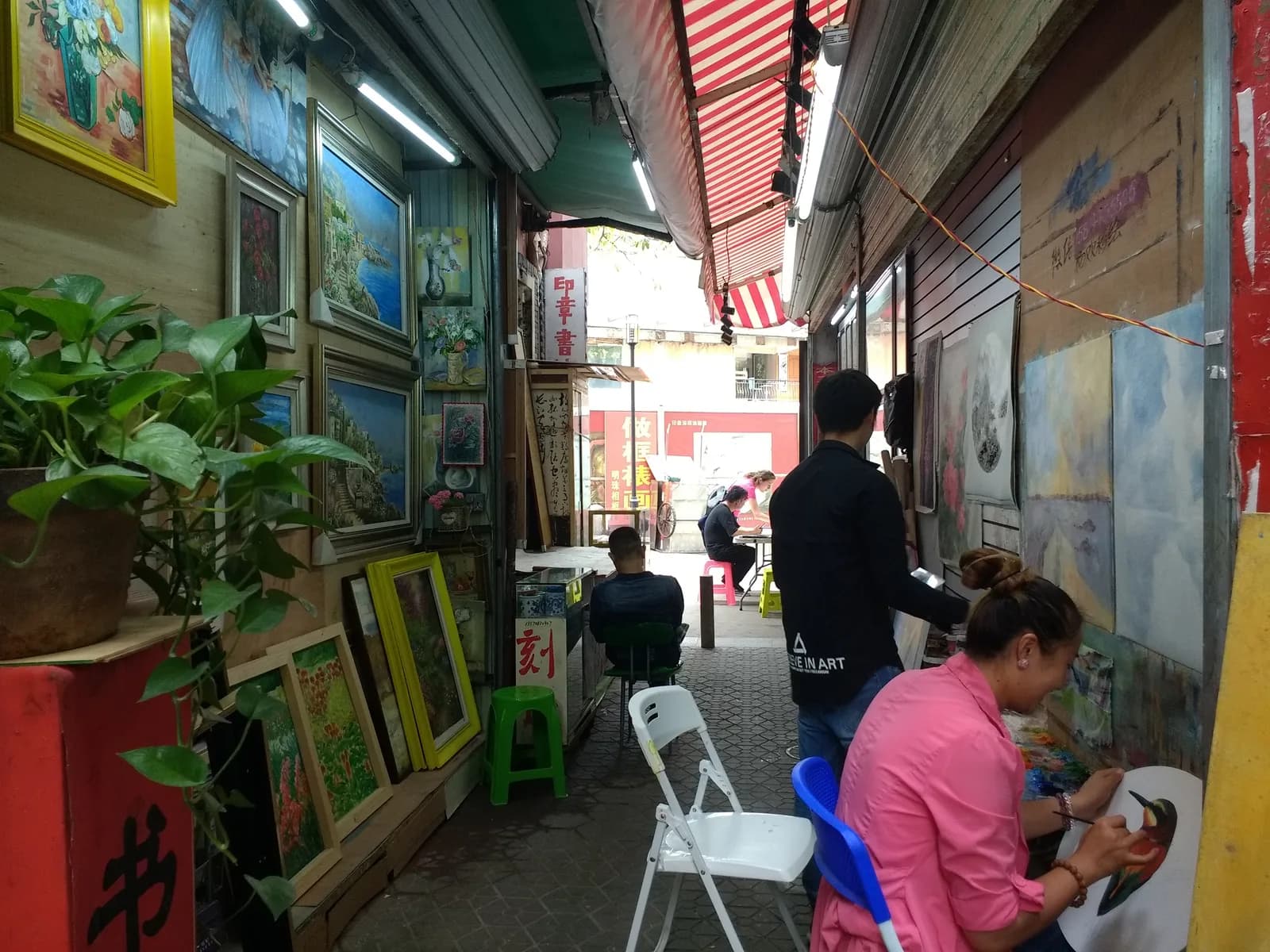
Afternoon is Dafen oil painting village (Line 3 out to Dafen station, in Buji). A whole district of working painters knocking out reproductions and originals, commercial but unique, and the best souvenir shopping in the city by a distance. Returning visitors say it looks much the same as a decade ago, which I'd take as a feature. Budget a half day including the ride out.
Finish at a 24-hour spa complex, the best value experience in China. One entry fee (from around 200 RMB, more at the flash ones) gets you the bathhouse, buffet, massage chairs, nap rooms and permission to simply exist there as long as you like; we did a top-to-bottom run for about $80 USD and it was comfortably worth it. Some, like Aqila, let you stay overnight, which is a legitimate final-night accommodation strategy if your flight or train leaves in the morning. Bring nothing; that's the point.
Swaps and extra days
With kids, swap Day 3's Shuibei morning for the Shenzhen Safari Park (200 RMB, three to four hours, and read the honest welfare caveats in the things to do guide first). I'd still push back on Window of the World unless the kids are the point of the trip. A fourth day buys you either the safari park without sacrificing anything, a proper Shekou-and-bay repeat, or the Dameisha beaches out east, which are pleasant but too far to justify inside three days.
Only have one or two days?
One day (the Hong Kong day trip): run Day 1. The high-speed rail from West Kowloon to Futian takes about 14 minutes for ¥75-82, which makes Shenzhen almost rude not to visit from Hong Kong. Huaqiangbei in the morning, Lianhuashan in the afternoon, the light show after dark, train back. If your day runs late, remember Huanggang is the only 24-hour crossing.
Two days: Days 1 and 2 as written, then squeeze Shuibei into your final morning before you leave; it's ten minutes from the Luohu border crossing anyway. The spa becomes your night-two evening instead of a finale.
The visa situation makes the short version easier than people expect. As of 2026, 77 countries including New Zealand and the UK get 30-day visa-free entry. US, Mexican, Czech and Lithuanian passport holders use the 240-hour (10-day) visa-free transit, which needs a confirmed onward ticket to a third country or region, and here's the useful part: Hong Kong counts as a third region, so a Hong Kong to Shenzhen to Hong Kong loop qualifies. West Kowloon station is itself an approved transit entry port now. Bring a hotel booking and onward ticket; screenshots are accepted.
Where to stay for this itinerary
Base yourself in one place for all three nights; the metro makes commuting to each day's zone trivial, and moving hotels in Shenzhen wastes a morning. The full where to stay comparison covers hotels, prices and the $40 five-star economics; the short version for this route:
Futian, the first-timer pick and the best base for this exact itinerary. Seven metro lines, the HSR terminus from Hong Kong, and Day 1 happens on your doorstep.
Luohu, the budget pick. Rooms from $28-50, the Day 3 markets walkable, the Hong Kong border a stroll away. Older and more chaotic.
Shekou, the pick for families, nomads and anyone staying longer. Seaside, English-friendly, the best food streets, but a long ride from Luohu's markets.
Bao'an, only if you fly out at dawn. It's the airport suburb, nothing more.
For luxury on any of the first three, the where to stay guide covers the St. Regis 96th-floor check-in and Futian's five-star row; even the top end runs about a third of Tokyo prices.
Getting there and when to go
From Hong Kong: high-speed rail from West Kowloon to Futian, about 14 minutes, ¥75-82, and it delivers you to the best base zone. The budget alternative is the MTR East Rail to Lo Wu then Metro Line 1, roughly 60-75 minutes for HK$40-55. Flying into HKIA and coming straight over, the SkyPier ferry runs to Shekou without clearing Hong Kong immigration. Shenzhen's own airport is Bao'an (SZX), on Metro Lines 1 and 11; Line 11 is the fast one.
Book high-speed rail on Trip.com (takes foreign cards, no Chinese number needed) or the 12306 English app. Get a travel eSIM before you fly, which routes your data out of China and gives you Google Maps and Instagram with no VPN, and set up Alipay or WeChat Pay with a Visa or Mastercard, because cash is genuinely awkward here now. Do the Alipay setup at home, not at the airport, since the free airport wifi wants a Chinese number for verification.
Best months: October to December, warm and dry. January to March is grey but cheap and fine for a markets-and-food trip. Summer is hot, humid and typhoon-prone, with August the cheapest month. The thing to actually plan around is the Canton Fair in April and October, which fills hotels across Shenzhen and Guangzhou both and turns a $60 room into a $140 room. Flexible by a week? Check the fair calendar first.
Budget breakdown (per day, USD)
| Item | Backpacker | Mid-range | Comfort |
|---|---|---|---|
| Accommodation | $12-30 | $50-140 | $180-400 |
| Meals (3/day) | $8-18 | $25-50 | $70-150 |
| Metro / DiDi | $2-5 | $6-15 | $20-40 |
| Activities | $0-15 | $25-55 | $60-150 |
| Daily total | $22-68 | $106-260 | $330-740 |
Call it $70-200 for the full three days backpacking, $320-780 mid-range. The itinerary itself is nearly free: Huaqiangbei, Shuibei, Dafen, Nantou, OCT-Loft and both bay parks cost nothing to walk. Your money goes on food, the spa, and whatever the markets talk you into.
Recommendations
- Do one district per day in this order: Futian, Nanshan, Luohu. Criss-crossing zones is how three days evaporate.
- Buy the ¥20 metro day pass on days one and two, or just tap a contactless foreign card at the gate.
- Set up Alipay or WeChat Pay with a foreign card before you fly, and get a travel eSIM so Google Maps works without a VPN.
- Hit Huaqiangbei Tuesday to Friday, in the morning, and haggle as an opening move, not a confrontation.
- Time Shenzhen Bay for the hour before sunset and stay until the towers light up.
- Eat in Shekou and the Luohu underground food court, not the mall chains.
- Skip Dongmen unless you're already in Luohu with time to burn; it's the most-skippable famous thing in the city.
- Don't buy drone show tickets; the shows are event-based and free with a reservation.
- Book your hotel 3-4 weeks out, or 2-3 months if your dates touch the Canton Fair in April or October.
- Consider the spa as your final night's accommodation if you have an early departure; some complexes let you sleep over.
Final note
Three days is exactly right for Shenzhen. Long enough for the market, the bay, the gold district and the spa; short enough that the city's lack of conventional sights never becomes a problem. It's the least "China" city in China, which is exactly why I rate it as a first stop.
Book your base with the where to stay in Shenzhen guide, use the things to do in Shenzhen post to go deeper on anything in this plan, and if Shenzhen has you curious about the completely opposite version of the country, that's the Guiyang cluster: first impressions of Guiyang, things to do in Guiyang, the Guiyang food guide, day trips from Guiyang and the 7-10 day Guizhou rail loop. Planning the wider region? The first trip to Japan guide runs the same prep logic for Asia's other easy entry point.
Frequently asked
Is 3 days enough for Shenzhen?
Yes, three days is the sweet spot. Day one covers Futian and the Huaqiangbei electronics market, day two covers Nanshan, Shekou and the Shenzhen Bay skyline, and day three covers Luohu's markets, Dafen painting village and a 24-hour spa. Two days works if you cut the Luohu day down to a Shuibei morning; four days only makes sense if you're adding the safari park or a beach run out east.
How should I split a Shenzhen itinerary between districts?
One district per day, because Shenzhen is four or five separate city centres and criss-crossing them wastes hours. Do Futian first (Huaqiangbei, Civic Center light show, Coco Park), Nanshan second (OCT-Loft, Nantou Ancient City, Shekou, Shenzhen Bay at sunset), and Luohu third (Shuibei jewellery district, Dafen, the spa). Base yourself in Futian and the metro handles the rest.
Can I do Shenzhen as a day trip from Hong Kong?
Easily. The high-speed rail from West Kowloon to Futian takes about 14 minutes for ¥75-82, so you can be in the middle of Shenzhen before your coffee cools. For one day, do the Futian day: Huaqiangbei in the morning, Lianhuashan Park in the afternoon, the Civic Center light show after dark, then the train back. Most nationalities now enter visa-free, and Hong Kong counts as a third region for the 240-hour transit policy, so even US passport holders can do the loop.
Do I need a visa for 3 days in Shenzhen?
Probably not. As of 2026, 77 countries including New Zealand, the UK and most of Europe get 30-day visa-free entry to mainland China. US, Mexican, Czech and Lithuanian passport holders use the 240-hour (10-day) visa-free transit instead, which requires a confirmed onward ticket to a third country or region, and Hong Kong counts. Bring a hotel booking and onward ticket; screenshots are fine.
How much does 3 days in Shenzhen cost?
Roughly $70-200 USD total for backpackers and $320-780 mid-range, excluding flights. Shenzhen is one of the best-value big cities anywhere: clean budget doubles from $12-50, genuine 5-stars at $130-200, meals that overdeliver at every price, and a metro that costs a few yuan per ride. The main thing that moves the number is the Canton Fair in April and October, when hotel prices spike city-wide.
How do tourists pay for the Shenzhen metro?
Three easy options: tap a contactless foreign bank card at the gate, use the Shenzhen Metro ride code inside Alipay or WeChat (works with a Visa or Mastercard after real-name verification), or buy the ¥20 one-day pass for unlimited rides in 24 hours from first use. Fares are distance-based at roughly ¥3-14, so the day pass pays off on a busy itinerary day.
What's the best time of year for a Shenzhen trip?
October to December: warm, dry and comfortable. January to March is cool, grey and cheap. Summer is hot, humid and typhoon-prone, though August is the cheapest month. Whatever you do, check the Canton Fair calendar before booking, because the April and October fair windows push hotel prices up across the entire city.