Where to Stay in Shenzhen: Every Zone Compared (And Why It's So Cheap)
Where to stay in Shenzhen: honest comparison of Futian, Luohu, Nanshan/Shekou and Bao'an, with hotels in each. Plus why a 5-star room here costs $40.
$40 5 Star Hotel Review Shenzhen, China — INSANE Value! 🇨🇳
Forty US dollars. That's what the five-star hotel room cost. I'd been in a lot of hotels across Asia by that point and I genuinely stood in the doorway doing the maths again, because rooms like that in Auckland or Tokyo start at three times the price and don't come with the view.
China has some of the best value hotels in the world, and Shenzhen is the sharpest version of it. But value only helps if you're in the right part of the city, because Shenzhen is enormous and the district you sleep in decides which version of it you actually get: the glass-tower CBD, the chaotic border-market zone, the seaside expat scene, or the airport suburb. Here's the honest comparison.
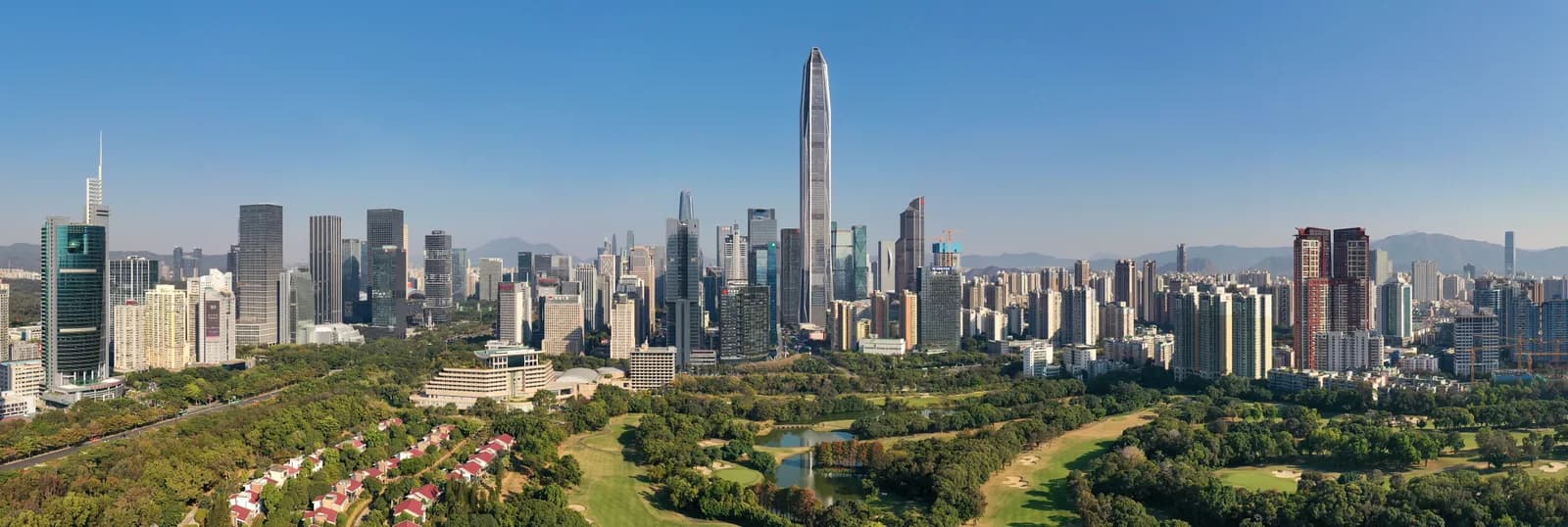
The four Shenzhen zones at a glance
| Zone | Best for | Metro | Price tier (USD/night) | Trade-off |
|---|---|---|---|---|
| Futian | First-timers, business, nightlife | 7 lines, dead central | $70-200 | Priciest, corporate, less character |
| Luohu | Budget, HK border, markets | Line 1, Lo Wu crossing | $28-90 | Older, crowded, dated buildings |
| Nanshan / Shekou | Families, expats, seaside food | Lines 1, 2, 11 | $60-180 | Long ride to the east side |
| Bao'an | Airport, cheapest rooms | Lines 1, 11 | $25-80 | You're in a suburb, not the city |
Why your zone choice matters here
Three things about Shenzhen that most guides skip.
The city is huge and young. It's not a historic core with suburbs around it; it's four or five separate centres that grew at once. Futian, Luohu, Nanshan and Bao'an all have their own skylines. A hotel that looks "close to the middle" on a map may be an hour of metro from what you actually want.
The metro is the whole game. It's excellent, it's cheap, and it accepts contactless foreign bank cards or a QR code, so you don't need a local transit card. The rule every recent guide converges on, and the one I'd actually use as a booking filter: stay within a 5-10 minute walk of a station. That single constraint matters more than which district you pick.
Price swings are driven by the Canton Fair, not the season. April and October spike city-wide because of the trade fair, and October averages around $175 a night against August's $121. If your dates are flexible, avoid those two windows and you'll get a better room for less anywhere in the city.
Where to stay in Shenzhen: the real options
Four zones worth comparing, each a different trip.
Futian, stay here if it's your first time in Shenzhen and you want to stop thinking about logistics. Seven metro lines converge here, Futian station is the high-speed rail terminus from Hong Kong (about 14 minutes from West Kowloon), and you're walking distance from Huaqiangbei, the Civic Center light show and the Coco Park bar cluster. There's an underground mall network called Link City connecting the metro stations, which is genuinely useful in the summer heat. The hotel spread is the widest in the city: Hilton Shenzhen Futian around $120 with the metro at the front door, Futian Shangri-La around $130, Four Seasons a three-minute walk from the Civic Center, and Atour Hotel Futian CBD or Jingju Hotel (around $80, directly above Jingtian metro) at the sensible end. Trade-off: it's the priciest zone, and it's corporate. You're sleeping in a business district.
Luohu, stay here if you're on a budget or bouncing back and forth to Hong Kong. It's the old centre, it sits right on the Lo Wu crossing, and Line 1 takes you everywhere else. It's also the best-positioned zone for the markets: Shuibei jewellery district, Dongmen, and Luohu Commercial City are all right here, and the Luohu underground food court is a genuinely good wander. Budget rooms start absurdly low (Chenduo Hotel Luohu Port MIXC runs CNY 220-350, roughly $30-50), and at the other extreme the St. Regis Shenzhen does check-in on the 96th floor, which is the signature splurge in the city at CNY 2,500-4,000. Trade-off: crowded, older infrastructure, and it feels its age next to Futian.
Nanshan and Shekou, stay here if you want the most liveable version of Shenzhen. Shekou is the seaside expat quarter: take Line 2 to Sea World station, walk the waterfront, and eat on Wanxia Road or Shekou Old Street, which locals push over the CBD for actual food. It's the most English-friendly zone and locals describe it as livelier than the CBD in the evenings. Nanshan proper is also where the theme parks are (Window of the World, Happy Valley, the safari park), so it's the family pick. Trade-off: you're a long metro ride from the east side of the city, and the OCT sub-zone is quiet at night.
Bao'an, stay here if you have an early flight or you want the cheapest bed in Shenzhen. It's the airport district, Lines 1 and 11 connect it, and rooms go for very little. Home Inn Nantou is the metro-adjacent budget name that comes up. Trade-off: it's a suburb. There's no reason to stay here otherwise.
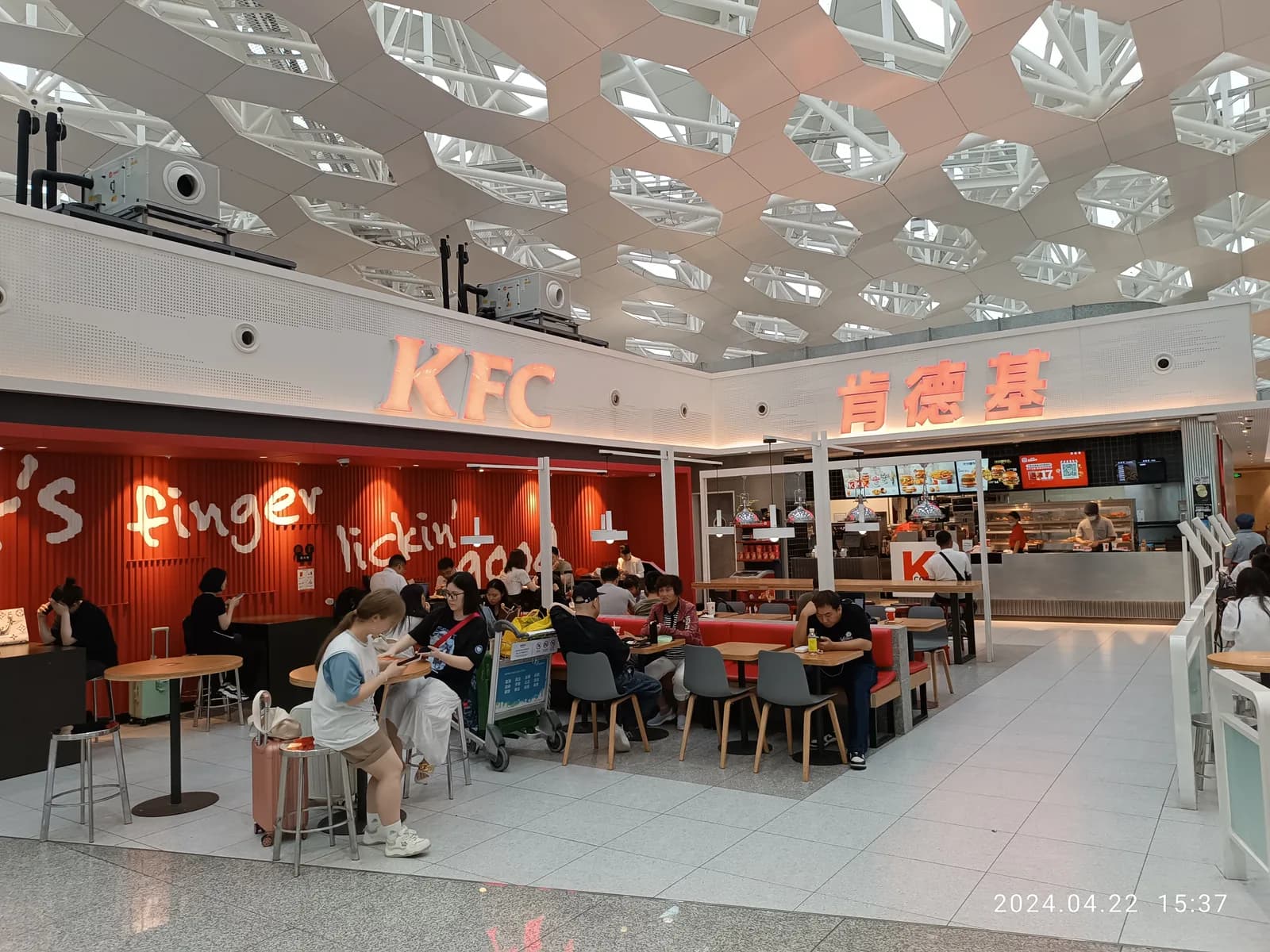
Luohu or Futian: which is better?
This is the actual decision for most people, because Nanshan rules itself out the moment you look at the metro map and Bao'an was never in the running. So, head to head:
Pick Futian if you're here to see Shenzhen. It's the modern centre: seven metro lines, the high-speed rail from Hong Kong terminating under your feet, Huaqiangbei and the Civic Center light show on foot, and the deepest hotel bench in the city from $70 up. It's also simply nicer. The buildings are newer, the footpaths are wider, and the underground Link City mall means you can move around in July without melting.
Pick Luohu if you're here on a budget, or Hong Kong is part of the plan. Rooms run $28-90 against Futian's $70-200, the Lo Wu crossing is a literal walk, and the markets, Shuibei, Dongmen, Luohu Commercial City, are your neighbourhood rather than a metro ride. The catch is that Luohu is the 1990s version of Shenzhen: older towers, more crowds, less polish. Line 1 fixes the distance problem, so you're never far from the shiny stuff; you're just not sleeping in it.
The honest tiebreaker: the two districts are adjacent and Line 1 connects them in minutes, so you're choosing an atmosphere and a price band, not an itinerary. First trip and money's not tight, Futian. Budget trip, market trip, or border-hopping trip, Luohu, and put the savings into one good dinner in Shekou.
First time in Shenzhen? The 30-second district decision
If you've skimmed everything above and just want the answer:
- Default answer: Futian. Best-connected, closest to the classic sights, safest choice by a distance. Book within a 5-10 minute walk of any metro station and you're done.
- Watching every dollar? Luohu. Same metro line, half the price, and the markets are the attraction anyway.
- Travelling with kids? Nanshan. The theme parks are there and Shekou gives you the seaside.
- Only in town for an early flight? Bao'an. Otherwise ignore it.
That's genuinely the whole decision. Where first-timers go wrong isn't the district, it's booking a hotel 25 minutes' walk from a station because it looked cheap and central on the map. If you're still sketching out the trip itself, the Shenzhen itinerary lays out how many days each zone actually earns.
A note on the east side
One zone worth naming so you can rule it out: Dameisha and Yantian, the beach districts out east. They come up in guides as a couples-and-coastline option, and they're genuinely pleasant, but they're impractical as a first-timer base. You're a long way from Futian, the metro coverage thins out, and you'll spend your trip commuting to the things you came for. The InterContinental Dameisha (CNY 2,200-4,500) is the marquee property if you specifically want a resort weekend rather than a city trip. Treat it as a second stop, not a base.
The same logic applies to OCT, the sub-zone of Nanshan around the theme parks. It's leafy and family-friendly and the nightlife is close to nonexistent. Fine for three days with kids, quietly dull for anyone else.
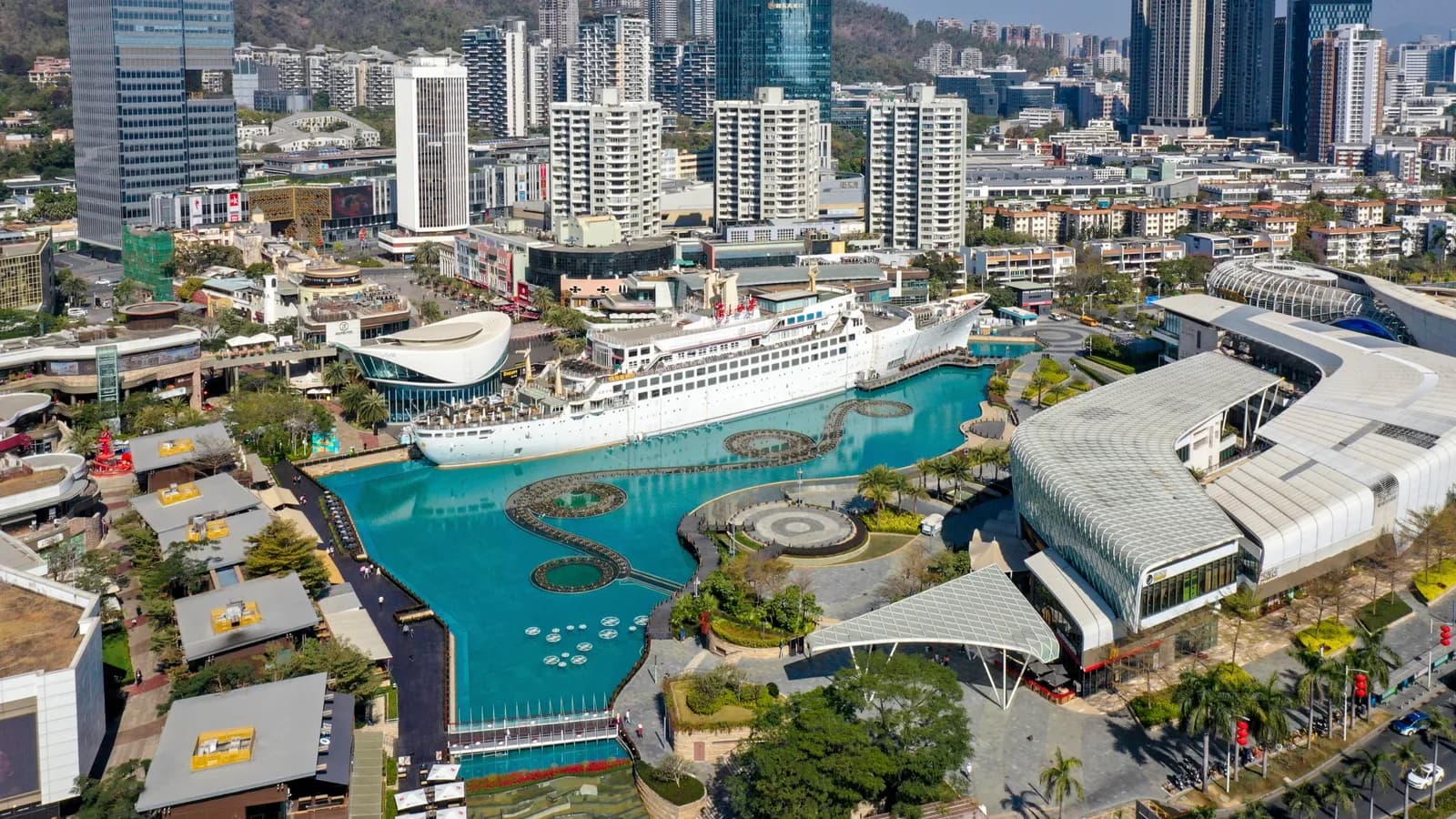
Travel-style picks
If you're a first-timer, Futian. The metro connectivity is worth the premium, and everything you came to see is close.
If you're on a budget, Luohu. Clean doubles from $28-50, the markets on your doorstep, and the Hong Kong border a walk away.
If you want luxury, St. Regis Shenzhen in Luohu for the 96th-floor check-in, or Futian's Four Seasons, Grand Hyatt or Park Hyatt. Even at the top end you're paying roughly a third of the Tokyo or New York equivalent.
If you're a family, Nanshan. The theme parks and the safari park are all here, and Shekou gives you a seaside afternoon when the kids are done with rides.
If you're a digital nomad or staying a month, Shekou. English-friendly, walkable, seaside, and the closest thing Shenzhen has to a neighbourhood you'd live in.
Cheap hotels in Shenzhen: the budget shortlist
Everything above tells you where; this is the what. Shenzhen's budget tier is dominated by domestic chains, and the good news is that the chains are exactly what you want here: consistent, clean, metro-adjacent, and cheap because the market is cheap, not because anything's wrong. The bands below are realistic 2025-2026 rates outside Canton Fair weeks, booked a few weeks out on an international platform.
Under $25: hostels, capsules and the true bottom. Shenzhen's floor is genuinely low: aggregator listings show Luohu 2-stars from around $13 and capsule beds like Xiao Youzi Capsule Hostel in Futian from about $14. This tier is fine for a night, but it's also where the "not licensed for foreign guests" problem lives, so book only through an international platform that confirms your booking, never a domestic app screenshot.
$20-45: the domestic budget chains. This is the sweet spot for a cheap trip. Hanting (Huazhu group) is everywhere, including multiple Luohu and Futian branches near metro stations, with doubles commonly in the $20-35 range. 7 Days Inn, Home Inn (the Nantou branch is the Bao'an budget name from earlier) and Jinjiang Inn sit in the same band, as does City Comfort Inn. Rooms are small and functional, English is minimal, but the beds are clean and the wifi works. Chenduo Hotel Luohu Port MIXC at CNY 220-350 (roughly $30-50) remains my pick of this tier for position: budget price, Line 1, Hong Kong border on foot.
$45-90: budget-plus, where Shenzhen gets absurd. Vienna Hotel branches (a nominal 4-star chain) run around $55-70 in Shenzhen, Atour and Ji Hotel (both Huazhu's design-led brands) sit at $60-110 depending on branch. Atour X Luohu Dongmen at $103-120 is the top of what I'd still call budget, and Jingju Hotel above Jingtian metro in Futian at around $80 is the best-positioned room in this band. This tier is where the value story really lands: what you're buying at $70 here is a legitimately nice modern room that would cost $200+ in Tokyo.
Two rules for the whole budget tier. First, the metro rule matters even more down here, because cheap hotels far from a station are cheap for a reason. Second, avoid April and October: Canton Fair weeks roughly double these numbers citywide, and a $30 Hanting room at $65 is no longer a story worth telling.
Why the hotels are this cheap
The $40 five-star isn't a fluke or a one-off deal. It's the market.
Shenzhen's hotel stock is new, there's a lot of it, and it competes for a domestic traveller who expects a genuinely nice room for a modest price. The result: budget doubles run $12-50, a solid 4-star lands around $120-140, and a real 5-star sits at $130-200 outside fair season. Aggregate data puts the 3-star average near $47 and the 5-star average near $178, with the Ritz-Carlton from around $319 and The Langham near $121. Recent guides put Shenzhen luxury at roughly a third of the Tokyo, Bangkok or New York equivalent, and that matches what I saw.
What you actually get at the $40-80 tier: a large modern room, a proper shower, fast wifi, often a pool and gym, and service that's brisk rather than warm. What you don't get: much English, and occasionally a hotel that isn't licensed to take foreign guests at all, which is a real thing that catches people out on domestic apps. Booking through an international platform filters that out for you.
Bring your passport for check-in. They'll scan it and register you, which is standard and takes two minutes.
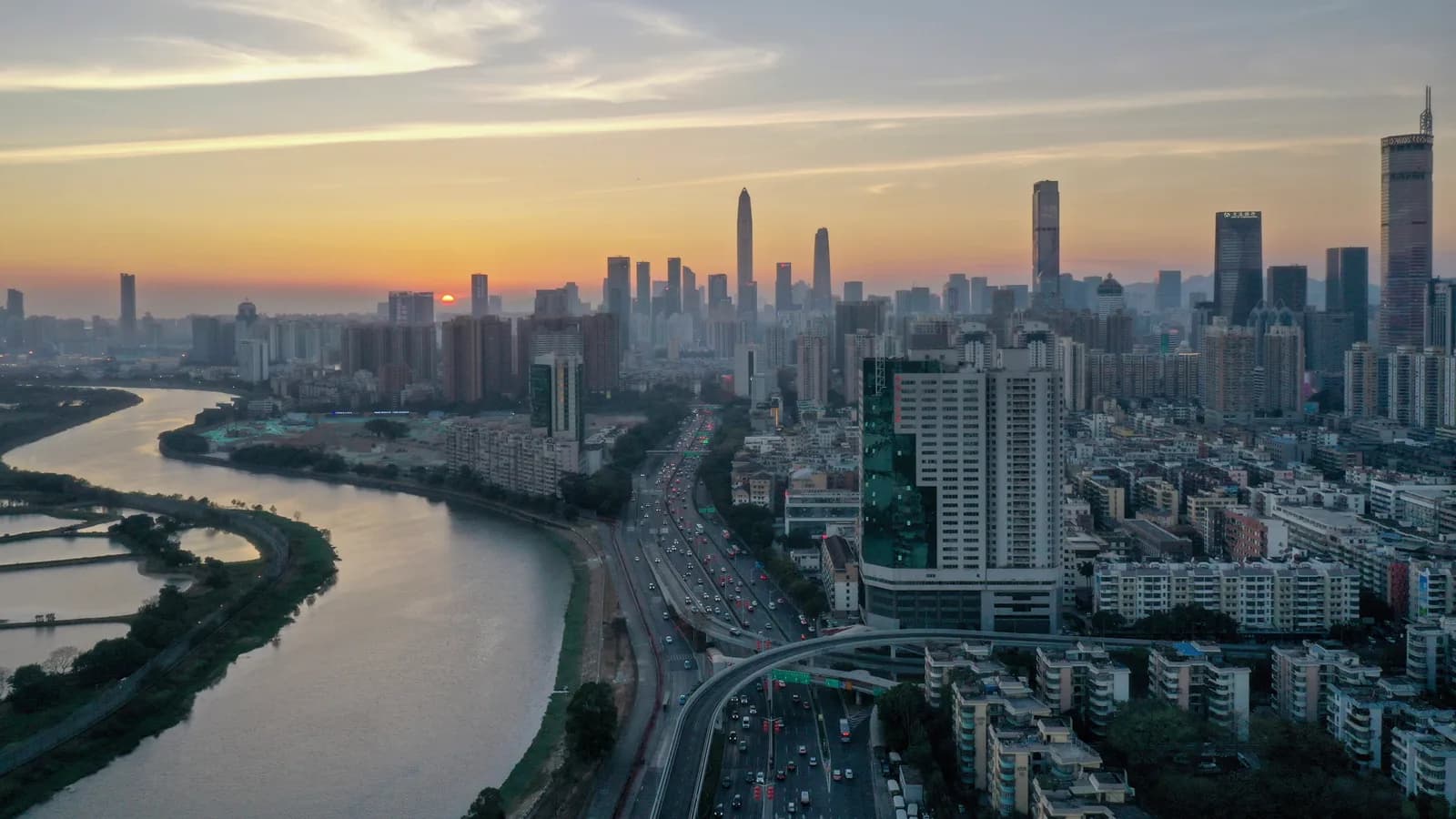
Getting there and getting around
From Hong Kong, the high-speed rail from West Kowloon to Futian is about 14 minutes for ¥75-82, and to Shenzhen North 18-25 minutes. That's the fast option and it lands you in the best zone. The cheap option is the MTR East Rail to Lo Wu and then Metro Line 1, about 60-75 minutes door to door for HK$40-55, which lands you in Luohu. Lok Ma Chau into Futian Checkpoint (Lines 4 and 10) is similar. Huanggang is the only 24-hour crossing (Line 7), which matters if your flight lands late.
Flying into HKIA and heading straight over? The SkyPier ferry runs to Shekou without you clearing Hong Kong immigration at all, with luggage tagged through at the E2 desk. One traveller in May 2025 described the whole thing taking about an hour at Shekou including fingerprints and permit issue.
Shenzhen's own airport is Bao'an (SZX), connected by Metro Lines 1 and 11. Line 11 is the fast one.
For visas in 2026: 77 countries including New Zealand and the UK get 30-day visa-free entry. US, Mexican, Czech and Lithuanian passports are limited to the 240-hour (10-day) transit, which requires a confirmed onward ticket to a third country. Immigration wants a hotel booking and an onward ticket, and screenshots are accepted. First entry means fingerprints and a Temporary Foreign Entry Card.
Book HSR on Trip.com (foreign cards, no Chinese phone number needed) or the 12306 English app. Get a travel eSIM before you fly, which routes your data out of China and gives you Google Maps and Instagram without a VPN. DiDi works fine once you're on local data.
When to go
- October to December: the best window. Warm, dry, comfortable. Avoid the first half of October if the Canton Fair is running.
- January to March: cool and grey, cheap, perfectly fine for a market-and-food trip.
- April to June: warming up, humid, and April carries the other Canton Fair price spike.
- July to September: hot, very humid, typhoon season. August is the cheapest month of the year (around $121 average) if you can take the weather.
The Canton Fair is the thing to actually plan around, more than the weather. It runs in two phases across April and again across October, it fills hotels across Shenzhen and Guangzhou both, and it turns a $60 room into a $140 room without improving the room. If your dates are flexible by even a week, check the fair calendar before you book anything.
Budget breakdown (per day, USD)
| Item | Backpacker | Mid-range | Comfort |
|---|---|---|---|
| Accommodation | $12-30 | $50-140 | $180-400 |
| Meals (3/day) | $8-18 | $25-50 | $70-150 |
| Metro / DiDi | $2-5 | $6-15 | $20-40 |
| Activities | $0-15 | $25-55 | $60-150 |
| Daily total | $22-68 | $106-260 | $330-740 |
Three nights in Shenzhen lands around $70-200 backpacking, $320-780 mid-range, and $1,000-2,200 at the comfort end. The mid-range tier is where Shenzhen embarrasses most of Asia.
Recommendations
- Filter your booking by "5-10 minutes' walk to a metro station" before you filter by district. It's the highest-leverage decision you'll make.
- Book 3-4 weeks ahead normally, 2-3 months if your dates touch the Canton Fair in April or October.
- Book on an international platform so you don't land at a hotel that can't legally take foreign guests.
- Bring your passport to check-in. It gets scanned and registered; it's routine.
- Set up Alipay or WeChat Pay with a Visa or Mastercard before you fly. Cash is genuinely awkward in Shenzhen now.
- Get a travel eSIM instead of a local SIM. No VPN needed, and Google Maps works.
- Take the high-speed rail from Hong Kong rather than the metro crossing unless you're actively saving every dollar. Fourteen minutes versus seventy.
- If you land after midnight, remember Huanggang is the only 24-hour crossing.
- Stay in Luohu if your trip is markets-first. Shuibei, Dongmen and Luohu Commercial City are all walkable from there.
- Don't book Bao'an unless you have an early flight. The savings aren't worth the distance.
- Splurge one night if you're curious. A genuine 5-star here costs what a bad 3-star costs in Auckland.
Final note
The $40 room is the story people remember, but the useful version is broader: Shenzhen is a city where the mid-range is so good that the usual travel maths stops applying. You don't need to choose between a decent room and a decent trip. You just need to be next to a metro station.
Futian if it's your first time. Luohu if you're here for the markets and the border. Shekou if you want to actually like the place. Bao'an only if you're flying out at 6am.
For what to do once you've booked, the things to do in Shenzhen guide covers Huaqiangbei, the jewellery district, the 24-hour spa and the reggaeton situation, and the Shenzhen itinerary turns it all into a day-by-day plan. For the completely different side of China, the Guiyang cluster is where I'd point you next: first impressions of Guiyang, where to stay in Guiyang, the Guiyang food guide, things to do in Guiyang, day trips from Guiyang, the world's best coffee shop, and the 7-10 day Guizhou rail loop. If Shenzhen is your first stop in Asia, the first trip to Japan guide walks the same prep logic for the region.
Frequently asked
Where should first-timers stay in Shenzhen?
Futian. It's the central business district, seven metro lines run through it, and it puts you walking distance from Huaqiangbei, Coco Park nightlife and the Civic Center light show. It's the consensus first-timer pick across every recent Shenzhen guide. If Futian's prices don't suit, Luohu next door is cheaper and closer to the Hong Kong border.
Why are Shenzhen hotels so cheap?
Supply, competition and a domestic market that expects a lot for the money. Shenzhen luxury hotels run roughly a third of the Tokyo, Bangkok or New York equivalent: a genuine 5-star sits around $130-200 a night outside fair season, solid 4-stars land at $120-140, and clean budget doubles start near $12-50. I reviewed a 5-star for about $40 and it was the best value hotel I've stayed in anywhere.
What's the best area to stay in Shenzhen for Hong Kong day trips?
Luohu. It sits right at the Lo Wu border crossing, so you can walk across and be on the MTR into Hong Kong in minutes, and Metro Line 1 runs straight into the rest of Shenzhen. Futian is the other option if you're using the high-speed rail to West Kowloon, which takes about 14 minutes. Huanggang in Futian is the only crossing open 24 hours.
Is Futian or Nanshan better in Shenzhen?
Futian for a first visit, Nanshan for a longer or more relaxed one. Futian is central, best-connected and closest to the classic sights. Nanshan (especially Shekou) is the seaside, expat-friendly, English-friendly zone with the best food streets, but it's a long metro ride to anything on the east side of the city. Families heading for the theme parks should pick Nanshan.
Luohu or Futian: which is better to stay in?
Futian if you want the modern city: it's the CBD, seven metro lines cross it, and Huaqiangbei, Coco Park and the Civic Center light show are on foot. Luohu if you want the cheapest well-connected base: it's the older centre, rooms run $28-90, the Shuibei jewellery district, Dongmen and Luohu Commercial City markets are on your doorstep, and the Lo Wu crossing puts Hong Kong a walk away. Luohu feels dated next to Futian, but for budget or border-hopping trips it's the smarter pick.
Where are the cheapest hotels in Shenzhen?
Luohu and Bao'an. Luohu has clean budget doubles from roughly $28-50 (Chenduo Hotel near Luohu Port runs CNY 220-350) while keeping you central and on Metro Line 1. Bao'an, the airport district, goes even lower but you're in a suburb with no other reason to be there. Citywide, budget doubles start near $12-50 and August is the cheapest month (around $121 average across all tiers); avoid the April and October Canton Fair weeks, when everything spikes.
What are the best budget hotel chains in Shenzhen?
The domestic chains: Hanting, 7 Days Inn, Home Inn, Jinjiang Inn and City Comfort Inn all run clean metro-adjacent doubles for roughly $20-45 a night, with multiple branches in Luohu and Futian. One band up, Vienna Hotel (around $55-70) and Huazhu's design-led Atour and Ji Hotel brands ($60-110) are the budget-plus picks. Book through an international platform so you don't hit a branch that isn't licensed for foreign guests, and avoid the April and October Canton Fair weeks, when budget rates roughly double.
How far in advance should I book a Shenzhen hotel?
Three to four weeks in peak season is enough for most trips. During the Canton Fair (April and October) you want two to three months, because prices spike across the whole city: October averages around $175 a night versus $121 in August. August is the cheapest month and October is the most expensive, almost entirely because of the fair.
Do I need to stay near a metro station in Shenzhen?
Yes, and it matters more than which district you pick. Shenzhen is enormous and spread out, and the metro is excellent, so the single best filter when booking is a 5-10 minute walk to a station. Recent guides converge on this as the deciding rule. Being in a slightly less fashionable district next to a station beats a trendy address that needs a taxi every time.
Can foreigners book Shenzhen hotels normally?
Mostly yes, though not every Chinese hotel is licensed to take foreign guests, which catches people out on domestic booking apps. Booking through international platforms filters for you. Bring your passport for check-in (they'll scan it and register you), and set up Alipay or WeChat Pay with a foreign card before you arrive for everything else.