Getsemaní vs Walled City vs Bocagrande: Where to Stay in Cartagena
Getsemaní vs Walled City vs Bocagrande, compared on price, noise, walkability and hotels, so you can pick the best area to stay in Cartagena for your trip.
Cartagena is the easiest city in Colombia to book wrong. Not because the neighbourhoods are confusing (there are really only three that matter for a visitor) but because they look close on the map and feel nothing alike on the ground. I spent my time there walking the Old Town, eating my way through Getsemaní and being underwhelmed by the Bocagrande beach, and I wrote the full zone-by-zone guide in where to stay in Cartagena. This post is the narrower, more opinionated version: the Getsemaní vs Walled City vs Bocagrande decision on its own, with 2026 prices in pesos, the noise and safety reports from recent travellers, and named hotels in each.
Short version first, then the argument.
The short answer
The best area to stay in Cartagena for a first trip is the Walled City, with the San Diego end if you sleep lightly. The best area for value, food and nightlife is Getsemaní, five minutes' walk away and 30-50% cheaper for an equivalent room. Bocagrande is only the right answer if a pool, a chain-hotel room and a beach outside the lobby matter more than the colonial city, because you will taxi in for almost everything else. Manga and Castillogrande are the quiet fourth option for long stays and families.
The rest of this post explains why, and where the exceptions are.
Getsemaní vs Walled City vs Bocagrande at a glance
Prices are 2026 nightly rates for a decent private room, converted at roughly 3,200 COP to the US dollar (the official TRM was 3,183 on 2 November 2026).
| Area | Vibe | Price band (per night) | Noise | Walk to the Old Town | Best for |
|---|---|---|---|---|---|
| Walled City (Centro + San Diego) | Colonial postcard, rooftop bars, horse carriages, cruise crowds by day | 500,000-1,200,000 COP ($155-375 USD) boutique; 1,500,000+ ($470+) for the convent hotels | Medium: street performers, carriages, bars on the Centro side; San Diego quieter | You are in it; 15-20 min wall to wall | First-timers, couples, history-first trips |
| Getsemaní | Street art, salsa, plazas, hostels next to boutique hotels | 300,000-700,000 COP ($95-220 USD); dorms 30,000-70,000 COP ($10-22) | High near Plaza de la Trinidad, Calle del Arsenal and Media Luna until 1-2am on weekends; low on the back streets | 5 min to the Clock Tower from the Arsenal side, 10-15 min from the far edge | Nightlife, food, budget, solo travellers, second visits |
| Bocagrande | High-rise strip, chain hotels, city beach, supermarkets | 350,000-900,000 COP ($110-280 USD) mid-range; 900,000-1,800,000+ ($280-560+) for the five-stars | Low in the room, moderate on the beach (vendors, music) | Not walkable in practice; 10-15 min taxi, 12,250-13,000 COP | Families, pool-and-beach trips, loyalty-point stays |
| Manga / Castillogrande | Residential, leafy, bay views, few restaurants | Manga from about 250,000 COP ($80); Castillogrande apartments and the Hyatt at the top end | Low | Manga 15-25 min on foot from the bridge; Castillogrande 10-15 min taxi | Long stays, remote work, families with small kids, repeat visitors |
Getsemaní vs Walled City: the real decision
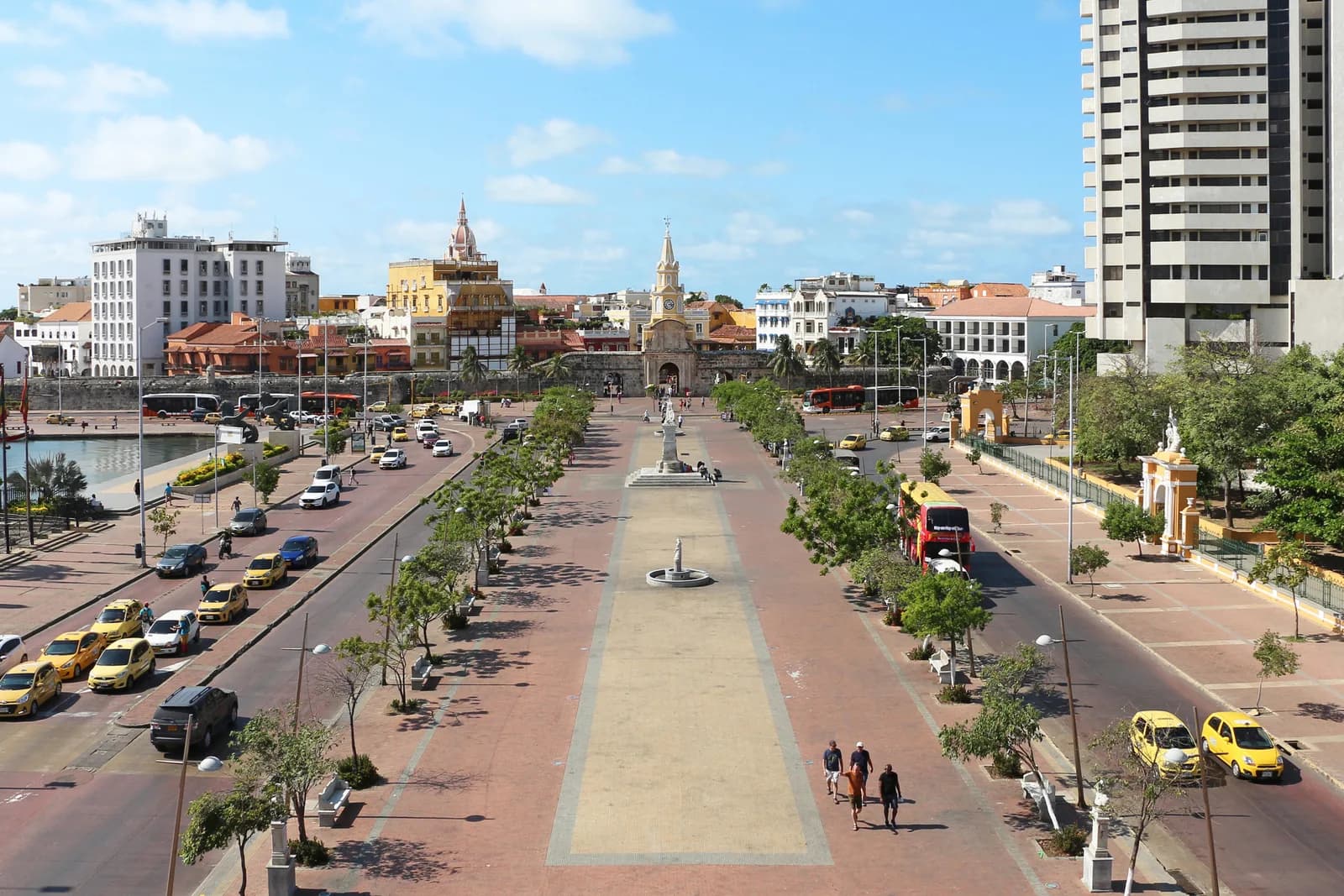
This is the comparison most people are actually making, because Bocagrande falls away quickly once you realise the beach is not the point of Cartagena. Getsemaní and the Walled City are separated by a park, a road and about five minutes on foot through the Puerta del Reloj. What differs is the price, the noise profile and what you see when you step outside.
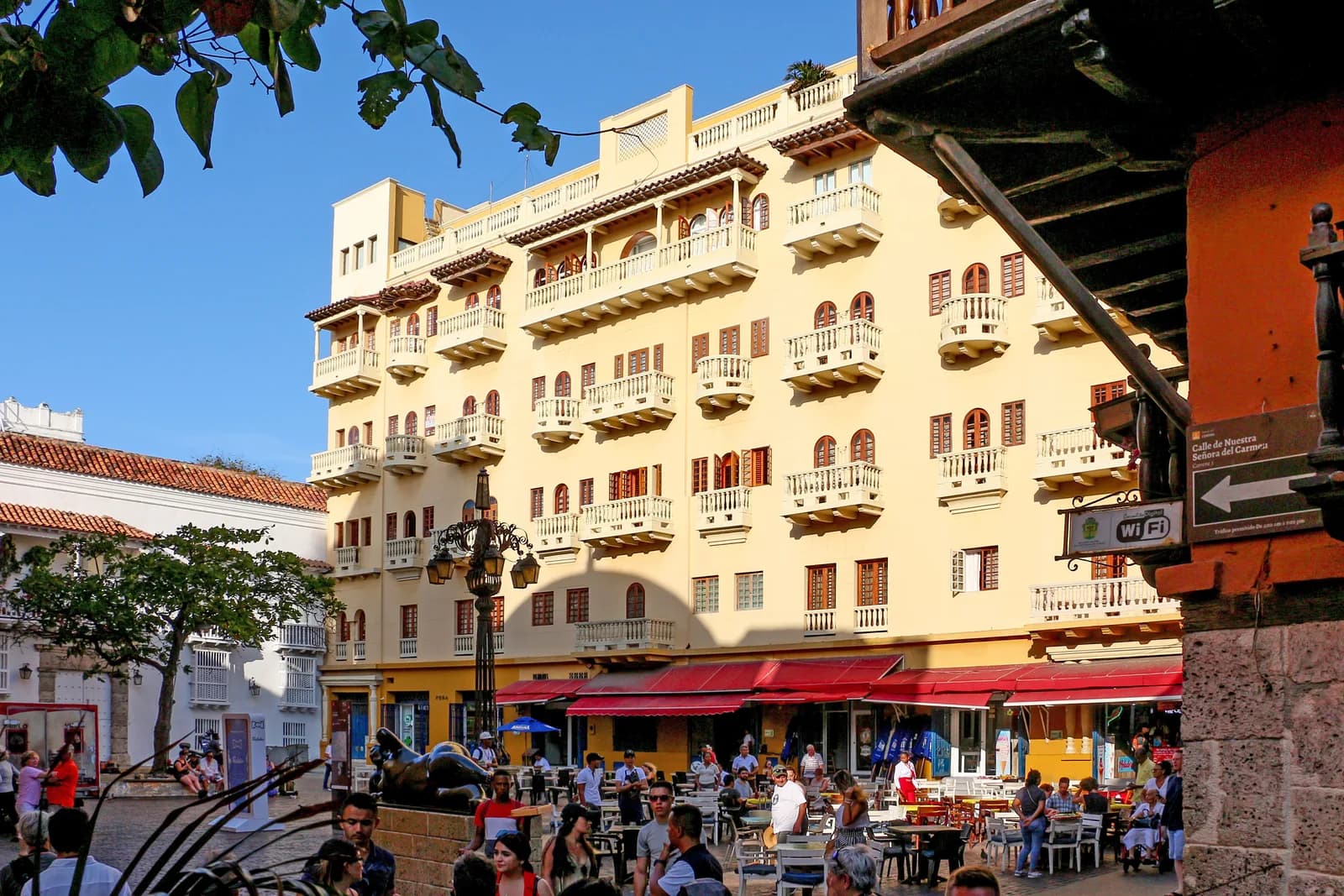
The Walled City is the reason the city exists on your list. The is Cartagena worth it post gave the Old Town a 10 out of 10 and I stand by it: it is the most photogenic colonial centre in Latin America and the safest zone to walk at midnight. You pay for that. In 2026 a boutique room in a converted mansion runs 500,000-1,200,000 COP a night and the big-name convent hotels start well above that. The noise is real but different from Getsemaní's: horse carriages clattering on stone until midnight, street performers, rooftop bars on the Centro side. Travellers in 2025-2026 guides repeatedly suggest asking for a courtyard-facing or interior room, and that applies even at the expensive places.
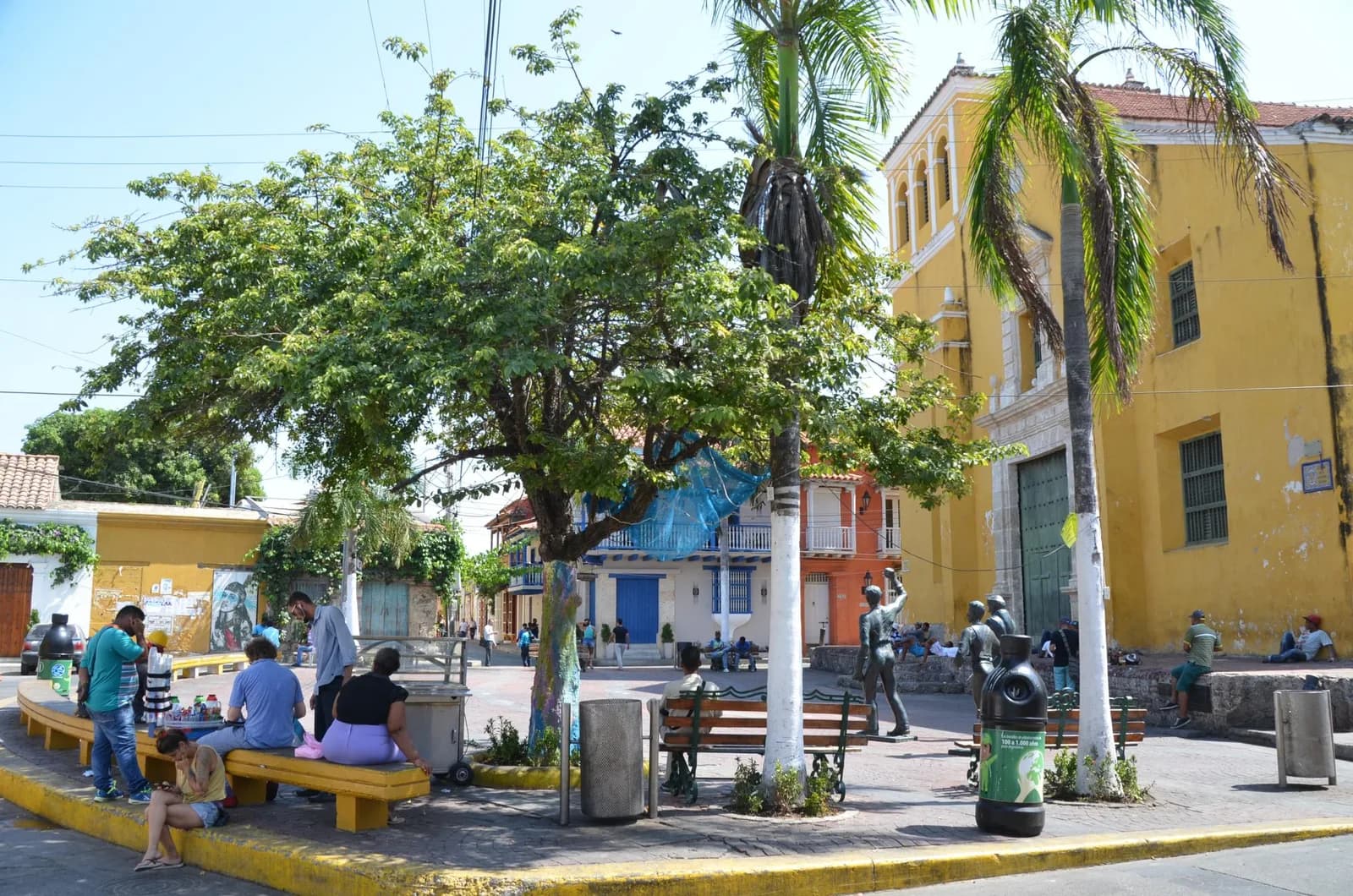
Getsemaní got the other 10 in that review, for the food. It is the neighbourhood where recent travellers say they felt they were in a city rather than a museum: murals, Plaza de la Trinidad filling up around 9pm with locals on the church steps, champeta and salsa spilling out of bars on Calle del Arsenal. Equivalent rooms run 300,000-700,000 COP, roughly 30-50% below the walls, and the hostel scene is still the best in the city. The trade-off is sleep. Multiple 2025 reviews of hostels and small hotels near the plaza use the word "noisy" without qualification, and one guide is blunt enough to say light sleepers should avoid booking directly on Calle de la Media Luna or the plaza itself on a Friday or Saturday.
My rule: Walled City if this is trip number one and the budget stretches; Getsemaní if it is trip two, if you are solo, or if 400,000 COP a night of savings buys you another Rosario Islands day. Either way, eat in Getsemaní.
Staying in the Walled City: Centro vs San Diego, and the hotels
Inside the walls there are two sub-zones, and the choice between them matters more than most hotel reviews admit. Centro is the southern half around Plaza Santo Domingo, Plaza de San Pedro Claver and the cathedral: the densest concentration of restaurants, rooftop bars and tour groups, and the loudest streets after dark. San Diego is the northern end around Plaza de San Diego and the Las Bóvedas arches: same architecture, more residents, fewer carriages, and in every 2025-2026 guide I read, the recommendation for anyone who wants the Walled City without the late-night soundtrack.
The hotels that show up in two or more recent sources, by tier:
- Convent and mansion luxury: Sofitel Legend Santa Clara in San Diego (a former convent, the one guide after guide calls the prettiest hotel in town), Casa San Agustín, the Charleston Santa Teresa, and Casa Pestagua, an 11-room Relais & Châteaux house listing around €330 a night in mid-2025. Expect 1,500,000 COP and up.
- Mid-range: Movich (the rooftop pool with the best view in the city), Bantú by Faranda, Casa Claver for families who want apartment-style lofts, and Bóvedas de Santa Clara, which buys access to the Sofitel's pool at a lower rate.
- Value: Casa India Catalina and Hotel Don Pedro de Heredia are the realistic under-500,000 COP options inside the walls on 2025 lists.
- Hostels: El Viajero Cartagena, República Hostel and the slightly-upmarket Clock Hostel & Suites.
Search the Walled City on Booking.com and filter by San Diego if quiet matters.
Staying in Getsemaní: the street matters more than the hotel
Getsemaní is small enough that any address is walkable, so the variable that decides whether you sleep is the street. The loud triangle is Plaza de la Trinidad, Calle del Arsenal (the bar strip along the water, facing the convention centre) and Calle de la Media Luna. The quieter streets are the ones toward Parque Centenario and the outer edge by the inlet, with the caveat from a September 2025 hotel guide that the outer edge is also where you should take a taxi back late rather than walk.
The neighbourhood also changed tier in April 2026, when the Four Seasons Cartagena opened across several heritage buildings, including the San Francisco convent opposite the Clock Tower: 131 rooms, opening rates around $600 USD a night. That is Getsemaní's first true five-star, and it will pull the surrounding boutique prices up. Book while the gap to the walls is still wide.
Hotels confirmed across two or more recent sources:
- Top end: Hotel Capellán de Getsemaní is the one that comes up most, with a rooftop pool and rooms priced like Walled City mid-range. Reviewers note the walls are thick but not soundproof and suggest a courtyard room. Osh Hotel and Casa Lola Deluxe are the design-led alternatives.
- Mid-range: Hotel Arsenal (rooftop pool with a bay view, near the Clock Tower end), Casa Canabal and Casa Jaguar.
- Value: Casa Isabel is the repeat best-value pick, on the quiet outer edge with a view across to Castillo San Felipe, and it hands out earplugs at check-in. Casa Tere, just off Parque Centenario, is the other one that keeps appearing.
- Hostels: Media Luna is the party hostel (Lonely Planet's line: great for some, too loud for others), Santuario is the capsule-dorm option with mixed 2025 reviews on noise, and El Viajero Getsemaní on Calle Larga (the former Selina, rooftop pool, coworking) is the one most guides now call the best hostel in the city. Dorm beds run 30,000-70,000 COP by season.
Browse Getsemaní on Booking.com and read the three most recent reviews of anything near the plaza before you commit.
Getsemaní or Bocagrande: beach hotel vs walkable city
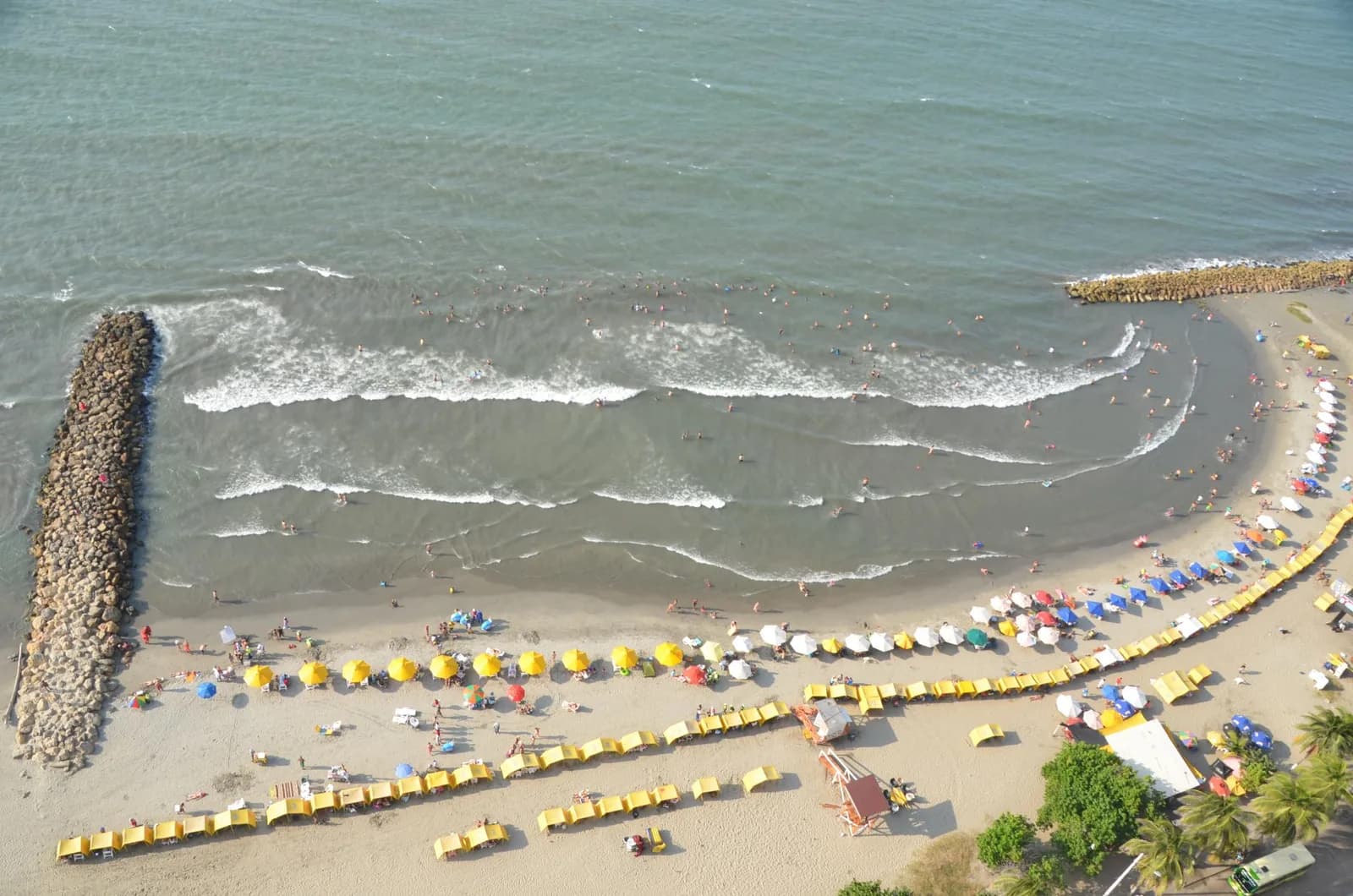
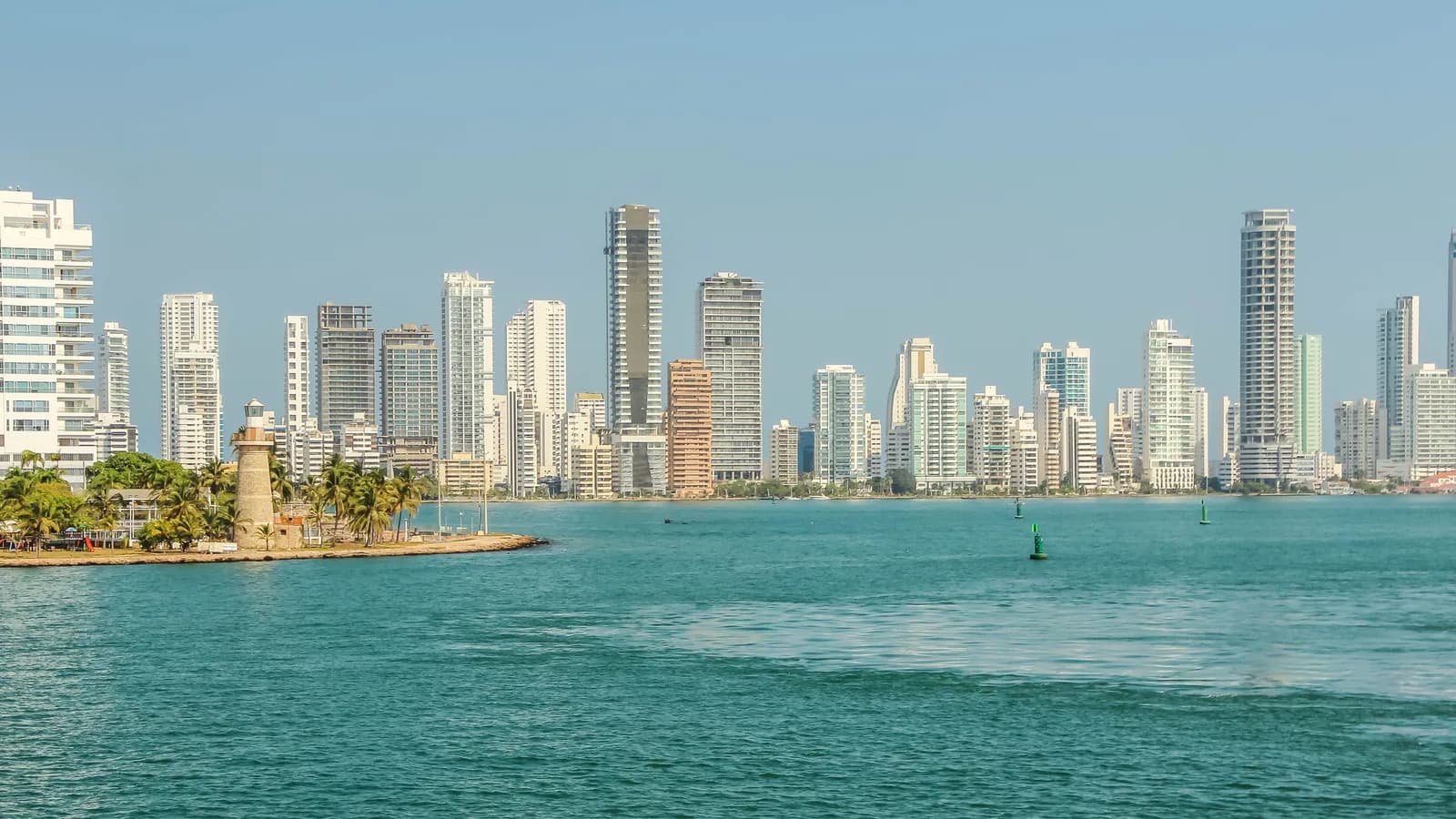
Here the comparison is less about character and more about what kind of trip you are on. Bocagrande is the high-rise peninsula south of the Old Town: a Miami-style strip of hotels, apartment towers, supermarkets and chain restaurants along a wide, grey-brown city beach. The 2025-2026 reports are consistent and match what I saw: the sand is darker than the island beaches, the water is murky, and the vendors are persistent enough that I rated the beach a 5 out of 10 in the worth-it review. El Laguito at the far tip has the calmest water.
What Bocagrande does have that Getsemaní cannot offer: real pools, elevators, strong air conditioning, big-brand points and the quietest nights of the three zones. Several 2026 writers note that a chain hotel here often undercuts a comparable Old City boutique, which is why families keep choosing it. The cost is the commute. Every Old Town meal, walking tour and sunset on the walls is a 10-15 minute taxi away, 12,250-13,000 COP each way in 2026, more in evening traffic. One 2026 guide puts it bluntly: not walkable in practice.
The hotels that recur in recent reports:
- Five-star: Hyatt Regency Cartagena, the twin towers on the Castillogrande side with the rooftop pools everyone photographs (an early-2025 guest found two of three pools closed, so check), the Hilton at El Laguito with its own gardens and calmer water, and the InterContinental mid-strip, whose beachfront was reported under construction in February 2026.
- Mid-range: Hotel Caribe by Faranda, the 1945 original with mature gardens and several pools, is the family favourite; Estelar and Capilla del Mar do sea-view rooms at a lower rate.
- Value: Oz Hotel, Hotel Blue Concept and the Holiday Inn Express Bocagrande cover the 350,000-500,000 COP band.
Search Bocagrande on Booking.com and check the pool status in the latest reviews, because renovations have been the recurring complaint this year.
The fourth option: Manga and Castillogrande
Two residential zones deserve a paragraph each, because they solve problems the main three do not.
Manga is the island across the bridge from Getsemaní: leafy, mid-priced, marinas along the bay, almost no tourist infrastructure. Rates sit below Getsemaní and the apartments suit two-week stays. The rule every guide repeats is to book within a few blocks of the Puente Román bridge, so the Walled City stays a 15-20 minute walk; further south it stretches toward 30 minutes, and one solo female blogger said she would not have wanted to walk it home alone at night. Less English is spoken here, and the Holiday Inn Express Manga is the only chain; otherwise it is apartments and small casas. Start with Manga on Booking.com.
Castillogrande is the quiet tip of the Bocagrande peninsula, separated by a small inlet, where well-off cartageneros live. Tree-lined streets, a bayside promenade, and a calmer bay-facing beach that locals use more than tourists, so fewer vendors. Hotel inventory is thin: the Hyatt Regency sits on this side, Capilla del Mar is on the border, the rest is serviced apartments, and you will taxi for dinner. It suits families with small children and repeat visitors who want Bocagrande's calm without the strip. Search Castillogrande on Booking.com.
Where to stay in Cartagena: the verdict by traveller type
The map below pulls live availability across all four zones for your dates. Below it, the picks.
First-timers: the Walled City, San Diego end. Stay here if you want to open the door onto the thing you flew in for and walk home from dinner without thinking about it. Trade-off: the highest prices in Colombia and the cruise crowds between 10am and 4pm.
Nightlife and solo travellers: Getsemaní. Stay here if Plaza de la Trinidad at 11pm sounds like the point rather than the problem. Hostels with rooftop pools, salsa within a block, and the best cheap food in the city. Trade-off: the plaza and Calle del Arsenal are loud until 1-2am on weekends, and the outer streets need a taxi home after midnight.
Budget: Getsemaní again, or Manga if you are staying two weeks. Dorms at 30,000-70,000 COP, private rooms from around 300,000, and you give up nothing in walkability. Trade-off: the cheapest beds are the noisiest, so pay the extra 50,000 for a back-street casa over a plaza-front hostel.
Families and beach: Bocagrande for the pool and the chain-hotel room, or Castillogrande for the calmer beach. Stay here if the kids need a pool every afternoon and you are fine with a 13,000 COP taxi into town. Trade-off: the beach is not the postcard, so still budget a Rosario Islands day for the real Caribbean.
Couples: a courtyard hotel in San Diego if the trip is about the colonial city, or one of the Getsemaní boutiques (Capellán, Osh, Casa Lola) if it is about going out. Trade-off: in San Diego you pay Walled City rates; in Getsemaní you ask for the courtyard room and bring the earplugs anyway.
Digital nomads and long stays: Manga near the bridge, or the quieter end of Getsemaní. Apartment pricing, residential rhythm, and the Old Town is still on foot.
Getting between the zones and when prices spike
Cartagena's 2026 taxi decree set the minimum fare at 12,250 COP, and the Walled City, Getsemaní and Bocagrande are all inside one minimum fare of each other; drivers round to 13,000 and add a 1,100 COP surcharge between 9pm and 5am. Uber and inDriver land close to the meter with a locked fare, which matters in a city where El Universal keeps reporting tourists charged 100,000-200,000 COP for a Centro-to-Bocagrande ride. The Transcaribe T103 bus links Bocagrande and the historic centre for a fraction of that. From the airport, the kiosk-ticket taxi to any of these zones is 20,200-34,400 COP.
On timing: all three zones roughly double in price between mid-December and the Hay Festival in late January, and again in Semana Santa; April and November are the shoulder sweet spots. If the Walled City is only affordable in low season, go in May rather than settling for Bocagrande in January. The Cartagena vs Medellín post covers how the two cities' seasons line up if you are splitting a trip.
Recommendations
- Decide the zone before the hotel. A great hotel in the wrong zone is still the wrong trip.
- Inside the walls, choose San Diego over Centro if you sleep lightly; the architecture is identical and the carriages are not.
- In Getsemaní, read the three most recent reviews for the word "noise" before booking anything within a block of Plaza de la Trinidad, Calle del Arsenal or Calle de la Media Luna.
- Ask for a courtyard-facing or interior room in every zone. It is the single most repeated tip in 2025-2026 reports.
- Treat Bocagrande as a hotel decision, not a neighbourhood decision: pick it for the pool and the brand, and check pool status in the latest reviews, because renovations were the recurring 2025-2026 complaint.
- Use Uber or inDriver after 9pm regardless of zone, even for the hop between outer Getsemaní and the walls.
- Book four to six weeks ahead for December-January and Semana Santa in any zone.
- Whatever you pick, eat in Getsemaní at least twice. The things to do in Cartagena list has the food-tour and salsa-class options.
- If being an obviously foreign face changes how you weigh the quiet zones, the Asians in Colombia post and the first-day-in-Cartagena write-up cover what that attention actually looks like here.
Final note
Getsemaní and the Walled City are one neighbourhood with a wall through it and a price gap across it; Bocagrande is a different city that happens to share a taxi rank. Walled City for a first trip if the budget allows, Getsemaní for the same trip with less sleep and less money, Bocagrande only if the pool is the point. Manga and Castillogrande are for people who have already done the postcard.
I was in Cartagena briefly rather than for a month, so the hotel-level detail here leans on 2025-2026 traveller reports more than on my own nights in each zone. If you have stayed somewhere recently that contradicts this, tell me and I will update it. For the budget table and day-trip options, the where to stay in Cartagena guide is the parent post, and where to stay in Medellín and where to stay in Bogotá are the same zone-by-zone treatment for the rest of the route.
Frequently asked
Is it better to stay in Getsemaní or the Walled City in Cartagena?
For a first trip with the budget for it, the Walled City. It is the postcard, the safest zone to walk at night, and everything is inside a 15-minute radius. Getsemaní is a five-minute walk from the Clock Tower, roughly 30-50% cheaper for an equivalent room, and has the better food and nightlife, so it wins for second-timers, solo travellers and anyone watching the budget. The honest trade-off is noise: Getsemaní around Plaza de la Trinidad and Calle del Arsenal runs until 1-2am on weekends.
Should I stay in Getsemaní or Bocagrande?
Getsemaní unless a pool and a beach outside the door are the whole point of your trip. Bocagrande is a 10-15 minute taxi from the Old Town (about 12,250-13,000 COP in 2026, roughly $4 USD), the sand is grey-brown and the water is murky, and recent reports still flag persistent vendors. It does have the big-brand hotels, elevators, strong air conditioning and real pools, which is why it suits families and loyalty-point travellers. Getsemaní suits everyone who came for the colonial city.
What is the best area to stay in Cartagena for first-time visitors?
The Walled City (Ciudad Amurallada), with the quieter San Diego end as the pick for light sleepers. If the room rates there (roughly 500,000-1,200,000 COP, $155-375 USD, for a boutique in 2026) are too steep, Getsemaní is the best-value runner-up at about 300,000-700,000 COP ($95-220 USD) and keeps you within walking distance of everything.
Is Getsemaní noisy at night?
Yes, in specific spots. Plaza de la Trinidad fills from around 9pm and the music and crowds run to 1-2am on Fridays and Saturdays. Calle del Arsenal and Calle de la Media Luna have the bar density, and travellers also mention chivas (party buses) with sound systems rolling through. Book on a quieter back street, ask for a courtyard-facing room, and bring earplugs. Several boutique hotels there now hand them out at check-in.
How much is a taxi from Bocagrande to the Walled City?
The 2026 official minimum fare in Cartagena is 12,250 COP (about $4 USD), and Bocagrande to the Old Town or Getsemaní falls inside that minimum. Drivers round to 13,000, and there is a 1,100 COP night surcharge between 9pm and 5am. Uber and inDriver work and usually land close to taxi prices, with the advantage that the fare is fixed before you get in. Budget 10-15 minutes, longer in evening traffic.
Is Bocagrande safe?
Yes. Bocagrande is consistently described in 2025-2026 guides as the safest area in Cartagena, with high-rise hotels, doormen and a visible police presence along the beach strip. The Walled City and central Getsemaní are also heavily policed; the places that need care are the outer edges of Getsemaní late at night and anything past Castillo San Felipe. The main risk in all three zones is phone snatching, not anything worse.
Is Manga or Castillogrande a good place to stay in Cartagena?
As a fourth option, yes, for specific travellers. Manga is a residential island across the bridge from Getsemaní, cheaper than the tourist zones, and good for long stays and remote work if you book within a few blocks of the bridge so the walk to the Walled City stays under 20 minutes. Castillogrande is the quiet, upscale tip of the Bocagrande peninsula with a calmer bay-side beach and fewer vendors; it suits families and repeat visitors, but you will taxi for dinner.