First Day in Cartagena, Colombia (As an Asian Traveller)
My first 12 hours in Cartagena, Colombia: the plaza selfie request, the Thailand-level heat, the Caribbean Spanish barrier, and what to actually do on day one.
What is it Like Being Asian in Colombia 🇨🇴
I'd been in Cartagena maybe four hours when a group of kids ran up to me in a plaza wanting to take a photo. They'd never seen an Asian person in real life. Not on TV, not in their school, not in their family, not anywhere. The mum was laughing, the kids were giggling, my Spanish was bad, their English was non-existent, and we got it sorted in 30 seconds with hand gestures. Photo taken. Move on. That was the first day.
If you searched "what is it like being Asian in Colombia," the full city-by-city answer — Bogotá vs Medellín vs Cartagena, the "chino" thing, where the attention ramps up and where it disappears — lives in the being-Asian-in-Colombia breakdown. This post is the day-one story that kicked that whole comparison off. I'm a Kiwi, East Asian, travelling Colombia solo, and Cartagena was my third stop after Bogotá and Medellín. The short version: it's mostly fine, sometimes weird, and the weird parts are wholesome. The bigger story is that Cartagena is a really good first city in Colombia and most posts undersell why.
What I'd already done in Colombia by this point
For context: I came into Cartagena from two weeks in Bogotá and Medellín. The climate alone in those three cities tells you most of what you need to know about Colombia.
| City | Altitude | Temperature | Vibe | Best for |
|---|---|---|---|---|
| Bogotá | 2,640 m | 50-65°F (10-18°C) | Cosmopolitan, gritty, historic | Cultural sites, food scene, museums |
| Medellín | 1,495 m | 65-78°F (18-26°C) | Modern, valley city, year-round spring | Digital nomads, expats, nightlife |
| Cartagena | Sea level | 80-92°F (27-33°C) | Caribbean, colonial, touristy | First-timers, beaches, photogenic Old Town |
Bogotá was cold. Genuinely cold. I climbed a mountain there and couldn't breathe properly because of the altitude, which is humbling when you're a Kiwi who thinks the New Zealand Alps are tall. Medellín was the perfect temperature, but it rained almost every day I was there, sporadic afternoon showers that meant I rearranged my whole schedule around weather. Cartagena landed and the climate immediately reminded me of Thailand, which I wasn't expecting. Same humidity, same wall of heat the second you step outside, same need for two changes of clothes a day.
If you're planning a Colombia trip and trying to pick between cities, Cartagena is usually the easiest landing pad because the tourist infrastructure is concentrated and the Old Town is genuinely walkable. Medellín is a softer city to live in for two weeks but harder to first-impression. Bogotá is best as the third stop, not the first.
Being Asian in Cartagena: the actual experience
Here's what happened on day one. I walked into a plaza, sat down to eat a Colombian-style burger (about $7, decent for what it was), and within an hour I'd had:
- Two double-takes from older locals walking past
- One group of kids who wanted a photo and got it
- Zero rude moments
- Zero people who tried anything
That's the reality. Cartagena's Old Town is touristy enough that any visible foreigner gets a moment of attention, but the attention doesn't tip into anything uncomfortable. The selfie request was the most novel thing that happened, and it was maybe 30 seconds of my day.
Outside the touristy core, the curiosity ramps up. I wandered into a market plaza later, the kind of spot that's not on any TripAdvisor itinerary, with live performances and a horse trotting around (genuinely, a horse). The horse was distracting enough that the camera I was holding stopped feeling weird. That's actually a good barometer: in any plaza in Cartagena where there's enough going on, you stop being the unusual one.
The thing nobody tells you: the Spanish in Cartagena is harder than the Spanish in Bogotá or Medellín. The Caribbean coast version is faster, more clipped, drops syllables. I could mostly follow conversations in Bogotá. In Cartagena, vendors and locals lost me in three words. Install Google Translate's Spanish pack offline before you arrive. It's the single most useful thing in your phone here.
Where to stay in Cartagena
Cartagena's neighbourhood landscape is more legible than most tourist cities. Four real options, ranked by what kind of trip you're booking. This is the quick version — the full where-to-stay-in-Cartagena comparison goes zone by zone with hotels in each. Use the breakdown below, then check what's available on Booking in your dates.
| Zone | Best for | Walk to Old Town | Price tier (USD/night) |
|---|---|---|---|
| Old Town (Walled City) | First-timers, romantic trips, Instagram | 0 (you're there) | $120-280 |
| Getsemaní | Backpackers, nightlife, street art | 5-10 min | $40-90 |
| Bocagrande | Beach + high-rise hotels | 10-15 min cab | $80-180 |
| Manga / San Diego | Quieter, residential, mid-range | 5-15 min | $60-130 |
Old Town (Ciudad Amurallada), stay here if you want to walk out the door into the colonial postcard, with Plaza Santo Domingo, Plaza San Pedro Claver, and the city walls within minutes. Tourist police presence is heaviest here, which means it's safest after dark. Trade-off: most expensive zone, most touristy energy, restaurants priced for cruise visitors.
Getsemaní, stay here if you want street art, salsa bars, and the late-night Plaza de la Trinidad. Real budget rooms exist here at half the Old Town price. Trade-off: petty theft is slightly higher than the Old Town, and the area gets loud past midnight.
Bocagrande, stay here if you want a beach outside your hotel, modern high-rises, and a Miami-style strip rather than the colonial vibe. Trade-off: you'll cab into the Old Town for most meals and sights, and the beach itself is decent but not the postcard.
Manga / San Diego, stay here if you want quieter residential streets, fewer tourists, and mid-range pricing. San Diego is technically inside the Walled City but feels less crowded than the Plaza Santo Domingo strip.
Travel-style picks
If you're a first-timer, stay in Old Town. The walkability and the safety net are worth the premium for trip number one.
If you're on a budget, Getsemaní. Hostels and budget B&Bs run $25-45 USD a night here and you're 5 minutes' walk from everything in the Old Town.
If you want luxury, Old Town boutiques like Casa Pestagua or Sofitel Santa Clara. Bocagrande high-rises are an option but feel less Cartagena.
If you're a digital nomad or doing 2+ weeks, Manga or quieter parts of Getsemaní. Both have decent wifi at hotels and feel more residential.
Things to do in Cartagena
12 hours barely scratches it. If you have 3-4 days, here's what's worth booking (the full things-to-do-in-Cartagena guide ranks all of these properly):
- Old Town walking tour, free or paid versions. The colonial history makes more sense with a guide. Pre-book a Cartagena Old Town tour on GetYourGuide.
- Islas del Rosario day trip, the cluster of islands an hour offshore. Better beaches than Cartagena city itself. Book the Rosario Islands tour.
- Playa Blanca, the famous white-sand beach a couple hours south. Day-trip or overnight options.
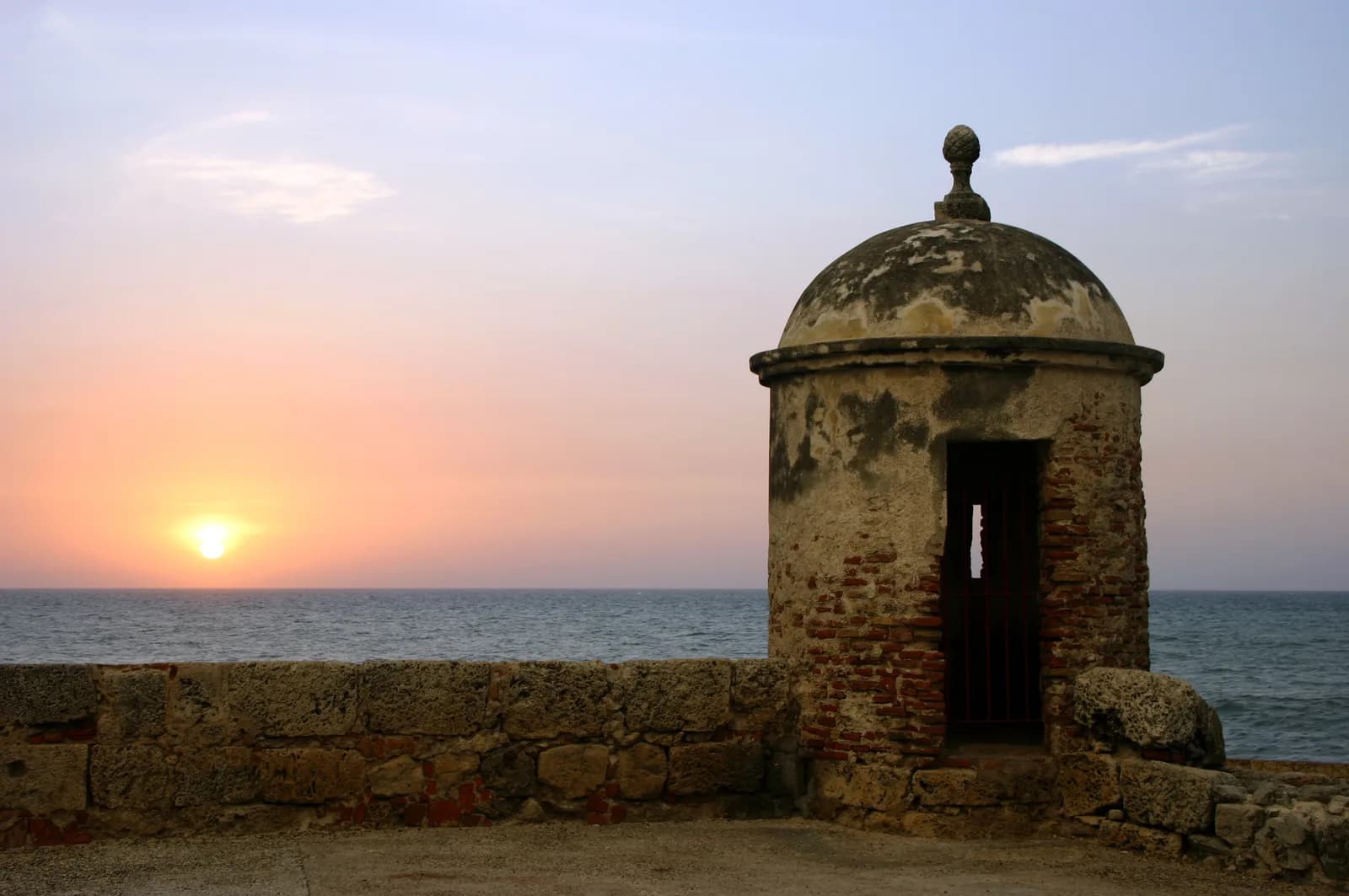
- Castillo San Felipe de Barajas, the colonial fort overlooking the city. Sunset is the move.
- Salsa class in Getsemaní, $15-25 USD, an actual cultural experience rather than a tourist set piece.
- Cartagena food tour, the easiest way to figure out what's worth eating before you wander solo.
- Volcán de Lodo El Totumo, the mud volcano about an hour outside the city. Ridiculous, photogenic, full-day commitment.
If you book one paid activity in advance, book the Rosario Islands day trip. It sells out in dry season.
Getting there and when to go
Cartagena's airport (CTG) takes direct flights from most US hubs (Miami, Atlanta, Fort Lauderdale, New York) plus connections from Mexico City, Panama, and Bogotá. From Bogotá or Medellín it's a 1-hour domestic flight, often cheaper than the bus. The airport is 15-20 minutes from the Old Town by taxi (around 25,000-35,000 COP / $6-9 USD).
Best months: December to April (dry season). January through March have the lowest rain risk. February is the sweet spot, hot but not soaking, breeze off the Caribbean. Avoid August through October if possible, peak rainy season with daily downpours.
The wider hurricane season is technically June to November, but Cartagena's far enough south on the Caribbean that direct hits are rare. Rain is the bigger risk than storms.
If you're routing in from elsewhere in Latin America: from Panama City it's a 1-hour flight; from Mexico City direct flights run regularly. From the Mexican Caribbean side (we just came out of Bacalar in Mexico), it's a connection through Bogotá or Mexico City. Not the easiest route, but doable.
Budget breakdown (per day, USD)
A real sense of what Cartagena costs depending on traveller style:
| Item | Backpacker | Mid-range | Luxury |
|---|---|---|---|
| Accommodation | $25-45 (Getsemaní hostel) | $90-140 (Old Town hotel) | $250-500 (boutique) |
| Meals (3/day) | $15-25 | $40-65 | $90-180 |
| Transit / cabs | $5-10 | $15-25 | $30-60 |
| Activities (avg) | $5-15 | $30-60 | $80-200 |
| Daily total | $50-95 | $175-290 | $450-940 |
For a 4-day Cartagena trip, a backpacker can do it for $250-380 USD all-in. Mid-range is $700-1,200. Luxury runs $1,800-3,800.
When to go in more detail
- December-March: peak dry season, peak prices. Christmas and Hay Festival (late January) are the busiest weeks.
- April: still mostly dry, prices easing. Good shoulder window.
- May-July: rainy season starts. Mornings often clear, afternoons unpredictable.
- August-October: wettest months. Cheapest accommodation by a wide margin if you can roll with rain.
- November: rain tapers, prices haven't spiked yet. The other shoulder sweet spot.
Recommendations
A short list of things I'd want a friend to know before they went:
- Don't underestimate the heat. Bring more water and more SPF than you think.
- Install Google Translate's Spanish pack offline before you arrive. The Caribbean Spanish is harder than textbook Spanish.
- Pull cash before you hit the smaller plazas. Card readers are inconsistent at street vendors.
- If kids ask for a photo, take it. It's a 30-second cultural exchange and a wholesome moment, not a problem.
- Use Uber, not street taxis, especially after dark.
- Don't book a single night in Cartagena. The Old Town deserves at least two evenings.
- For a beach day, do Rosario Islands or Playa Blanca, not the city beach.
- The Spanish here drops final consonants. "Más o menos" sounds like "ma' o meno'." Adjust your ear.
- If you're routing through the rest of Colombia, Cartagena belongs at either the start or end of the trip, not the middle. The temperature swing from Bogotá to Cartagena is significant; it's nicer to do altitude first or last.
- The selfie thing happens more outside the heavily-touristed Old Town. If it bothers you, stick to the Walled City and Bocagrande.
Final note
Being Asian in Colombia, on day one in Cartagena, was uneventful in the way that matters and eventful in the wholesome way. Curiosity from kids, friendly nods from older locals, decent food, weird heat. The "what's it like" answer is just: it's like being a visible foreigner anywhere that doesn't get a ton of East Asian travellers. People are interested rather than judgmental, the awkwardness is on you and dissolves once you get used to being the curiosity in the plaza.
Cartagena itself was the bigger surprise. I came in expecting the colonial-postcard thing and got that, but the wider feel of the city (hot like Thailand, friendly like Mexico, with a Caribbean rhythm I haven't felt anywhere else in Latin America) was the real story. Stay 3-4 days. Stay in the Old Town or Getsemaní. Eat at street level, not at the cruise-priced patio restaurants. Take the photo when the kids ask. Worth the trip.
The rest of the Colombia route is written up now: is Cartagena worth it is the full verdict on this city, is Medellín safe covers the hardest lesson of the trip, and the where to stay in Bogotá and things to do in Bogotá guides cover the capital. If you're routing through Mexico first, the where-to-stay deep-dive on Bacalar, the Mérida-to-Bacalar guide, and the is-Bacalar-worth-it review cover the Yucatán-side equivalent of this post.
Frequently asked
Is Cartagena a good first stop in Colombia?
Yes, and I'd argue it's the best one. The tourist infrastructure is concentrated, the Old Town is genuinely walkable, and there's no altitude to adjust to (Bogotá's 2,640m is a real day-one tax). The trade-offs are the heat, which is Thailand-level, and the Caribbean Spanish, which is faster and harder than the interior. Do Cartagena first or last in a Colombia route, not the middle — the temperature swing from the Andes is significant.
What should you do on your first day in Cartagena?
Keep it simple: walk the Old Town and the city walls, eat at street level rather than the cruise-priced patios, and finish near Plaza de la Trinidad in Getsemaní in the evening. Save the paid stuff (Rosario Islands, food tours, the fort) for day two onward. The heat will cap your ambitions anyway — plan for two changes of clothes and a mid-afternoon break.
What's the language barrier like in Colombia?
Real but workable. Outside the major tourist zones, English drops off fast. The Spanish on the Caribbean coast (Cartagena, Santa Marta) is also faster and more clipped than the textbook version, which makes it harder than the Spanish in Bogotá. Learn 50-100 essential phrases before you go, install Google Translate offline for the country, and you'll get by.
Bogotá, Medellín, or Cartagena: which should I visit first?
Depends on what you want. Bogotá is the cultural and altitude experience (and brutally cold by Colombian standards). Medellín is the perfect-temperature city most expats and digital nomads pick, but it rains a lot. Cartagena is the postcard, hot Caribbean climate, the most concentrated tourist infrastructure. For a first trip, Cartagena and Medellín together make the most sense.
Is Cartagena worth visiting on its own?
Yes, but plan 3-4 days minimum. The Old Town is walkable in a day; Getsemaní gives you another day of nightlife and street art; the beaches (Playa Blanca, Islas del Rosario) take a third. Bocagrande and Manga add value if you want a contrast to the colonial centre. Less than 3 days and you're rushing the best part.
What's the climate like in Cartagena?
Hot and humid year-round. Daytime highs sit in the high 80s to low 90s°F (30-33°C), with the dry season (December to April) being clearer and slightly less brutal. The Caribbean climate is closer to Bangkok or Phuket than to anywhere in Mexico. Pack accordingly: light layers, sunscreen, a hat.