Where to Stay in Bogotá: A Neighborhood Guide for First-Timers (2026)
Where to stay in Bogotá by traveller type. Honest comparison of Chapinero, La Candelaria, Zona G, Zona Rosa, Usaquén and Parque 93, with the trade-offs that matter.
I spent a couple of weeks in Bogotá before heading on to Medellín and Cartagena, and the thing I'd tell any mate before they booked is that your neighbourhood choice does more work here than in most Latin American capitals. Get it right and the city opens up. Get it wrong and you spend the trip wary. This is the zone-by-zone breakdown: what each one is actually like, and who it suits.
And the single thing those reports agree on is this: in Bogotá, your neighborhood choice matters more than in most cities, because the safe-and-central sweet spot and the where-the-sights-are zone are not the same place. Get it wrong and you'll either be Ubering across town all day or feeling twitchy walking back to your hotel at night. This guide compares the five or six zones that actually come up, with honest trade-offs, so you can self-select.
The short answer
If you only read one paragraph: the best area to stay in Bogotá for most first-time travellers is Chapinero, specifically Chapinero Alto or the Zona G end. It's central, it feels safe to walk at night, and it has the densest cluster of cafés and restaurants in the city. If you want to wake up next to the museums and don't mind taxiing home after dark, La Candelaria is the historic budget pick. Want safe, leafy and quiet over central? Go north to Usaquén or Parque 93. Here for the nightlife? Zona Rosa / Zona T. The rest of this guide compares all of them with the trade-offs and booking links for each.
Quick map of the zones:
- Chapinero / Chapinero Alto – best all-rounder for first-timers, foodies and longer stays.
- La Candelaria – best for budget travellers and museum-first sightseeing, weakest at night.
- Zona G & Quinta Camacho – best for foodies who want leafy, calm and walkable.
- Zona Rosa / Zona T – best for nightlife, shopping and upscale comfort.
- Usaquén – best for families, calm and the Sunday flea market.
- Parque 93 – best for business travellers and quiet northern luxury.
Why your zone choice in Bogotá really matters
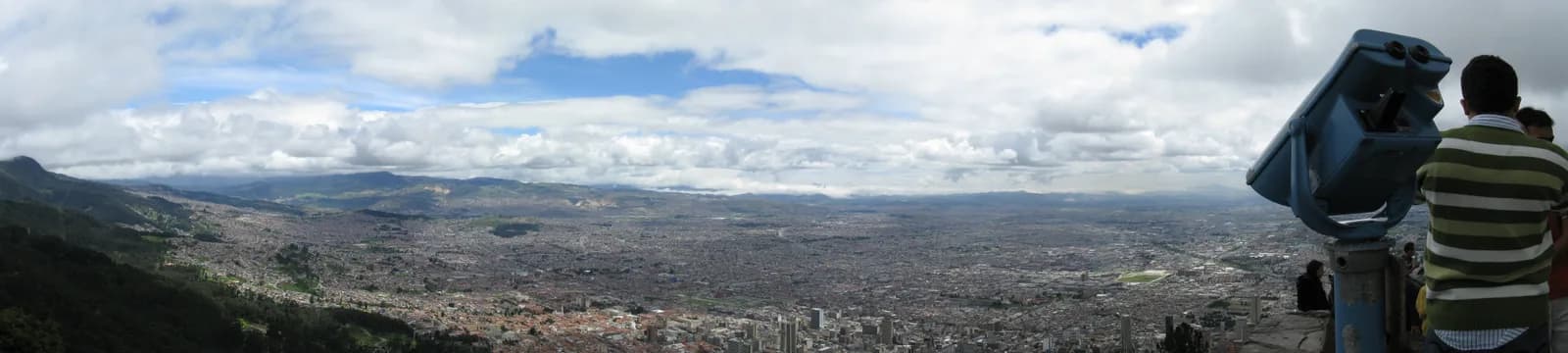
Bogotá is big, it sits at 2,640m on the Andean plateau, and its traffic is genuinely punishing. Recent travellers keep circling back to the same three points, so I'll borrow them.
First, the sights and the comfortable zones are at opposite ends of the city. La Candelaria, in the south-central historic core, has the Gold Museum, the Botero Museum, the colonial streets and the cable car up Monserrate. The safe-feeling, leafy zones (Usaquén, Parque 93, Zona Rosa) are 30 to 45 minutes north in traffic. Chapinero sits in the middle, which is exactly why it keeps getting recommended as the compromise.
Second, the day-versus-night split in La Candelaria is real, not internet paranoia. Multiple recent reports and safety guides name it as a mugging hotspot after dark, while also calling it perfectly pleasant during the day. A solo-female traveller thread on the TripAdvisor Bogotá forum landed on the same advice you'll see everywhere: sightsee in La Candelaria, but sleep somewhere you'll feel fine walking back to at 10pm.
Third, the altitude is a soft tax on day one. At 2,640m, a chunk of visitors report mild soroche (breathlessness, a headache, a bit of nausea). It usually passes. But it means your first night's location should be somewhere you can eat, drink water and potter without a big commute, which is another quiet point in Chapinero's favour.
If it's your first trip and you're unsure, stay in Chapinero. If your trip is sightseeing-heavy and budget-led, La Candelaria. If comfort and safety trump everything, go north.
The Bogotá zones at a glance
| Zone | Vibe | Price tier (double/night) | Best for | Watch-outs |
|---|---|---|---|---|
| Chapinero / Chapinero Alto | Hip, café-dense, LGBTQ-friendly | 150,000-450,000 COP ($38-115) | First-timers, foodies, long stays | Big and uneven; pick Alto or Zona G end |
| La Candelaria | Historic, backpacker, arty | 70,000-300,000 COP ($18-75) | Budget, museums, day-one sightseeing | Sketchy at night, noise, hills |
| Zona G & Quinta Camacho | Leafy, foodie, residential-calm | 350,000-700,000 COP ($88-175) | Foodies wanting quiet + walkable | Pricey; thin nightlife |
| Zona Rosa / Zona T | Upscale nightlife & shopping | 300,000-650,000 COP ($75-165) | Partygoers, shoppers, comfort | Far from sights; can feel sterile by day |
| Usaquén | Quaint, colonial-village, calm | 250,000-600,000 COP ($63-150) | Families, Sunday market, quiet | Far north; limited to walk once seen |
| Parque 93 | Business, modern, secure | 350,000-800,000 COP ($88-200) | Business, northern luxury | Sterile; 30-45 min to old town |
Conversions use a rough 4,000 COP to 1 USD. Rates move, so treat the USD figures as ballpark.
Where to stay in Bogotá: your real options
The menu below is the version of the trip I'd book if I were doing it again, and the map shows live availability across all of these zones for your dates.
Chapinero / Chapinero Alto, stay here if you want the best balance of central, safe-feeling and interesting. This is the zone recent travellers recommend most for first-timers, and it's where I'd book. It's enormous and uneven, so aim for Chapinero Alto (up the hill toward the mountains) or the Zona G end rather than the grittier lower flats near Avenida Caracas. You get the densest café and restaurant scene in Bogotá, a visible LGBTQ-friendly nightlife, and a central position that puts both La Candelaria and the northern zones within a short Uber. Hotels that surface repeatedly include The Grace Hotel and the boutique Casa Legado. Trade-off: it's a real working part of the city, not a polished tourist bubble, so quality varies block to block.
La Candelaria, stay here if your trip is museum-first and budget-led, and you accept taxiing at night. This is the historic, backpacker heart: cobbled streets, street art, the Gold Museum, the Botero, and the Monserrate cable car all on your doorstep. Hostels like Masaya, Cranky Croc and the Selina go for as little as 50,000-90,000 COP ($13-23) a dorm bed, and characterful spots like Hotel de la Ópera anchor the mid-range. The repeated warning in recent reports: it empties out and feels unsafe after dark, so book somewhere central and use Uber back rather than walking quiet streets late.
Zona G & Quinta Camacho, stay here if you're a foodie who wants leafy and calm over loud and central. Zona G (the "gourmet zone") and the adjacent, tree-lined Quinta Camacho are technically part of Chapinero but feel more residential and grown-up. This is the upscale-but-quiet pick: excellent restaurants, calm streets, a short hop to both Zona Rosa and central Chapinero. Casa Medina (a Four Seasons) and Mika Suites are the names that recur. Trade-off: you pay for it, and the nightlife is more dinner-and-wine than dance floor.
Zona Rosa / Zona T, stay here if nightlife, shopping and comfort are the point of the trip. The Zona T is a pedestrian, T-shaped strip of bars and clubs that travellers describe as livelier than Medellín's, ringed by malls and reliably among the safest-feeling districts at night. Hotel B3 Virrey and the boutique-glossy options around Calle 85 are the usual picks. Trade-off: it's a long way from the historic sights, and by daylight it can feel like a sterile shopping-and-business zone rather than a neighborhood with a soul.
Usaquén, stay here if you want calm, family-friendly and the famous Sunday flea market. Usaquén is a former colonial village swallowed by the city's northern sprawl, with a pretty plaza, good restaurants and the Mercado de las Pulgas flea market that takes over the streets each Sunday. The W Bogotá is the headline hotel. It's safe and charming, and it's the natural base for a Zipaquirá Salt Cathedral day trip. Trade-off: it's the furthest north of all the options, so everything downtown is a real commute, and once you've walked the village you've largely seen it.
Parque 93, stay here if you want quiet northern luxury or you're in town for business. The area around the leafy Parque de la 93 is modern, wealthy and secure, with new comfortable hotels (BOG, Bioxury) and a cluster of restaurants. Travellers rate it the safest-feeling zone in the city. Trade-off: it's the most sterile, and you're easily 30-45 minutes from the Gold Museum in Bogotá's unforgiving traffic.
Travel-style picks
- First-timer: Chapinero Alto. Central, safe-feeling, great food, and a short Uber from everything. The lowest-regret choice for trip number one.
- Budget: La Candelaria. Dorm beds from 50,000-90,000 COP ($13-23), walkable to the major museums. Just plan to taxi home after dark.
- Luxury: Zona G / Quinta Camacho or Parque 93. Casa Medina, BOG and the W (in Usaquén) are the marquee names, all leafy-north and quiet.
- Nomad or family: Nomads, Chapinero for cafés, coworking and price. Families, Usaquén for the plaza, the Sunday market and the calm.
Things to do once you've picked a base
Bogotá rewards a base that's central enough to bounce out from. The booking-intent shortlist, wherever you sleep:
- Gold Museum (Museo del Oro) in La Candelaria, one of the best museums on the continent and the one sight nearly every traveller names.
- Monserrate, the mountaintop shrine above the old town reached by cable car or funicular. Save it for day two so the altitude has settled.
- La Candelaria walking and street-art tour, the fastest way to make the historic core make sense, graffiti tours especially.
- Bogotá food tour, often run out of Chapinero or the central markets (Paloquemao).
- Zipaquirá Salt Cathedral day trip, an underground cathedral carved into a salt mine, an hour north and easiest from Usaquén.
- Usaquén Sunday flea market and the Ciclovía, the weekly market plus the citywide Sunday road closure when locals reclaim the streets on bikes.
If you book one thing ahead, make it the Salt Cathedral trip on a day that isn't your arrival day. For the longer breakdown, the things to do in Bogotá guide goes deeper.
Getting there and when to go
Bogotá's El Dorado (BOG) is the busiest airport in Colombia and the main international gateway, with direct flights from US hubs (Miami, Fort Lauderdale, New York, Atlanta), Mexico City, Panama, Madrid and the rest of Latin America. From inside Colombia it's a quick domestic hop from Cartagena or Medellín, often cheaper and far faster than the long Andean bus routes.
From the airport, the move is Uber or a registered white taxi. A metered white taxi to Chapinero or La Candelaria runs roughly 35,000-60,000 COP ($9-15) once you add the airport surcharge; Uber is typically 20-30% cheaper but operates in a legal grey zone, so you may be asked to sit up front. The ride is 20-40 minutes depending on traffic and which zone you chose. Skip anyone touting an unmarked car at arrivals, and have your hotel's address written down. There's also a cheap TransMilenio bus option (around 3,000 COP with a Tullave card), but with luggage after a long flight, a car is worth the few dollars.
On timing: Bogotá's "seasons" are about rain, not temperature. It hovers around 13-19C by day all year because of the altitude, so pack layers and a rain shell regardless. The driest, most reliable windows are roughly December to March and July to August. The two rainier stretches are April to May and October to November, when afternoons cloud over and dump. None of it is a deal-breaker, but if you're choosing a month, aim for the dry windows.
One more time on the altitude, because it's the thing travellers underestimate: 2,640m is high enough to leave you winded on stairs and headachy on day one. Take it slow, hydrate, ease off the aguardiente the first night, and your body sorts itself out within a day or two.
Budget breakdown (per day, USD)
| Item | Backpacker | Mid-range | Luxury |
|---|---|---|---|
| Accommodation | $13-25 (Candelaria hostel) | $50-110 (Chapinero hotel) | $175-400 (Zona G / Parque 93) |
| Meals (3/day) | $12-22 | $35-65 | $90-180 |
| Transit / Uber | $4-9 | $12-22 | $30-60 |
| Activities | $5-20 | $30-60 | $80-180 |
| Daily total | $34-76 | $127-257 | $375-820 |
Bogotá is noticeably cheaper than Cartagena for accommodation, so your money stretches further here than on the coast. A backpacker can do a comfortable Bogotá day for $35-75; mid-range lands $130-260; luxury runs $375-820.
Recommendations
A short list of things I'd want a friend to know before booking:
- Book Chapinero (Alto or Zona G end) if you're not sure. It's the lowest-regret zone for a first trip.
- Treat La Candelaria as a daytime place. Sleep there only if you'll happily Uber back after dark.
- Take day one slow for the altitude. Land, eat, walk gently, save Monserrate for day two.
- Use Uber or InDriver over street taxis where you can; the price is locked and there's a record of the trip.
- Don't walk quiet La Candelaria streets late at night, and keep your phone in your pocket, not your hand, anywhere central.
- If your trip includes a Sunday, base near or visit Usaquén for the flea market, and catch the Ciclovía in the morning.
- Pack layers and a rain shell. Bogotá is cool and changeable year-round, not the tropical Colombia people expect.
- Three nights beats two. It's enough for the museums, Monserrate, the north and a salt-cathedral day trip without rushing.
- Pull some cash before you leave the central zones; smaller cafés and market stalls are still cash-first.
Final note
Bogotá's neighborhood map is less intuitive than Cartagena's because the comfortable zones and the headline sights sit at opposite ends of a big, traffic-clogged city. But the decision tree is simple once you see it: Chapinero for balance, La Candelaria for budget and sightseeing, the north for safety and calm. Pick the zone that matches your trip and the city gets a lot friendlier.
Bogotá moves fast, so if a price or a neighbourhood has shifted since I was last there, double-check before you book. The things to do in Bogotá guide covers the activity side, the where to stay in Medellín comparison is the same treatment for the usual next stop, and if you're routing on to the coast, the where to stay in Cartagena and things to do in Cartagena guides are the parallels, with the honest is Cartagena worth it review and the Asian-traveller-in-Colombia post for the identity-and-logistics angle that applies just as much in Bogotá as on the coast.
Frequently asked
Where should first-timers stay in Bogotá?
Chapinero, specifically Chapinero Alto or the Zona G end. It's the safest-feeling central zone to walk at night, it has the best café and restaurant density, and it sits between La Candelaria's museums and the northern nightlife so you're never far from either. Recent travellers consistently flag staying in La Candelaria as the most common first-timer mistake: great for daytime sightseeing, uneasy after dark.
Is La Candelaria safe to stay in?
Fine in daylight, dodgy at night. La Candelaria is Bogotá's historic core and the most walkable zone for museums, but recent traveller reports repeatedly name it as a mugging hotspot after dark, especially on quiet side streets. If you stay there, book somewhere central near Plaza del Chorro or the main drag, and take an Uber back rather than walking after about 8pm.
Which Bogotá neighborhood is safest?
Parque 93, Usaquén and the Zona Rosa / Zona T area come up most often as the safest-feeling zones in recent reports, all in the wealthier north of the city. They trade safety and comfort for distance: you're 30-45 minutes from La Candelaria's sights in Bogotá's notorious traffic. Chapinero is the best balance of safe-feeling and central.
Where should I stay in Bogotá for nightlife?
Zona Rosa / Zona T for upmarket bars and clubs, or Chapinero for a hipper, more mixed and LGBTQ-friendly scene. Zona T is a pedestrian T-shaped strip packed with clubs that travellers describe as livelier than Medellín's. Chapinero Alto skews younger, cheaper and more local. Both beat La Candelaria, where you'd be taxiing out to party anyway.
How many days do you need in Bogotá?
Two to four. One day for La Candelaria and the Gold Museum, one for Monserrate and the northern neighborhoods, and a Sunday if you can swing it for the Usaquén flea market and the Ciclovía. Many travellers treat Bogotá as a 2-night gateway before Medellín or Cartagena, which works, but three nights lets the altitude settle.
How do you get from El Dorado airport to the city?
Uber or a registered white taxi. A taxi to Chapinero or La Candelaria runs roughly 35,000-60,000 COP (about 9-15 USD) including the airport surcharge; Uber is usually 20-30% cheaper but technically operates in a grey zone. The trip is 20-40 minutes depending on traffic. Avoid unmarked cars touting at arrivals.
Will I get altitude sickness in Bogotá?
Possibly mild. Bogotá sits at 2,640m, high enough that some visitors feel breathless, headachy or queasy (soroche) on day one. It's rarely serious. Take your first day slow, skip the Monserrate hike until day two, go easy on alcohol, and drink plenty of water while your body adjusts.